


Anex:Fòssils de l'evolució humana

- Artícul principal → Evolució humana.

La evolució humana o hominización és el procés d'evolució biològica del Homo sapiens. L'estudi de dit procés requerix un anàlisis interdisciplinar en el que es aúnan coneiximents procedents de ciències com la genètica, l'antropologia física, la paleontologia, l'estratigrafia, la geocronología, l'arqueologia, la llingüística i unes atres.
El terme «humà», en el context de la seua evolució, es referix als individus del gènero Homo. No obstant, els estudis de l'evolució humana inclouen uns atres homininos, com Ardipithecus, Australopithecus, etc. Els científics han estimat que les llínees evolutives dels sers humans i dels chimpansés es varen separar fa entre 5 i 7 millons d'anys. A partir d'esta separació va continuar la ramificació en noves espècies, totes extintes actualment a excepció del Homo sapiens. Les espècies anteriors al final del Mioceno són de difícil associació directa en l'arbre evolutiu humà encara que són necessàries per a comprendre les branques posteriors.
Els primers possibles homínits bípedos (homininos) pertanyien a l'espècie Sahelanthropus tchadiensis, encara que atres autors ho qüestionen.[1] Respecte a Orrorin tugenensis no hi ha consens sobre si va ser totalment bípeda. Referent a Ardipithecus, despuix del descobriment d'un esquelet casi complet, malnomenat Ardi, s'han resolt alguns dubtes sobre el seu bipedestación. La forma de la part superior de la pelvis indica que era bípedo i que caminava en l'esquena recta, pero la forma del peu, en el dit gros dirigit cap a dins (com en les mans), en lloc de ser paralel als demés, indica que devia caminar recolzant-se sobre la part externa dels peus, i que no podia recórrer grans distàncies.[2]
Distribució cronològica de les espècies
Els colors són els mateixos que els de les taules de fòssils de més avall.
Descripció de les taules de fòssils
Les taules mostren alguns dels fòssils descoberts en relació en l'evolució humana. Existixen mils d'ells, pero este anex no té com a fi mostrar-los tots. Els criteris bàsics de selecció han segut: mostrar a lo manco un de cada una de les espècies descrites, aquells de més i menys antiguetat en cada espècie, aquells que varen marcar algunes fites rellevants en l'investigació, alguns dels de major difusió mediàtica o atres criteris dels autors. Els fòssils estan ordenats per la seua edat, establida per diversos métodos de datació. Els noms científics de les espècies representen el consens científic actual i quan no hi ha un consens clar, es fa notar.
Les següents indicacions ajuden a una millor comprensió de les taules:
- Els colors de fondo de les taules corresponen als del gràfic superior.
- L'ordenació cronològica es basa en la data més recent en cas d'existir un marge, que pugues deure's al dau per la datació més acceptada o a l'existència de vàries datacions.
- La divisió en periodos és aproximada.
- El «lloc» correspon a la divisió administrativa de països de la segona década de el XXI i no a la del moment del descobriment.
- Existix un comentari sobre algunes de les imàgens que es visualisa en passar la busca sobre elles o en observar el carrusel d'imàgens de l'artícul (accedint en obrir qualsevol image).
Eoceno (56-33,9 Ma)
l'Eoceno és la segona época geològica del periodo Paleógeno en l'era Cenozoica. Comprén el temps entre el final del Paleoceno (fa 56 millons d'anys) i el principi del Oligoceno (fa 33,9 millons d'anys).[7][8][9] Durant esta época es varen terminar de formar algunes de les cordilleras més significatives del món, com els Alps o l'Himalaya, i varen ocórrer varis canvis climàtics importants: el màxim tèrmic del Paleoceno-Eoceno, que va aumentar la temperatura del planeta i delimita l'inici d'esta época geològica; i l'event Azolla, un refredat global que donaria pas a les primeres glaciacions. l'extinció massiva Gran Ruptura de Stehlin marca el fi del Eoceno.[10]
| Nom | Espècie | Edat[nota 1] | Descobriment[nota 2] | Lloc[nota 3] | Publicació[nota 4] | Image | Conservació[nota 5] |
|---|---|---|---|---|---|---|---|
| PMO 214.214 i WDC-MG-210[nota 6] Anada[11][12] |
Darwinius masillae | 47 Ma | 1983 Aficionats |
Erro al crear miniatura: | Jens Lorenz Franzen (2000) |  |
Museu d'Història Natural de l'Universitat d'Oslo (Noruega) (plancha A) Museu privat en Wyoming (plancha B) |
| IVPP V10591[13] | Holotip de Eosimias sinensis | 45 Ma | 1992 Christopher Beard et al.[14] |
 |
Christopher Beard et al. (1994)[15] | [fig. 1] | Museu Eosimias Sinensis, Shanghuang (China) |

Oligoceno (33,9-23,03 Ma)
l'Oligoceno és la tercera época geològica del periodo Paleógeno en l'era Cenozoica. Va escomençar fa 33,9 ± 0,1 millons d'anys i va finalisar fa 23,03.[7][8][16] El nom fa referència a l'escassea de nous mamífers moderns despuix de la racha d'evolució del Eoceno.[nota 7]
El començ del Oligoceno està marcat per un gran event d'extinció, una substitució de la fauna d'Europa en una atra d'Àsia, llevat para les famílies endèmiques de rosegadors i marsupials, coneguda com Gran Ruptura de Stehlin.
El Oligoceno és a sovint considerat com un moment de transició entre el món tropical arcaic del Eoceno i els ecosistemes d'aspecte més modern del Mioceno.[18] El canvi més significatiu dels ecosistemes del Oligoceno és l'expansió global dels pasturages i una regressió dels boscs tropicals de la franja equatorial.[19]
El Oligoceno va tindre varis episodis importants per a l'evolució humana. Fa aproximadament 30 millons d'anys, el suborde dels haplorrinos es va dividir en dos suborden: platirrinos i catarrinos. Cinc millons d'anys més tart, els catarrinos varen donar orige a la superfamilia Hominoidea. Algunes innovacions del gènero Proconsul es reflectixen en Homo sapiens, com: l'absència de coa,[20] l'estructura dels colzes, i el tamany del cervell relativament gran respecte al del cos.[21]
El llímit Oligoceno-Mioceno no està marcat per un event tan fàcilment identificable com lo va ser el començ, sino més be per llímits regionals entre el més càlit Oligoceno tardà i el relativament fret Mioceno.
| Nom | Espècie | Edat[nota 1] | Descobriment[nota 2] | Lloc[nota 3] | Publicació[nota 4] | Image | Conservació[nota 5] |
|---|---|---|---|---|---|---|---|
| DPC 2803 Dick[22][23][24] |
Aegyptopithecus zeuxis | 33-35 Ma | 1977-1983 Equip de E. Simons |
Erro al crear miniatura: | Elwyn Simons (1985)[25] | [fig. 2][fig. 3] | |
| SGS-UM 2009-002 | Holotip de Saadanius hijazensis | 28-29 Ma | 2009 Iyad S. Zalmout et al.[26] |
Erro al crear miniatura: | Iyad S. Zalmout et al. (2010)[27] |  |


Mioceno (23,03-5,33 Ma)
El Mioceno és la quarta época geològica de l'era Cenozoica i la primera época del periodo Neógeno. Va escomençar fa 23,03 millons d'anys i va terminar fa 5,332 millons d'anys.[7][8][28] Es produïx un descens de les mars significatiu, lo que provoca una extensió del terreny africà cap al nort i la dessecació del Mediterràneu.[29]
El nom «Mioceno» procedix de les paraules gregues μείων (meiōn, ‘menys’) i καινός (kainos, ‘recent’), i significa ‘menys recent’,[17] aludint a que presenta un 18 % menys d'invertebrats marins moderns que el Plioceno. Els primers grans simis apareixen,[30] i es distribuïxen, ademés tant en Àfrica com en Àsia i en el sur d'Europa.[nota 8][31] Al final del periodo es produïx la separació de chimpansés i homininos.[nota 9] Lo que convertix a este periodo com la «edat d'or dels simis».[34]
| Nom | Espècie | Edat[nota 1] | Descobriment[nota 2] | Lloc[nota 3] | Publicació[nota 4] | Image | Conservació[nota 5] |
|---|---|---|---|---|---|---|---|
| KNM-RU 7290 M32363[35][36][37] |
Holotip de Proconsul heseloni[nota 10] | 18 Ma | 1948-1949[nota 11] Mary Leakey |
Erro al crear miniatura: | W. E. Li Gros Clark (1949, 1950)[38][39][40] | ||
| KNM-WK 16999[41] | Holotip de Afropithecus turkanensis | 16-18 Ma | 1986 Richard Leakey |
Erro al crear miniatura: | R. Leakey i M. Leakey (1986)[42] |  |
|
| KNM-WK 16950[43][44][fig. 4] | Holotip de Turkanapithecus kalakolensis | 16-18 Ma | 1986 Richard Leakey |
Erro al crear miniatura: | R. Leakey i M. Leakey (1986)[45] |  |
|
| KNM-TH 28860[46][47] | Holotip de Equatorius africanus | 15,58-15,36 Ma | 1993 Expedició del BPRP |
Erro al crear miniatura: | S. Ward et al. (1999)[48] | [fig. 5] | |
| IPS 21350 Pau[49][fig. 6][fig. 7] |
Holotip de Pierolapithecus catalaunicus | 12,5-13 Ma[nota 12] | 2002 Obrers d'un abocador[50] |
 |
S. Moyà-Solà et al. (2004)[51] | .jpg) | |
| Laia[52] | Holotip de Pliobates cataloniae | 11,6 Ma | 2011 Equip d'arqueòlecs liderat per Josep Maria Roures |
|
D. M. Alba et al. (2015)[53] | [fig. 8][fig. 9] | |
| GSP 15000[54][fig. 10] | Sivapithecus indicus[nota 13] | 8,5-9,5 Ma | 1979 S. M. Ibrahim Shah i David Pilbeam[57] |
 |
D. Pilbeam (1982)[55] |  |
|
| IGF 4335[58][59] | Holotip de Oreopithecus bambolii | 8 Ma | 1862 Igino Cocchi[60] |
Erro al crear miniatura: | P. Gervais (1872)[61] |  |
|
| BMNH. M 11555 BM 112[62][63][64][65][66] |
Oreopithecus bambolii | 8 Ma | 1871 Igino Cocchi[67] |
Erro al crear miniatura: | P. Gervais (1872)[61] | [fig. 11] | British Museum of Natural History |
| IGF 11778 Esquelet de Florencia Sandrone[62][68] |
Oreopithecus bambolii | 8 Ma | 1958 | Erro al crear miniatura: | J. Hürzeler (1958) |  |
|
| IVPP PA644 PA644[69] |
Lufengpithecus lufengensis[nota 14][72] | 8 Ma | 1978[69] | |
Li et al. (1981)[73] R. Wu (1987)[74] |
[fig. 12] | |
| Mandíbula de G. freybergi | Holotip de Graecopithecus freybergi | 7,2 Ma | 1944 Durant la construcció d'un búnker nazi |
Erro al crear miniatura: | B. von Freyberg (1951)[75] |  | |
| TM 266-01-060-1 TM 266 Toumaï |
Holotip de Sahelanthropus tchadensis | 6-7 Ma | 2001 Alain Beauvilain, Fanone Gongdibe, Mahamat Adoum i Ahounta Djimdoumalbaye |
Erro al crear miniatura: | M. Brunet et al. (2002)[76] |  |
Yamena (Chad), BEAC |
| BAR 1000'00[fig. 13] | Holotip de Orrorin tugenensis | 5,6-6,2 Ma | 2000 | Erro al crear miniatura: | M. Pickford et al. (2001)[77] |  |


Plioceno (5,33-2,58 Ma)
El Plioceno és l'época geològica que comença fa 5 332 000 anys i termina fa 2 588 000 anys. El Plioceno va succeir al Mioceno i és anterior al Pleistoceno. És la segona época del periodo Neógeno. Anteriorment comprenia també el Gelasiense (finalisant fa 1 806 000 anys), pero una revisió en 2009 de la Comissió Internacional d'Estratigrafia ha passat esta etapa al Pleistoceno.[7][8][78]
El Plioceno va ser nomenat d'esta forma per Charles Lyell, i prové de les paraules grega πλέιων, 'més' i καινός, 'recent',[17] i significa alguna cosa semblat a ‘continuació de lo recent’, referint-se als mamífers essencialment moderns.
Les fronteres del Plioceno no estan establides com un event mundial fàcilment identificable, sino com una série de fronteres regionals entre el Mioceno, càlit, i el Plioceno, més fret.[34]
Els membres de Ardipithecus varen donar pas als primers homininos clarament bípedos, Australopitecus. Apareix Kenyanthropus, si ben els pocs eixemplars trobats fan difícil el seu encaix.[nota 15] El fòssil de Homo més antic conegut, LD-3501-1, se situa al final del periodo, fa uns 2,8 millons d'anys.[79] [80]
| Nom | Espècie | Edat[nota 1] | Descobriment[nota 2] | Lloc[nota 3] | Publicació[nota 4] | Image | Conservació[nota 5] |
|---|---|---|---|---|---|---|---|
| ALA-VP-2/10[fig. 14] | Holotip de Ardipithecus kadabba | 5,2-5,77 Ma | 2001 | Erro al crear miniatura: | Y. Haile-Selassie (2001) |  |
|
| ARA-VP-6/500 Ardi[81][82] |
Ardipithecus ramidus[nota 16] | 4,4 Ma | 1992 Gen Suwa, membre de l'equip liderat per Tim White[85] |
Erro al crear miniatura: | T. White, G. Suwa i B. Asfaw (1994)[83] | ,_4,4_milioni_di_anni_fa_02.jpg) |
|
| ARA-VP-6/1[86] | Holotip de Ardipithecus ramidus[nota 16] | 4,4 Ma | 1993 Gada Hamed, de l'equip de Tim White |
Erro al crear miniatura: | T. White, G. Suwa i B. Asfaw (1994)[83] | [fig. 15][fig. 16] | |
| KNM-LT 329 F-LT 1 Mandíbula de Lothagam[87][88][89][90][91][fig. 17] |
Australopithecus anamensis o Hominidae indeterminat[92] | 4,2-5 Ma[nota 17] | 1967 Arnold Lewis i Bryan Patterson |
Erro al crear miniatura: | B. Patterson et al. (1970)[93] |  |
National Museum, Centre for Prehistory and Palaeontology, Nairobi (Kènia) |
| KNM-TH 13150 | Australopithecus anamensis o Ardipithecus ramidus[95][96] |
4,15-5,25 Ma | 1984 Kiptalam Cheboi[90] |
Erro al crear miniatura: | S. Ward i A. Hill (1987)[97] | [fig. 18] | |
| KNM-KP 271 Homínit Kanapoi[98][99] |
Australopithecus anamensis | 4,1 Ma | 1965[90] | Erro al crear miniatura: | Patterson, B. (1966)[100] | .JPG) |
|
| KNM-KP 29281[98][101] | Holotip de Australopithecus anamensis | 4,1 Ma | 1994 Peter Nzube |
Erro al crear miniatura: | Meave Leakey et al. (1995)[102] |  |
|
| KNM-KP 29285[98][103][104][fig. 19] | Australopithecus anamensis | 4,1 Ma | 1994 Kamoya Kimeu |
Erro al crear miniatura: | Meave Leakey et al. (1995)[102] |  |
National Museums of Kenya, Nairobi Kènia |
| MRD-VP-1/1 | Australopithecus anamensis | 3,8 Ma | 2016 Ali Bereino, pastor afarense |
Erro al crear miniatura: | Yohannes Haile-Selassie et al. (2019)[105] Beverly Z. Saylor et al. (2019)[106] |
[fig. 20][fig. 21] | |
| LH 4[87][107][108][fig. 22] | Holotip de Australopithecus afarensis | 3,6-3,8 Ma | 1974 Maundu Muluila |
Erro al crear miniatura: | Mary Leakey et al. (1976)[109] |  |
|
| Chafades de Laetoli[110][fig. 23] | Australopithecus afarensis | 3,6 Ma | 1978 Paul I. Abell[111] |
Erro al crear miniatura: | Mary Leakey (1979)[112] |  |
|
| KSD-VP-1/1 Kadanuumuu[113][114] |
Australopithecus afarensis | 3,58 Ma | 2005 Alemayehu Asfaw, de l'equip de Yohannes Haile-Selassie |
Erro al crear miniatura: | Y. Haile-Selassie et al. (2010)[115] | [fig. 24] | |
| KT 12 KT 12/H1 Abel[87][116][117] |
Holotip de Australopithecus bahrelghazali | 3,58 Ma | 1995 Michel Brunet |
Erro al crear miniatura: | M. Brunet (1995)[118] | [fig. 25] | Yamena (Chad)[87] |
| KNM WT 40000 Flat faced ('cara plana')[119][120] |
Holotip de Kenyanthropus platyops | 3,5 Ma | 1999 Justus Erus i Meave Leakey |
Erro al crear miniatura: | M.G. Leakey et al. (2001)[121] | .JPG) |
|
| AL 129-1 Johanson's Knee ('genoll de Johanson')[122] |
Australopithecus afarensis | 3,4 Ma | 1973 Donald Johanson |
Erro al crear miniatura: | D. Johanson i Y. Coppens (1976)[123] | [fig. 26] | |
| BRT-VP-3/1[124] | Holotip de Australopithecus deyiremeda | 3,3-3,5 Ma | 2011 Mohamed Marao, Alemayehu Asfaw i atres membres de l'equip de Yohannes Haile-Selassie |
Erro al crear miniatura: | Y. Haile-Selassie et al. (2015)[125][126] | [fig. 27][fig. 28] | |
| Stw 573 Little Foot ('piececito')[127][128] |
Australopithecus sp. | 3,3 Ma[nota 18] | 1994-1997 Robert J. Clarke i atres membres del seu grup |
Erro al crear miniatura: | R. J. Clarke (1998), anunci[129] T.C. Partridge et al. (1999)[130] |
 |
|
| DIK-1-1 Selam Chiqueta de Dikika[131] |
Australopithecus afarensis | 3,3 Ma | 2000 Equip liderat per Zeresenay Alemseged |
Erro al crear miniatura: | Z. Alemseged (2006)[132] |  |
Museu nacional d'Etiopia |
| AL 288-1 Lucy Dinknesh (en etíop ‘eres maravellosa’)[133][134][135][136] |
Australopithecus afarensis | 3,2 Ma | 1974 Donald Johanson[137] |
Erro al crear miniatura: | D. Johanson i M. Taieb (1976)[138] |  |
Museu Nacional d'Etiopia |
| AL 200-1[139] | Australopithecus afarensis | 3-3,2 Ma | 1975 Nugue Alemayehu Asfaw |
Erro al crear miniatura: | D. Johanson i M. Tabieb (1976)[140] |  |
|
| AL 444-2[141][142][143][fig. 29] | Australopithecus afarensis[nota 19] | 3 Ma | 1992 Yoel Rak |
Erro al crear miniatura: | W. Kimbal, D. Johanson i Y. Rak (1994)[145] |  |
|
| LD 350-1 Mandíbula de Ledi |
Homo sp. | 2,75-2,8 Ma | 2013 Chalachew Seyoum |
Erro al crear miniatura: | B. Villmoare et al. (2015)[79] | [fig. 30][fig. 31] | |
| Taung 1 Chiquet de Taung[146][147][148] |
Holotip de Australopithecus africanus | 2,6-2,8 Ma | 1924 Raymond Dart a través d'uns treballadors de la pedrera |
Erro al crear miniatura: | R. Dart (1925)[149] |  |


Pleistoceno (2,60-0,012 Ma)
Comença en grans canvis en el clima de la Terra, els oceans, i la biota que es varen produir llavors (2588 millons d'anys) i que corresponen al llímit magnetoestratigráfico Gauss-Matuyama (quan es va invertir el camp magnètic de la Terra). Finalisa en l'última glaciació Würm, fa uns 11 800 anys. Es dividix en quatre edats o pisos: Gelasiense, Calabriense, Chibaniense i Tarantiense.[7][150]
El Pleistoceno es correspon en l'etapa cultural cridada Paleolític i a l'expansió i desenroll dels humans, possible i especialment al final del periodo[151] —si be és difícil poder assegurar-ho—.[152]
Gelasiense (2,59-1,80 Ma)
El Gelasiense o Gelaniano és una edat/chafe geològic que comença fa 2,588 Ma i termina fa 1,806 Ma. Pertany al Pleistoceno. Succeïx al Piacenziense (Plioceno superior/tardà) i precedix al Calabriense.[7][8][153]
Australopithecus va seguir poblant Àfrica mentres va escomençar a evolucionar a Homo (H. rudolfensis i H. habilis) per un costat i a Paranthropus (P. aethiopicus i P. robustus) per un atre.[154]
Els primers Homo varen ser els fabricants de les primeres ferramentes en pedra, encara que de modo molt bàsic; alguns autors indiquen la possibilitat de que A. garhi ya les usara.[155]
| Nom | Espècie | Edat[nota 1] | Descobriment[nota 2] | Lloc[nota 3] | Publicació[nota 4] | Image | Conservació[nota 5] |
|---|---|---|---|---|---|---|---|
| Omo 18-1967-18 Omo 18-18 Omo 18[156][157] |
Holotip de Paranthropus aethiopicus[nota 20] | 2,6 Ma | 1967 Camille Arambourg i Yves Coppens |
Erro al crear miniatura: | Y. Coppens i C. Arambourg (1968)[159] | [fig. 32] | |
| BOU-VP-12/130 Bouri[160][fig. 33] |
Holotip de Australopithecus garhi | 2,5 Ma | 1997 Y. Haile-Selassie |
Erro al crear miniatura: | B. Asfaw et al. (1999)[161] | .jpg) |
Museu Nacional d'Etiopia, Adís Abeba |
| KNM-WT 17000 Black Skull ('cràneu negre')[162][163] |
Paranthropus aethiopicus[nota 20] | 2,5 Ma | 1985 Alan C. Walker |
Erro al crear miniatura: | A. Walker et al. (1986)[164] |  |
|
| STS 14[nota 21][166][167][fig. 34] | Australopithecus africanus | 2,5 Ma | 1947 Robert Broom i John T. Robinson |
Erro al crear miniatura: | R. Broom i J. T. Robinson (1950)[168] | Museu del Transvaal | |
| STS 71[169] i STS 36[fig. 35] | Australopithecus africanus | 2,4-2,8 Ma | 1947 (STS 71) 1948 (STS 36) Robert Broom i John T. Robinson |
Erro al crear miniatura: | R. Broom i J. T. Robinson (1950)[168] |  |
|
| StW 13 StW/H 13[170][171] |
Australopithecus africanus | 2,4-2,8 Ma | 1971 Stephaans Gasela, Alan R. Hughes i Phillip V. Tobias |
Erro al crear miniatura: | P. V. Tobias (1972)[172] |  |
|
| StW 505 Mr. Ples ('Sr. Ples')[173][174] |
Australopithecus africanus | 2,01-2,65 Ma[nota 22] | 1989 Alun R. Hughes, S. Sekowe, M. Makgothokgo i Job Kibii |
Erro al crear miniatura: | C. A. Lockwood i P. V. Tobias (1999)[176] | .jpg) |
|
| KNM-BC 1 Temporal de Chemeron[177][178] |
Homo habilis o Homo rudolfensis o Homo sp. |
2,4 Ma[179] | 1965 John Kimengich de l'equip de John Martyn[87] |
Erro al crear miniatura: | J. Martyn (1967)[180] P.V. Tobias (1967)[181] |
[fig. 36][fig. 37] | |
| STS 52[182][fig. 38] | Australopithecus africanus | 2,3-2,8 Ma | 1949 John T. Robinson |
Erro al crear miniatura: | R. Broom i J. T. Robinson (1950)[168] |  |
|
| HPCR-UR 501 Uraha 501 Mandíbula de Uraha[183] |
Homo rudolfensis | 2,3-2,5 Ma | 1991-1992 Tyson Mskika |
Erro al crear miniatura: | T. Bromage, F. Schrenk i F. W. Zonneveld (1995)[184] |  |
|
| STS 60 i TM 1511[185][186] | Australopithecus africanus[nota 23] | 2,04 - 3,03 Ma | 1936 G. W. Barlow |
Erro al crear miniatura: | R. Broom (1936)[187][188][189] |  |
Museu del Transvaal |
| STS 5 Mrs. Ples ('Sra. Ples')[nota 21][190][191] |
Australopithecus africanus | 2,01-2,05 Ma[nota 24] | 1947 Robert Broom |
Erro al crear miniatura: | R. Broom i J. T. Robinson (1947)[193][194] R. Broom i J. T. Robinson (1950)[168] |
 |
Museu del Transvaal |
| TM 1517[87][195][196] | Holotip de Paranthropus robustus | 2 Ma | 1938 Un escolar cridat Gert Terblanche, inicialment, i després Robert Broom |
Erro al crear miniatura: | R. Broom (1938)[197] |  |
|
| DNH 7 Eurydice[fig. 39] |
Paranthropus robustus | 1,95-2,04 Ma[198] | 1992 R. Smith i André W. Keyser |
Erro al crear miniatura: | A. Keyser (2000)[199] |  |
Universitat del Witwatersrand, Suràfrica |
| KNM-ER 1470 Rudy[200][fig. 40] |
Holotip de Homo rudolfensis[nota 25] |
1,9 Ma | 1972 Bernard Ngeneo |
Erro al crear miniatura: | R. Leakey (1973)[201] |  |

Calabriense (1,80-0,774 Ma)
El Calabriense o Calabriano és la segona edat o pis del Pleistoceno. Els seus llímits cronométricos se situen entre 18,06 Ma i 0,781 millons d'anys. Succeïx al Gelasiense i precedix al Chibaniense.[7][202]
Al començ del Calabriense desapareixen els últims Australopithecus i Paranthropus evoluciona i ocupa gran part d'Àfrica, encara que desapareix en esta mateixa edat, despuix de la seua aparició en el Gelasiense. El gènero Homo va seguir ocupant part d'Àfrica i va eixir d'ella en direcció a Eurasia, poblant primer Àsia (segons sembla pels descobriments de la cova Fuyan) i inclús aplegant al sur de la península ibèrica i a Indonèsia.[nota 26]
| Nom | Espècie | Edat[nota 1] | Descobriment[nota 2] | Lloc[nota 3] | Publicació[nota 4] | Image | Conservació[nota 5] |
|---|---|---|---|---|---|---|---|
| OH 24 Twiggy[87][203][204] |
Homo habilis | 1,8 Ma | 1968 Peter Nzube |
Erro al crear miniatura: | M. D. Leakey et al. (1971)[205] |  |
Museu Nacional de Donar És Salaam (Tanzània) |
| OH 35[136][206][207] | Homo habilis[nota 27] | 1,8 Ma | 1960 Assistents de Louis Leakey |
Erro al crear miniatura: | M. D. Leakey (1971)[210] |  |
Museu Nacional de Donar És Salaam (Tanzània) |
| OH 62 Homínit Dik-dik[211] |
Homo habilis | 1,8 Ma | 1986 Tim White |
Erro al crear miniatura: | D. Johanson et al. (1987)[212] | [fig. 41] | |
| OH 65[87][213][214] | Homo habilis | 1,8 Ma | 1995 Amy Cushing i Agustino Venance |
Erro al crear miniatura: | R.J. Blumenschine et al. (2003)[215] | [fig. 42] | |
| MH1 Karabo[216][217] |
Holotip de Australopithecus sediba | 1,78 - 1,95 Ma | 2008 Matthew Berger, fill de Lee R. Berger |
Erro al crear miniatura: | L. R. Berger et al. (2010)[218] |  |
|
| MH2[216][219] | Paratipo de Australopithecus sediba | 1,78 - 1,95 Ma | 2008 Lee R. Berger |
Erro al crear miniatura: | L. R. Berger et al. (2010)[218] |  |
|
| KNM-ER 62003 KNM-ER 62000 KNM-ER 60000[220][221] |
Homo rudolfensis | 1,78-1,9 Ma[nota 28] | 2007 Robert Moru 2008 Elgite Lokorimudang 2009 Cyprian Nyete |
Erro al crear miniatura: | M. Leakey et al. (2012)[222] | [fig. 43] [fig. 44] [fig. 45] |
|
| KNM-ER 1813[223][224][225] | Homo habilis | 1,78 Ma | 1973 Kamoya Kimeu |
Erro al crear miniatura: | R. Leakey (1974)[226] |  |
|
| D 2280 (cràneu 1 de Dmanisi)[fig. 46] | Homo georgicus o Homo erectus |
1,77 Ma | 1999 | Erro al crear miniatura: | L. Gabunia et al. (2000)[227] | .jpg) |
Museu Nacional de Geòrgia |
| D 2282 (cràneu 2 de Dmanisi) i D 211 (mandíbula)[228] | Homo georgicus o Homo erectus |
1,77 Ma | 1999 (cràneu) 1991 (mandíbula) |
Erro al crear miniatura: | L. Gabunia et al. (2000) (cràneu)[227] L. Gabunia i A. Vekua (1995) (mandíbula)[229] |
.jpg) |
Museu Nacional de Geòrgia |
| D 2700 (cràneu 3 de Dmanisi) i D 2735 (mandíbula)[228] | Homo georgicus o Homo erectus |
1,77 Ma | 2001 (cràneu) 1991 (mandíbula) |
Erro al crear miniatura: | A. Vekua et al. (2002) (cràneu)[230] |  |
Museu Nacional de Geòrgia |
| D 3444 (cràneu 4 de Dmanisi) i D 3900 (mandíbula)[228] | Homo georgicus o Homo erectus |
1,77 Ma | 2002-2003 | Erro al crear miniatura: | D. Lordkipanidze et al. (2005)[231] D. Lordkipanidze et al. (2006)[232] |
.jpg) |
Museu Nacional de Geòrgia |
| D 4500 (cràneu 5 de Dmanisi) i D 2600 (mándíbula)[228][fig. 47][fig. 48] | Holotip de Homo georgicus (D 2600) o Homo erectus |
1,77 Ma | 2005 (cràneu) 2000 (mandíbula) |
Erro al crear miniatura: | D. Lordkipanidze et al. (2013)[233] |  |
Museu Nacional de Geòrgia |
| KNM-WT 17400[87][234][fig. 49] | Paranthropus boisei | 1,77 Ma | Desconeguts[87] | Erro al crear miniatura: | R. Leakey i A. Walker (1988)[235] |  |
National Museums of Kenya, Nairobi (Kènia)[87] |
| OH 5 Zinj (de Zinjanthropus) Nutcracker man ('Cascanueces') Dear boy ('Volgut chiquet')[87][236][237] |
Holotip de Paranthropus boisei[nota 29] | 1,75 Ma | 1959 Mary Leakey |
Erro al crear miniatura: | L. Leakey (1959)[238] | ||
| OH 7 Chiquet de Johnny[239][240] |
Holotip de Homo habilis | 1,75 Ma | 1960 Jonathan Leakey |
Erro al crear miniatura: | Louis Leakey (1961)[241] |  |
|
| OH 8[136][206][242][fig. 50] | Homo habilis Paratipo de l'espècie[136][nota 27] |
1,75 Ma | 1960 Equip liderat per L. Leakey |
Erro al crear miniatura: | Louis Leakey (1961)[241] |  |
|
| KNM-ER 1805[243][244][fig. 51] | Homo habilis | 1,74 Ma | 1973 Paul Abell |
Erro al crear miniatura: | R. Leakey (1974)[226] | ||
| KNM-ER 3733[245][246][247] | Homo ergaster o Homo erectus[nota 30] |
1,7 Ma[nota 31] | 1975 Bernard Ngeneo |
Erro al crear miniatura: | R. Leakey (1976)[248] |  |
|
| OH 13 Cinderella ('Cenicienta') Cindy[249][250][251] |
Homo habilis[nota 32] | 1,7 Ma | 1963 Ndibo Mbuika |
Erro al crear miniatura: | L. Leakey i M. Leakey (1964)[253] | [fig. 52] | |
| OH 16 George[87][254] |
Homo habilis | 1,7 Ma | 1963 Maiko Mutumbu |
Erro al crear miniatura: | L. Leakey i M. Leakey (1964)[253] |  |
Museu Nacional de Donar És Salaam (Tanzània) |
| KNM-ER 406[255][256] | Paranthropus boisei | 1,7 Ma | 1969 Richard Leakey i H. Mútua |
Erro al crear miniatura: | M. Leakey (1970)[257] |  |
|
| KNM-ER 732 KNM-ER 732 A[255][258][fig. 53] |
Paranthropus boisei[nota 33] | 1,7 Ma | 1970 Harrison Mútua |
Erro al crear miniatura: | R. Leakey (1971) - anunci[259] Leakey et al. (1972) - descripció |
 |
|
| KNM-ER 23000[255][260][fig. 54] | Paranthropus boisei | 1,7 Ma | 1990 Benson Kyongo |
Erro al crear miniatura: | B. Brown et al. (1993)[261] |  |
|
| KNM-WT 15000 Chiquet de Nariokotome Chiquet de Turkana Big boy ('Gran chiquet')[262] |
Homo erectus o Homo ergaster |
1,6 Ma | 1984 Kamoya Kimeu |
Erro al crear miniatura: | B. Brown et al. (1985)[263] |  |
Museu Nacional de Kènia |
| StW 53[264][fig. 55] | Homo habilis sensu clapixc, Holotip de Homo gautengensis o sense classificar[265] |
1,5-2 Ma | 1976 Alun R. Hughes |
Erro al crear miniatura: | A. R. Hughes i P. V. Tobias (1977)[266] |  |
|
| SK 46[267][fig. 56] | Paranthropus robustus[nota 34] | 1,5 - 2 Ma | 1936 canteros |
Erro al crear miniatura: | R. Broom (1939)[269] |  |
|
| SK 48[270][271] | Paranthropus robustus | 1,5-2 Ma | 1948-1949 Equip de Broom i Robinson[272] |
Erro al crear miniatura: | R. Broom i J. T. Robinson (1950 i 1952)[272][268] |  |
Museu del Transvaal |
| SK 847[nota 35][274][275][fig. 57] | Homo habilis sensu clapixc o Homo sense classificar[nota 36][274][265] |
1,5-1,8 Ma | 1948 (SK 80) Robert Broom i 1969 (SK 486b) Robert J. Clarke |
Erro al crear miniatura: | R. J. Clarke et al. (1970)[277] |  |
|
| KNM-ER 3883[87][278][279][280] | Homo erectus o Homo ergaster[nota 30] |
1,5-1,65 Ma | 1976 Richard Leakey i Maundu Muluila |
Erro al crear miniatura: | R. Leakey i A. Walker (1985)[281] |  |
Museus Nacionals de Kènia |
| KNM-ER 42700[282][283] | Homo erectus | 1,55 Ma[284] | 2000 Kyalo Manthi, part de l'equip de Meave Leakey. |
Erro al crear miniatura: | F. Spoor, M. Leakey et al. (2007)[284] |  |
|
| NMT-W64-160 Mandíbula de Peninj Pening 1[nota 37][255][286][287][288] |
Paranthropus boisei | 1,4-1,6 Ma | 1964 Kamoya Kimeu, part de l'equip de Richard Leakey |
Erro al crear miniatura: | L. Leakey i M. Leakey (1964)[253] |  |
Museu Nacional de Donar És Salaam (Tanzània) |
| KNM-ER 729[289][290][291] | Paranthropus boisei | 1,5 Ma | 1970 Paul Abell (excavat en 1971) |
Erro al crear miniatura: | R. Leakey (1972)[292] |  |
|
| OH 9 Home Chellean[293][294][295][296] |
Homo ergaster o Homo erectus[nota 30] |
1,5 Ma | 1960 Louis Leakey |
Erro al crear miniatura: | L. Leakey (1971)[241] |  |
|
| KNM-ER 992[297] | Holotip de Homo ergaster | 1,5 Ma | 1971 Richard Leakey i Glynn Isaac |
Erro al crear miniatura: | R. Leakey[259] |  |
|
| Mojokerto Mojokerto 1 Perning 1 Chiquet de Mojokerto[298][299] |
Homo erectus[nota 38] | 1,43 - 1,49 Ma | 1936 Andojo, membre de l'equip de Ralph von Koenigswald |
Erro al crear miniatura: | G. H. R. von Koenigswald (1936)[301][302] |  |
Institut d'Investigació Senckenberg |
| BL02-J54-100 Chiquet de Orce[303][fig. 58] |
Homo sp. | 1,4 Ma | 2002 Equip de Benvingut Martínez Navarro |
|
Reconegut com reste homínit (2008) I. Bou-Moyano et al. (2013)[304] |
 |
Orce |
| KGA 10-525 Konso[255][305][fig. 59] |
Paranthropus boisei | 1,4 Ma | 1993 A. Amzaye |
Erro al crear miniatura: | G. Suwa et al. (1997)[306] | ||
| OH 80[fig. 60] | Paranthropus boisei | 1,34 Ma |
2010[307] Equip de Manuel Domínguez-Rodrigo |
Erro al crear miniatura: | M. Domínguez-Rodrigo et al. (2013)[308] |  |
Museu Nacional de Donar És Salaam (Tanzània) |
| VM-0 Home de Orce[309][fig. 61][fig. 62] |
Homo sp.[nota 39] | 1,3 Ma | 1982 Equip de Josep Gibert i Clols |
|
J. Gibert et al. (1983)[311] |  |
Orce |
| ATE9-1 Mandíbula de l'Alvenc de l'Elefant[312][313][314][fig. 63] |
Homo sp. | 1,2 Ma | 30 de juny de 2007 Rosa Huguet i Equip d'Investigació de Atapuerca (EIA) |
|
Eudald Carbonell et al. (2008)[315] |  |
Museu de l'Evolució Humana, Burgos (Espanya) |
| Cràneu de Kocabas Kocabas[316] |
Homo erectus | 1,1 Ma | 2002 M. Cihat Alçiçek et al. |
Erro al crear miniatura: | J. Kappelman et al. (2008)[317] |  |
|
| BOU-VP-2/66 Cràneu de Daka[318][319] |
Homo erectus | 1,0 Ma | 1997 Henry Gilbert |
Erro al crear miniatura: | B. Asfaw et al. (2002) |  |
|
| Madam Buya Buia UA31 UA31 UA-31[320][321][322][fig. 64] |
Homo ergaster o Homo erectus[nota 30] |
1,0 Ma | 1995 Equip d'Ernesto Abbate |
Erro al crear miniatura: | E. Abbate et al. (1998) - anunci[323] R. Macchiarelli et al.(2002) - descripció[324] |
||
| BSN49/P27 Gona BSN49/P27 Pelvis de Gona |
Homo erectus | 0,9 - 1,4 Ma | 1999 |
Erro al crear miniatura: | S. W. Simpson et al. (2008)[325][326][327] | [fig. 65] | |
| KNM-OG 45500 KNM-OL 45500[87][328] |
Homo erectus | 0,9 Ma | 2003 Equip liderat per Richard Potts |
Erro al crear miniatura: | R. Potts et al. (2004)[329] | [fig. 66] | |
| ATD6-15 i ATD6-69 Chiquet de la Gran Dolina[330][331] |
Holotip de Homo antecessor o Homo erectus |
0,9 Ma | 1994 Equip d'Investigació de Atapuerca (EIA) |
|
J. M. Bermúdez de Castro, J. L. Arsuaga et al. (1997)[332] |  |
Museu de l'Evolució Humana, Burgos (Espanya) |
| Ceprano Home de Ceprano Argil[333][334][335] |
Homo antecessor o Homo erectus o Holotip de Homo cepranensis |
0,8-0,9 Ma | 1994 Italo Bidittu |
Erro al crear miniatura: | A. Ascenzi et al. (1996)[336] |  |
|
| Sangiran 2 Sangiran II Pithecanthropus II[337] |
Homo erectus | < 0,79 Ma[nota 40] | 1937 Membres de l'equip de Ralph von Koenigswald |
Erro al crear miniatura: | G. H. R. von Koenigswald (1938)[340] | .jpg) |
Museu Senckenberg d'Història Natural, Alemània |
| Sangiran 4[337][fig. 67] | Homo erectus | < 0,79 Ma[nota 40] | 1938 (calvaria) 1939 (mandíbula) |
Erro al crear miniatura: | G.H.R. von Koenigswald i Franz Weidenreich (1939) | .jpg) |
Museu Senckenberg d'Història Natural, Alemània |
| Sangiran 17 Pithecanthropus VIII[337][341][fig. 68][fig. 69] |
Homo erectus | < 0,79 Ma[nota 40] | 1969 Towikromo |
Erro al crear miniatura: | S. Sartono (1973)[342] |  |
Geological Research and Development Center (GRDC), Indonèsia[337] |
| Home de Yuanmou[343][344] | Homo erectus o Homo erectus yuanmouensis |
0,78 - 1,1 Ma[nota 41] | 1965 Fang Qian |
|
P. Li et al. (1976)[347] | [fig. 70][fig. 71] | Museu Nacional de China |
| Ternifine 1 (1954-7-825) Ternifine I Tighennif I Tighenif I Atlanthropus I[348][349][350][351][fig. 72] |
Homo erectus[nota 42] | c. 700 ka[nota 43] | 1954 Camille Arambourg i Robert Hoffstetter |
Erro al crear miniatura: | C. Arambourg i R. Hoffstetter (1954, anunci)[354] C. Arambourg (1954, descripció)[355] |
 |
|
| Ternifine 3 Ternifine III Tighennif III Atlanthropus III Tighenif III [348][349][351][356] |
Homo erectus[nota 42] | c. 700 ka[nota 43] | 1955 Camille Arambourg i Robert Hoffstetter |
Erro al crear miniatura: | C. Arambourg i R. Hoffstetter (1955)[357] |  |
|
| Trinil 2 Pithecanthropus 1 Home de Java[358][359] |
Holotip de Homo erectus[nota 44] | 0,7-1,6 Ma | 1891 Eugène Dubois |
Erro al crear miniatura: | E. Dubois (1892)[361] |  |

_3_(15440774116).jpg)


Chibaniense (774 - 129 ka)
El Chibaniense, Chibaniano o Pleistoceno Mig és la tercera edat o pis del Pleistoceno. Els seus llímits cronométricos se situen entre 781 i 126 mils d'anys. Succeïx al Calabriense i precedix al Tarantiense.[7][362]
El seu llímit inferior està molt pròxim a l'última inversió magnètica, la Brunhes-Matuyama, ocorreguda fa 773 000 anys.[7]
Solament Homo habita ya el planeta, ocupant Àfrica i Eurasia. Durant este periodo apareixen els primers Homo sapiens en Àfrica, fa uns 200 mil anys,[363] i H. neanderthalensis en Europa i l'occident d'Àsia (en certa controvèrsia en l'adjudicació d'alguns restants i les distintes teories).[364][365]
| Nom | Espècie | Edat[nota 1] | Descobriment[nota 2] | Lloc[nota 3] | Publicació[nota 4] | Image | Conservació[nota 5] |
|---|---|---|---|---|---|---|---|
| Zhoukoudian I ZDN Cràneu I Home de Pequín[366][367] |
Homo erectus | 680k - 780 ka[nota 45] | |
D. Black (1934)[371] | _presented_at_Paleozoological_Museum_of_China.jpg) |
Desaparegut | |
| Zhoukoudian III ZDN Cràneu III Home de Pequín[366] |
Homo erectus | 680-780 ka[nota 45] | 1929 Pei Wenzhong |
|
W.C. Pei (1929)[372] |  |
Desaparegut |
| OH 28[373] | Homo ergaster o Homo erectus[nota 30] |
600-800 ka | 1970 Mary Leakey |
Erro al crear miniatura: | M. D. Leakey (1971)[374] |  |
|
| Bodo Bodo 1 Home de Bodo[375][376][fig. 73] |
Homo heidelbergensis o Homo erectus |
600 ka | 1976 Alemayehu Asfaw, Paul Whitehead i Craig Wood |
Erro al crear miniatura: | G. C. Conroy et al. (1978)[377] |  |
|
| Mauer 1 Home de Heidelberg[378] |
Holotip de Homo heidelbergensis | 600 ka | 1907 Daniel Hartmann, un treballador de la mina d'arena |
Erro al crear miniatura: | O. Schoetensack (1908)[379] | .JPG) |
|
| Home de Boxgrove[380][381] | Homo heidelbergensis | 478-524 ka | 1993 | Erro al crear miniatura: | M. Roberts et al.. (1994)[382] |  |
|
| Arago XXI Arago 21 Home de Tautavel[383][384][385] |
Homo heidelbergensis o Homo erectus o Homo erectus tautavelensis |
400-450 ka | 1971 Marie Antoinette i Henry de Lumley |
Erro al crear miniatura: | M. A. de Lumley i H. de Lumley (1971)[386] |  |
|
| Cràneu 5 Miguelón[387][388][389] |
Homo heidelbergensis o Homo pre neandertal |
430 ka | 1992 Ignacio Martínez Mendizábal i Equip d'Investigació de Atapuerca (EIA) |
|
J. L. Arsuaga et al. (1993)[390] |  |
Museu de l'Evolució Humana, Burgos (Espanya) |
| Aroeria 3[391] | Homo heidelbergensis | 400 ka | 2014 Joan Daura i el seu equip |
Erro al crear miniatura: | Daura, J. et al. (2017)[392] |  |
|
| Ndutu[393][394][395] | Homo rhodesiensis o Homo heidelbergensis[nota 46] |
400 ka[nota 47] | 1973 Equip liderat per Amini A. Mturi |
Erro al crear miniatura: | Robert J. Clarke (1976)[397] |  |
|
| Home de Swanscombe[398][399][fig. 74][fig. 75][fig. 76] | Homo heidelbergensis o Homo neanderthalensis |
400 ka | 1935-1936 Alvan T. Marston i 1955 John Wymer i A. Gibson |
Erro al crear miniatura: | A. T. Marston (1935, 1936 i 1937)[400][401][402] J. Wymer (1955)[403] |
 |
Museu d'Història Natural, Londres, Regne Unit |
| IVPP PA 830 PA 830 Hexian[404][405] |
Homo erectus | 387-437 ka | 1980 Huang Wanpo i atres |
|
R. K. Wu i X. R. Dong[nota 48] (1982)[406] | [fig. 77] | Institut de Paleontologia de Vertebrats i Paleoantropología (IVPP), Beijing, China |
| DH1[407] LES1[408] | Holotip de Homo naledi | 335 ka[nota 49] | 2013 Rick Hunter i Steven Tucker (espeleòlecs que varen descobrir el jaciment) |
Erro al crear miniatura: | L. R. Berger et al. (2015)[411] | Universitat del Witwatersrand (Suràfrica) | |
| Jebel Irhoud 10 i 11[412][fig. 78] | Homo sapiens o presapiens |
315± 34 ka | 2017 Equip de Jean-Jacques Hublin |
Erro al crear miniatura: | J. J. Hublin (2017)[413] |  | |
| Cràneu de Dali Home de Dali[414][415][416] |
Homo heidelbergensis o Homo sapiens o Holotip de Homo sapiens daliensis |
260-300 ka[nota 50] | 1978 Shuntang Liu |
|
XZ. Wu (1981)[418] | [fig. 79] | |
| Home de Florisbad Cràneu de Florisbad[419] |
Homo heidelbergensis o Homo rhodesiensis o Homo helmei |
259 ka | 1932 Thomas Dreyer |
Erro al crear miniatura: | T. Dreyer (1935)[420] |  |
|
| Home de Gawis[421] | Homo rhodesiensis | 250-500 ka | 2006 Asahmed Humet, integrant del Proyecte Gona d'Investigació Paleoantropológica |
Erro al crear miniatura: | S. Semaw (2006) - anunci |  |
|
| Cràneu de Steinheim Steinheim 1[422][423][424] |
Homo heidelbergensis[nota 51] | 250-350 ka | 1933 Karl Sigrist |
Erro al crear miniatura: | F. Berckheimer (1933)[425] |  |
Staatlichen Museum für Naturkunde de Stuttgart (Alemània) |
| D1740 i D1741 Bontnewydd[426] |
Homo neanderthalensis | 230 ka | 1981 Equip liderat per H. Stephen Green |
Erro al crear miniatura: | H. S. Green (1984)[427] | [fig. 80][fig. 81] | National Museums & Galleries of Wales |
| Home de Saldanha[428][429][430] | Homo heidelbergensis | 200-500 ka[nota 52] | 1953 Keith Jolly i Ronald Singer |
Erro al crear miniatura: | M. R. Drennan (1953)[432] |  |
Museu Nacional d'Història Natural de l'Institut Smithsoniano, Estats Units |
| KNM-ES 11693 ES-11693[433][434] |
Homo sapiens arcaic o Homo heidelbergensis |
200-300 ka | 1983 Gerlinde Darnhofer i Till Darnhofer |
Erro al crear miniatura: | G. Bräuer i R. Leakey (1986)[435][436] |  |
|
| Vaig salar[437][438] | Homo erectus o Homo sapiens arcaic[nota 53] |
200-250 ka[nota 54] | 1971 Un cantero |
Erro al crear miniatura: | J. J. Jaeger (1975)[439] |  |
|
| Omo 1, 2 i 3 Omo I, II i III Hòmens de Kibish[363][440][fig. 82][fig. 83] |
Homo sapiens | 195 ka | 1967 Equip liderat per Richard Leakey |
Erro al crear miniatura: | R. Leakey (1969)[441] |  |
|
| BOU-VP-16/1 Restants de Herto Hòmens de Herto[nota 55][442][fig. 84][fig. 85] |
Homo sapiens idaltu o Homo sapiens |
160 ka | 1997 Equip de Tim White |
Erro al crear miniatura: | T. White et al. (2003)[443] |  |
|
| Jebel Irhoud 1[444] | Homo sapiens[nota 56] | 160 ka | 1961 (Irhoud 1) El miner Mohammed Ben Fatmi |
Erro al crear miniatura: | E. Ennouchi (1962)[445][447] |  |
|
| Petralona 1 Home de Petralona[448] |
Homo heidelbergensis | 150-350 ka[nota 57] | 1960 L'espeleòlec Christos Sariannidis |
Erro al crear miniatura: | P. Kokkoros i A. Kanellis (1964)[450] |  |
Museu Paleontológico de l'Universitat de Tesalónica |
| Zuttiyeh Home de Galilea Home de Palestina[451] |
Homo neanderthalensis o Homo heidelbergensis |
148-500 ka[nota 58] | 1925 Francis Adrian Joseph Turville-Petre |
Erro al crear miniatura: | F. Turville-Petre et al. (1927)[454] |  |
|
| Singa[455][456][457] | Homo sapiens | 133 ka[nota 59] | 1924 W. R. G. Bond |
 |
A. S. Woodward (1938)[458] |  |
|
| Altamura 1 Home de Altamura[459][460][fig. 86][fig. 87][fig. 88] |
Homo neanderthalensis[nota 60] | 130-172 ka | 1993 Espeleòlecs |
Erro al crear miniatura: | V. Pesce Delfino i E. Vacca (1994)[461] | in situ | |
| IVPP PA 84 PA 84 Maba Mapa[462][463][464] |
Homo heidelbergensis | 129-135 ka[465] | 1958 Llauradors |
|
J. K. Woo i R. C. Peng (1959)[466] |  |
Institut de Paleontologia de Vertebrats i Paleoantropología, Beijing, China |


Tarantiense (129 - 11,8 ka)
El Tarantiense, Tarantiano o Pleistoceno superior és la quarta i més recent edat o pis del Pleistoceno. Els seus llímits cronométricos se situen entre 126 000 i 11 784 anys. Succeïx a l'edat o pis Chibaniense i precedix a l'época o série actual, l'Holoceno.[7][467]
El seu llímit inferior s'ha fet coincidir en la base del interglacial Eemiense, abans de l'últim episodi glacial del Pleistoceno.[7]
El final del Pleistoceno marca, també, el final de H. neanderthalensis, mentres que H. erectus va permanéixer en la zona de l'actual Indonèsia i H. floresiensis apareix com una espècie independent, possiblement evolucionada de erectus per efecte illa. Un «poble misteriós conegut com denisovianos» molt relacionat en neandertal, segons Pääbo (2010), o una espècie diferent segons Viola (2015), ocupava el centre d'Àsia i va conviure en ells ademés d'en nosatres.[468] Homo sapiens va poblar gran part del Vell Món i va aplegar a Austràlia,[469] mentres que en Euroasia occidental es hibridaba en neandertal.[470][471] Els últims onze mil anys d'esta edat són exclusius de la nostra espècie, una volta extinguits neandertals, denisovianos i erectus.[nota 61]
| Nom | Espècie | Edat[nota 1] | Descobriment[nota 2] | Lloc[nota 3] | Publicació[nota 4] | Image | Conservació[nota 5] |
|---|---|---|---|---|---|---|---|
| Broken Hill 1 BMNH 686 Home de Rodhesia Kabwe E686 Cràneu de Kabwe[472][fig. 89] |
Homo heidelbergensis[nota 62] | 125-300 ka | 1921 Tom Zwiglaar |
Erro al crear miniatura: | A. S. Woodward (1921)[473] |  |
|
| Krapina C Krapina 3[474][475][fig. 90] |
Homo neanderthalensis | 125 ka | 1899 Dragutin Gorjanović-Kramberger |
Erro al crear miniatura: | D. Gorjanović-Kramberger (1906)[476] | ||
| LH 18 Cràneu de Ngaloba[477][478] |
Homo sapiens | 120-200 ka | 1976 Equip de Mary Leakey |
Erro al crear miniatura: | M. H. Day et al. (1980)[479] |  |
|
| Tabun 1 Tabun C1[480][fig. 91] |
Homo neanderthalensis | 120 ka[nota 63] | 1929-1934 Yusra, una dòna local membre de l'equip de Dorothy A. E. Garrod |
Erro al crear miniatura: | T. D. McCown i A. Keith (1939)[484] |  |
Museu d'Història Natural |
| Saccopastore 1[485][486][fig. 92] | Homo neanderthalensis | 100-130 ka | 1929 Mario Grazioli |
Erro al crear miniatura: | R. Köppel (1934)[487] G.Sergi (1934)[488] |
.jpg) |
|
| Qafzeh VI Qafzeh 6[489][490][491][492][fig. 93] |
Homo sapiens[nota 64] | 90-120 ka[nota 65] | 1934 R. Neuville |
Erro al crear miniatura: | R. Köppel (1935)[494] | ||
| Qafzeh IX Qafzeh 9[490][491][495] |
Homo sapiens[nota 64] | 90-120 ka | 1967 Bernard Vandermeersch |
Erro al crear miniatura: | B. Vandermeersch (1969)[496] |  |
|
| Denisova 11 Denny[497][498][499] |
Híbrit de Homo neanderthalensis i Homo sapiens ssp. 'Denisova'[nota 66] | 90 ka | 2012 |
Cova de Denisova, Siberia Erro al crear miniatura: | V. Slon et al. (2018)[503] |  |
Institut Max Planck d'Antropologia Evolutiva (Leipzig, Alemània) |
| EH 06 | Homo sapiens? | 88-132 ka | 2002-2006 Proyecte Eyasi, equip de Manuel Domínguez-Rodrigo |
Erro al crear miniatura: | M. Domínguez-Rodrigo et al. (2008)[504] |  |
Museu Nacional de Donar És Salaam (Tanzània) |
| SCLA 4A-1 a el 20 Scladina Chiquet de Scladina Chiqueta de Scladina[505][506][507] |
Homo neanderthalensis | 80-127 ka | 1993: 4A-1 al 4 Campanyes posteriors, el restant |
Erro al crear miniatura: | M. Otte et al. (1993)[508] | [fig. 94][fig. 95][fig. 96] | |
| Dents de Daoxian DX1 a DX47 |
Homo sapiens | 80-120 ka | 2011-2013 Wu Liu et al. |
|
W. Liu et al. (2013[509] i 2015[510]) | [fig. 97] | |
| Skhul V[511][512] | Homo sapiens | 80-120 ka[513][514] | 1932 Theodore D. McCown i Hallam L. Moivus, Jr. |
Erro al crear miniatura: | T. D. McCown (1937)[515] |  |
|
| Skhul IX[512] | Homo sapiens? | 80-120 ka[513][514] | 1932 Theodore D. McCown i Hallam L. Moivus, Jr. |
Erro al crear miniatura: | T. D. McCown (1937)[515] | [fig. 98] | |
| Subalyuk 2[516][517] | Homo neanderthalensis | 80-110 ka | 1932 János Dancza |
Erro al crear miniatura: | O. Kadić (1940)[518]</ref> | ||
| Obi-Rakhmat 1[519][520] | Homo neanderthalensis | 75 ka[505] | 2003 |  |
M. Glantz et al. (2008)[521] | [fig. 99] | |
| Teshik Tash 1 Cràneu de Teshik-Tash[521][522][523][524] |
Homo neanderthalensis | 70 ka | 1938 Alexey P. Okladnikov |
|
A. Hrdlička (1939, breu resenya)[525] A.P. Okladnikov (1940)[526] |
 |
|
| Home de Liujiang Cràneu de Liujiang Liujiang[527][528][529] |
style="background:steelblue; color:black;"| Homo sapiens | >68 ka[nota 67] | 1958 Grangers |
|
R. K. Wu[nota 68] (1959)[531] |  |
|
| Amud 7[532][533] | Homo neanderthalensis | 61 ka | 1992 | Erro al crear miniatura: | Y. Rak et al. (1994)[534] E. Hovers et al. (1995)[535] |
[fig. 100][fig. 101] | |
| Cuevas del riu Klasies KRM[536][537][538] |
Homo sapiens | 60-115 ka | 1967-1968 Equip de John J. Wymer i 1984-en avant Equip d'Hilary J. Deacon |
Erro al crear miniatura: | R. Singer i J. J. Wymer (1969 i 1982)[539][540] H. J. Deacon et al. (varis)[541][542] |
[fig. 102] | |
| LB 1 Hobbit[543][544] |
Holotip de Homo floresiensis | 60-100 ka[nota 69] | 2003-2004 Grup de científics indonesis |
Erro al crear miniatura: | P. Brown et al. (2004)[545] |  | |
| Esquelet de Roc-de-Marsal Roc de Marsal[547][548] |
Homo neanderthalensis | 60-70 ka | 1961 Jean Lafille |
Erro al crear miniatura: | F. Vores i J. Lafille (1962)[549] |  |
Museu Nacional de Prehistòria de Eyzies, França |
| La Chapelle-aux-Saints 1 Home de la Chapelle-aux-Saints El Vell[550][551] |
Homo neanderthalensis | 60 ka | 1908 Amédée i Jean Bouyssonie i Louis Bardon |
Erro al crear miniatura: | A. Bouyssonie et al. (1908)[552] M. Boule (1908)[553] |
 |
Musée de la Chapelle-aux-Saints, Corresa (França) |
| Spy 1 i Spy 2 Home de Spy[554][555] |
Homo neanderthalensis | 60 ka | 1886 Marcel de Puydt i Max Lohest |
Erro al crear miniatura: | J. Fraipont i M. Lohest (1887)[556] |  |
|
| Kebara 2 KMH 2 Moshe |
Homo neanderthalensis | 58 ka | 1983 Ofer Bar-Yosef, Baruch Arensburg i Bernard Vandermeersch |
Erro al crear miniatura: | Y. Rak et al. (1983)[557] |  |
Universitat de Tel Aviv, Israel |
| Amud 1[532][558][559][560][fig. 103] | Homo neanderthalensis | 53 ka | 1961 Equip dirigit per Hisashi Suzuki |
Erro al crear miniatura: | H. Suzuki (1965)[561] | Universitat de Tel Aviv | |
| Dederiyeh 1[562][563] | Homo neanderthalensis | 50-70 ka | 1993 Equip liderat per Takeru Akazawa |
Erro al crear miniatura: | T. Akazawa et al. (1995)[564] |  |
|
| La Ferrassie 1[565] | Homo neanderthalensis | 50-70 ka | 1909 Louis Capitan i Denis Peyrony |
Erro al crear miniatura: | L. Capitan i D. Peyrony (1912)[566] |  |
Musée de l'Homme (París)[87] |
| TPL 1 Dòna de Tam Pa Ling[567] |
Homo sapiens | 46-63 ka[nota 70] | 2009 Equip de Fabrice Demetera |
Erro al crear miniatura: | F. Demetera et al. (2012)[569] |  |
|
| Zafarraya 1 i Zafarraya 2[570][571] |
Homo neanderthalensis | 46 ka[nota 71] | 1982 1983 Equip de Cecilio Barroso Ruiz |
|
A. Ruiz (1983)[573] C. Barroso (1984)[574] |
[fig. 104] [fig. 105] |
Museu de Màlaga (Espanya) |
| Gibraltar 1[575] | Homo neanderthalensis | 45-70 ka[nota 72] | 1848 Capità Edmund Flint |
Erro al crear miniatura: | G. Busk (1864)[578] |  |
Natural History Museum, Londres |
| Home de Sidrón[579][580][581][fig. 106][fig. 107][fig. 108][fig. 109] | Homo neanderthalensis | 43-51,6 ka | 1994 Carlos Armant, Juan José i Francisco Javier del Ric |
|
J. Fortea et al. (2003)[582] |  |
|
| Pech de l'Azé I[nota 73][583][584] | Homo neanderthalensis | 41-51 ka[nota 74] | 1909 Denis Peyrony |
Erro al crear miniatura: | L. Capitan i D. Peyrony (1909 i 1910)[586][587] |  |
|
| Mont Circeo 1 Circeo 1 Guattari 1[588][589][590][fig. 110][fig. 111] |
Homo neanderthalensis | 40-60 ka | 1939 A. Guattari i atres |
Erro al crear miniatura: | A. C. Blanc i A. G. Segre (1953)[591] |  |
Museu Pigorini vaig donar Roma |
| Home de Mungo Llac Mungo III LM3[469][592] |
Homo sapiens | 40-60 ka | 1974 Jim Bowler |
Erro al crear miniatura: | J. M. Bowler i A. G. Thorne (1976)[593] |  |
|
| Li Moustier 1[594] | Homo neanderthalensis | 40-56 ka | 1909 Otto Hauser |
Erro al crear miniatura: | O. Hauser (1909)[595] |  |
|
| La Quina 5 La Quina H 5[fig. 112] |
Homo neanderthalensis | 40-55 ka | 1911 | Erro al crear miniatura: | L. Henri-Martin (1923)[596] |  |
|
| La Quina 18 La Quina H 18[597][fig. 113] |
Homo neanderthalensis | 40-55 ka | 1915 | Erro al crear miniatura: | L. Henri-Martin (1926)[598] |  |
|
| Denisova 8 Homínit de Denisova Dent de l'homínit de Denisova[599][600][601][602] |
Homo sp. o Homo altaiensis[nota 66] |
40-50 ka o 110 ka[nota 75] |
2010 | Erro al crear miniatura: | [fig. 114][fig. 115] | ||
| Denisova 3 Dòna X Homínit de Denisova[599][601][604][fig. 116] |
Homo sp. o Homo altaiensis[nota 66] |
40-50 ka | 2008 Equip de Michael Shunkov |
Erro al crear miniatura: | J. Krause et al. (2010)[605] |  |
Destruïda per a anàlisis de ADNm |
| Denisova 4 Homínit de Denisova Dent de l'homínit de Denisova[599][600][601][606][fig. 117] |
Homo sp. o Homo altaiensis[nota 66] |
40-50 ka | 2010 | Erro al crear miniatura: | B. Viola et al. (2011)[607] |  |
|
| Denisova 5 Falange de peu de Denisova[599][602][608][fig. 118] |
Homo sp. (possible H. neanderthalensis o híbrit d'eixa espècie en l'homínit de Denisova[nota 66]) | 40-50 ka | 2010 | Erro al crear miniatura: | M.B. Mednikova (2011)[609] |  |
|
| Neanderthal 1 Feldhofer Home de Neanderthal[610] |
Holotip de Homo neanderthalensis | 40 ka | 1856 Johann Carl Fuhlrott |
Erro al crear miniatura: | J. C. Fuhlrott i H. Schaaffhausen (1857) H. Schaaffhausen (1858)[611] |
 |
Neanderthal Museum, Renania (Alemània) |
| Oase 1 | Homo sapiens | 39,5-41,5 ka | 2003 Ştefan Milota, Ricardo Rodrigo, Oana Moldovan i João Zilhão[nota 76] |
 |
E. Trinkaus et al. (2003a)[613] | ||
| Oase 2[612][fig. 120] | Homo sapiens | 39,5-41,5 ka | 2003 Ştefan Milota, Ricardo Rodrigo, Oana Moldovan i João Zilhão[nota 77] |
|
E. Trinkaus et al. (2003b)[614] |  |
|
| Niah[615][616] | Homo sapiens | 39-45 ka | 1958 Equip liderat per Tom Harrisson |
Erro al crear miniatura: | T. Harrison (1958)[617] |  |
|
| Saint-Césaire 1[618][619] | Homo neanderthalensis | 36 ka | 1979 François Lévêque |
Erro al crear miniatura: | F. Lévêque i B. Vandermeersch (1980)[620] |  |
|
| Shanidar 1 Nandy[621][622][623] |
Homo neanderthalensis | 35-45 ka | 1957 Ralph Solecki |
Erro al crear miniatura: | R. Solecki (1960)[624] |  |
Perdut |
| Engis 2 Chiquet de Engis[505][625][626][627] |
Homo neanderthalensis[nota 78] | 34,5-36 ka | 1829 | Erro al crear miniatura: | P.-C. Schmerling (1833 i 1846)[628][629] |  |
Universität Lüttich (Bèlgica) |
| Hofmeyr 1 Cràneu de Hofmeyr[630][fig. 121] |
Homo sapiens | 32,9-39,5 ka | 1952 Equip liderat per Frederick E. Grine |
Erro al crear miniatura: | F. E. Grine et al. (2007)[631] |  |
|
| TK-78 Home de Yamashita-Cho[632][633] |
Homo sapiens | 32 ka[634] | 1968 Equip liderat per Hiroto Takamiya |
Erro al crear miniatura: | H. Takamiya (1975)[635] | [fig. 122] | |
| Cro-Magnon 1[636][637] | Homo sapiens | 28 ka | 1868 Peons camineros i després Louis Lartet |
Erro al crear miniatura: | L. Lartet (1868)[638] |  |
|
| Ng 6 Ngandong V Cràneu V de Sol Ngandong 6 Solament 5[nota 79][639][640][641][642][643] |
Homo erectus | 27-53 ka | 1932 Panudju, membre de l'equip dels publicadores |
Erro al crear miniatura: | W. F. F. Oppenoorth (1932)[nota 80][644][645] | [fig. 123] | |
| Ng 7 Ngandong VI Cràneu VI de Sol Ngandong 7 Solament 6[nota 81][639][640][641][642][643][646][fig. 124][fig. 125] |
Homo erectus | 27-53 ka | 1932 Panudju, membre de l'equip dels publicadores |
Erro al crear miniatura: | W. F. F. Oppenoorth, C. ter Haar i G. H. R. von Koenigswald (P)[nota 80] |  |
|
| Ng 13 Ngandong X Cràneu X de Sol Ngandong 11 Solament 10[nota 82][639][640][641][642][643] |
Homo erectus | 27-53 ka | 1933 Equip dels publicadores |
Erro al crear miniatura: | W. F. F. Oppenoorth, C. ter Haar i G. H. R. von Koenigswald (P)[nota 80] |  |
|
| Ng 14 Ngandong XI Cràneu XI de Sol Ngandong 12 Solament 11[nota 83][639][640][641][642][643] |
Homo erectus | 27-53 ka | 1933 Panudju, membre de l'equip del publicador |
Erro al crear miniatura: | C. ter Haar (P)[nota 80] |  |
|
| Predmosti 3 Predmost 3[647][648] |
Homo sapiens | 26 ka | 1894 Karel Jaroslav Maska |
Erro al crear miniatura: | K.J. Maska (1901)[649] | .jpg) |
Destruït pels nazis durant la II Guerra Mundial |
| Chiquet de Lapedo Lagar Velho 1 Lapedo 1[650] |
Homo neanderthalensis o Homo sapiens o híbrit d'abdós |
24,5 ka | 1998 Pedro Ferreira |
Erro al crear miniatura: | C. Duarte, J. Zilhão et al. (1999)[651] | [fig. 126][fig. 127][fig. 128] | |
| Wadi Kubbaniya[652] | Homo sapiens | 23-39 ka | 1982 |
Erro al crear miniatura: | F. Wendorf i R. Schild (1986)[653] | ||
| Tandou[654][655] | Homo sapiens | 17 ka | 1967 Duncan Merrilees |
Erro al crear miniatura: | L. Freedman i M. Lofgren (1983)[656] | [fig. 129] | Western Australian Museum |
| Minatogawa 1 Home de Minatogawa[fig. 130] |
Homo sapiens | 16,6-18,2 ka | 1970 Seiho Oyama |
Erro al crear miniatura: | H. Suzuki i K. Hanthara (1982)[634] |  |
Museu d'Antropologia (Universitat de Tòquio) |
| Fòssils de Cova Gough 87[657][658] | Homo sapiens | 14,7 ka | 1987 Roger M. Jacobi |
Erro al crear miniatura: | A.P. Currant, R.M. Jacobi i C.B. Stringer (1989)[659] |  |
|
| Oberkassel 1 i 2 Tombes de Oberkassel[660][661][662] |
Homo sapiens | 13,4-16,6 ka | 1914 |
Erro al crear miniatura: | M. Verworn et al. (1914)[663] |  |
|
| Iwo Eleru[664][665][fig. 131] | Homo sapiens | 13 ka | 1965 Thurstan Shaw i el seu equip |
Erro al crear miniatura: | D. Brothwell i T. Shaw (1971)[666] |  |
|
| Home de Chancelade[667][668][669] | Homo sapiens | 12-17k | 1888 Michel Hardy i Bretou (membre de l'equip d'excavadors) |
Erro al crear miniatura: | J. L. Testut (1889)[670] M. Hardy (1891)[671][672] |
 |
Musée d'art et d'archéologie du Périgord, Perigueux (França) |


Holoceno (< 11,8 ka)
L'Holoceno (del grec Όλος, ‘tot’, i καινός, ‘recent’:[17] ‘l'era totalment recent’) és l'última i actual época geològica del periodo Cuaternario. L'inici de Holoceno s'establix en el canvi climàtic corresponent al fi de l'episodi fret conegut com Dryas Recent, posterior a l'última glaciació, i comprén els últims 11 784 anys, prenent l'any 2000 com a base de referència cronològica.[7][8][673] És un periodo interglaciar en el que la temperatura es va fer més suau i la capa de gèl es derritió, lo que va provocar un ascens en el nivell de el mar. Açò va fer que Indonèsia, Japó i Taiwan se separaren d'Àsia; Gran Bretanya de l'Europa continental;[674] i Nova Guinea i Tasmania d'Austràlia. Ademés, va produir la formació del estret de Bering.[675]
L'única espècie humana que ha vixcut en esta época, en certea (per eixemple Penghu 1 té una datació molt incerta i Loglin 1 n té atribució d'espècie assegurada), per lo que indica l'absència de fòssils d'atres espècies, ha segut el Homo sapiens, que durant estos últims milenis va desenrollar l'agricultura, ganaderia i la civilisació,[676] ocasionant importants canvis en el mig ambient i ocupant tot el planeta, llevat les zones polars, en haver aplegat fa dotze mil anys, o més, a Amèrica.[677]
| Nom | Espècie | Edat[nota 1] | Descobriment[nota 2] | Lloc[nota 3] | Publicació[nota 4] | Image | Conservació[nota 5] |
|---|---|---|---|---|---|---|---|
| Longlin 1 Home del cérvol roig[678] |
Subespecie de Homo no establida o Homo sapiens arcaic |
11,5-14,5 ka | 1979 | |
D. Curnoe et al. (2012)[679] |  |
|
| Tel Vermelha IV, homínit 1 Tel Vermelha IV Luzia[680] |
Homo sapiens | 11,2-11,7 ka | 1975 Annette Laming-Emperaire |
Erro al crear miniatura: | A. Laming-Emperaire (1979), solament descripció in situ.[681] |  |
Destruït en l'incendi del Museu Nacional de Brasil de 2018[682] |
| Paiján[683] | Homo sapiens | 10,2 ka | 1975 Claude Chauchat |
Erro al crear miniatura: | C. Chauchat i J.-M. Dricot (1979)[684] | [fig. 132] | |
| Penghu 1[fig. 133] | Homo sp. o Homo tsaichangensis |
10-190 ka[nota 84] | 2008 Peixcadors |
 |
C.-H. Chang et al. (2015)[685] |  |
Museu Natural de Ciències Naturals, Taichung |
| Wadjak 1[687][688][689][fig. 134] | Homo sapiens | 10-12 ka[nota 85] | 1888[nota 86] Burchard Derk van Rietschoten |
Erro al crear miniatura: | E. Dubois (1920)[691] |  |
|
| Dòna de l'Alquitrà[692][693] | Homo sapiens | c. 10 ka | 1914 |  |
A. L. Kroeber (1962)[694] |  |
Los Angeles Country Museum of Natural History |
| Combe Capelle[695] | Homo sapiens | 9,5 ka[nota 87] | 1909 Otto Hauser |
Erro al crear miniatura: | H. Klaatsch i O. Hauser (1910)[696] | _(14592689010).jpg) |
Museum für Vor- und Frühgeschichte, Berlín (Alemània) |
| Home de Cheddar GC 1 Cova de Gough 1[697][698][699] |
Homo sapiens | 9,1 ka | 1903 Treballador de la cova |
Erro al crear miniatura: | H. N. Davies (1904)[700][701] |  |
Museu d'Història Natural, Londres, Regne Unit |
| Kow Swamp 1 KS1[702] |
Homo sapiens | 9-13 ka[nota 88] | 1968 Alan Gordon Thorne i A. L. West |
Erro al crear miniatura: | A. G. Thorne i P. G. Macumber (1972)[705] |  |
|
| 6-B-36 Wadi Halfa[706] |
Homo sapiens | 8-11 ka | 1963-1964 David L. Greene, George H. Ewing i George J. Armelagos |
|
G. Armelagos et al. (1965)[707] | [fig. 135] | |
| Dòna de Minnesota Dòna de Pelican Rapids-Minnesota[708] |
Homo sapiens | 7,9 ka | 1931 Treballadors d'una carretera |
|
A. E. Jenks (1933)[709] |  |
|
| Lothagam 4b Lo 4b[710][711][712] |
Homo sapiens | 6-9 ka | 1965-1975 H. Robbins i B.M. Lynch |
Erro al crear miniatura: | J. L. Angel et al. (1980)[713] | [fig. 136] | |
| Ötzi Home de Similaun Home de Hauslabjoch Home de gèl del Tirol i atres[714][715] |
Homo sapiens | 5,3 ka | Helmut i Erika Simon |
Erro al crear miniatura: [nota 89] |  |
Museu d'Arqueologia del Tirol del Sur de Bolzano, Tirol del Sur, Itàlia | |
| SDM 16704 Esquelet de De la Mar Cràneu de De la Mar[716][717][718][719] |
Homo sapiens | 4,9 - 11,8 ka[nota 90] | 1929 Malcom J. Rogers |
|
J. L. Bada et al. (1974)[721] | [fig. 137] | Sant Diego Museum of Man |
| Tepexpan 1 Home de Tepexpan[722] |
Homo sapiens | 4,7 ka[nota 91] | 1947 Hermut de Terra |
Erro al crear miniatura: | H. de Terra (1947)[725] |  |
|
| Kerma Cràneu de Kerma[726][727][fig. 138] |
Homo sapiens | 3,5 ka | 1913-1916 | |
G. A. Reisner (1923)[728] |  |
|
| Cerro Sota 2 CS.2 99.1/780[729][730] |
Homo sapiens | 3,4 ka | 1936 Junius Bouton Bird |
 |
J. B. Bird (1938)[731] | [fig. 139] | The American Museum of Natural History of New York |
| Five Knolls 18[732][733] | Homo sapiens | 2,8-4,3 ka[nota 92] | 1887 Worthington George Smith |
Erro al crear miniatura: | W. G. Smith (1894)[735] |  |
Bedford Modern School Museum, Regne Unit |


Abreviatures usades en el catàlec dels noms dels fòssils
Els principals jaciments, museus, àrees d'excavació, llocs de conservació, etc. reben denominacions abreviades en unes quantes inicials per a una major comoditat del nomenat dels fòssils trobats. Els principals utilisats en este anex són:
- AL - Afar Locality, Etiopia
- ARA-VP - Aramis Vertebrate Paleontology, Etiopia
- AT - Atapuerca-Alvenc dels Ossos, Espanya
- ATD - Atapuerca-Trinchera-Gran Dolina, Espanya
- ATE - Atapuerca-Trinchera-Alvenc de l'Elefant, Espanya
- BAR - (Llac) Baringo, Kènia
- BCV - Barranc de Ca Vila, Barcelona, Espanya
- BL - Barranc León, Granada, Espanya
- BM - British Museum, Regne Unit
- BMNH - British Museum of Natural History, Regne Unit
- BOU-VP - Bouri Vertebrate Paleontology, Etiopia
- CS - Cerro Sota, Chile
- D - Dmanisi, Geòrgia
- DH - Dinaledi Hominin, Suràfrica
- DNH - Drimolen Hominid, Suràfrica
- DPC - Duke Primat Center, Egipte
- DX - Cova Fuyan, Daoxian, China
- EH - (Llac) Eyasi Hominid, Tanzània
- GC - Gough Cave, Regne Unit
- GSP - Geological Survey of Pakistan
- HPCR-UR - Hominid Corridor Research Project-Uraha, Malaui
- IGF - Institut vaig donar Geologia Firenze, Itàlia
- IVPP - Institute of Vertebrate Paleonthology and Paleoanthropology, China
- KGA - Konso-Gardula, Etiopia
- KMH - Kebara Mousterian Hominid, Israel
- KNM - Kenya National Museum, Kènia
- KNM-BC - Al no poder identificar el cràneu se li va codificar com Wide-Based Cranium [cràneu de base ampla].
- KNM-ER - East (llac) Rudolf (antic nom del llac Turkana)
- KNM-ES - Eliye Springs
- KNM-KP - Kanapoi
- KNM-LT - Lothagam
- KNM-OG - Olorgesailie
- KNM-OL - Olorgesailie
- KNM-RU - Rusinga
- KNM-TH - Tugen Hills
- KNM-WK - Kalodirr
- KNM-WT - West (llac) Turkana
- KT - Koro Bou, Chad
- LB - Liang Bua, Indonèsia
- LD - Ledi-Geru, Etiopia
- LES - Lesedi, Suràfrica
- LH - Laetoli Hominid, Tanzània
- Lo - Lothagam, Kènia
- MRD-VP - Mire Dora, Vertebrate Paleontology, Etiopia
- MH - (coves) Malapa Hominid, Suràfrica
- OH - Olduvai Hominid, Tanzània
- SK - Swartkrans, Suràfrica
- Sts, Stw - Sterkfontein, Suràfrica
- SGS - Saudi Geological Survey, Aràbia Saudita
- TM - Transvaal Museum, Suràfrica
- TM - Bous-Menalla, Chad
- TPL - Tam Pa Ling, Laos
- VM - Venda Micena, Espanya
Vore també
- Evolució humana
- Primats fòssils
- Últim ancestro comú chimpansé-humà
- Hominoidea
- Orige de l'home
- Orige dels humans moderns
Notes
- ↑ 1,0 1,1 1,2 1,3 1,4 1,5 1,6 1,7 1,8 Antiguetat del fòssil. S'utilisen les següents unitats: Ma, millons d'anys; ka, mils d'anys. Quan una fòssil té un ranc de datació deu organisar-se per la data més recent. En cas d'un ranc en una data més certa deu indicar-se dita data i per mig d'una nota descriure l'incertitut o discrepància.
- ↑ 2,0 2,1 2,2 2,3 2,4 2,5 2,6 2,7 2,8 Any del descobriment i descobridor.
- ↑ 3,0 3,1 3,2 3,3 3,4 3,5 3,6 3,7 3,8 País a on es va produir el descobriment.
- ↑ 4,0 4,1 4,2 4,3 4,4 4,5 4,6 4,7 4,8 Any i científics de la primera descripció del fòssil. Si hi ha referència és a l'artícul de la descripció.
- ↑ 5,0 5,1 5,2 5,3 5,4 5,5 5,6 5,7 5,8 Lloc a on es conserven o exhibixen els fòssils.
- ↑ PMO 214.214 i WDC-MG-210 són les dos referències que corresponen a sengles planches en restants fòssils del mateix eixemplar de Darwinius masillae i que permaneixen en ubicacions distintes, d'ahí els còdics tan dispars.
- ↑ El terme «Oligoceno» prové de l'adjectiu grec ολίγος, el significat del qual és «escàs, poc, menut, dèbil, baix, curt».[17]
- ↑ Per a la distribució d'homínits en Àfrica, Àsia i Europa durant el Mioceno es poden observar els llocs de trobada dels fòssils.
- ↑ No existix consens en quàn va ocórrer la separació de forma concreta, segons els estudis siguen en base en la genètica, en els fòssils trobats o atres estudis els autors oferixen distints màrgens, encara que hi ha coincidència en que és a finals del Mioceno.[32][33]
- ↑ El fòssil KNM-RU 7290, fins a Walker (1993), va estar catalogat com P. africanus.[35]
- ↑ De KNM-RU 7290, en 1949, es va trobar part de la cresta nucal pero no es reensambló en el restant del cràneu fins a trenta anys despuix ya que els restants s'havien catalogat com a ossos de tortuga.
- ↑ En un artícul posterior, es menciona una datació del fòssil IPS 21350, Pierolapithecus catalaunicus, d'11,9 millons d'anys. En dit artícul participen part dels primers publicadores de l'espècie i fòssil.[49]
- ↑ GSP 15000 va ser assignat des de la primera descripció a Sivapithecus indicus,[55] posteriorment alguns autors han indicat la possibilitat de reasignarlo a Sivapithecus sivalensis, si ben no hi ha consens al respecte.[56]
- ↑ El reconeiximent en la década de 1980 de que els fòssils de Ramapithecus eren femelles de Sivapithecus va dur a la creació del nou gènero i espècie Lufengpithecus lufengensis per a donar cabuda a la gran colecció de fòssils d'homínits recuperats en Lufeng en la década de 1970, entre ells IVPP PA644. L'espècie va ser reconeguda per tindre un molt alt grau de dimorfisme sexual, comparable a l'observat en les mones Cercopithecinae.[69][70] Publicacions anteriors i posteriors poden, per tant, fer referència a estos restants com Sivapithecus yunnanensis.[71]
- ↑ Per a observar les dates i espècies d'homínits del Plioceno observe's la taula de fòssils del periodo
- ↑ 16,0 16,1 Ardipithecus ramidus va ser nomenat per White et al. originalment, en 1994, com Australopithecus ramidus, lo que varen corregir en maig de 1995.[83][84]
- ↑ KNM-LT 329 es va datar originalment en 5-5,5 Ma.[93][94]
- ↑ La complexitat del sistema a on es va trobar Little Foot ha fet de la datació d'este fòssil una tasca àrdua i controvertida, tirant dates que oscilen entre 4 i 2,2 Ma (vore datació de Little Foot).
- ↑ Walter (1999) posa en dubte esta catalogació d'AL 444-2 i creu més encertada la de A. africanus.[144]
- ↑ 20,0 20,1 Despuix de la descripció de la nova espècie, P. aethiopicus, en el descobriment d'Omo 18 es va produir cert rebuig, que va quedar resolt quan es va descobrir el cràneu negre, encara que en presentar una morfologia robusta, en una prominent cresta sagital, va ser, al principi, classificat com Paranthropus boisei, pero atres característiques són similars a les de Australopithecus afarensis. Per això, KNM-WT 17000 i Omo 18, varen ser inclosos en l'espècie inicial.[158]
- ↑ 21,0 21,1 Sts 14 i Sts 5 podrien haver segut part del mateix eixemplar de africanus segons alguns estudis.[165]
- ↑ Els fòssils de Sterkfontein sempre han oferit una gran dificultat a la datació. Al descobriment es va datar StW 505 en 3,0-2,6 Ma,[87] ya que s'assegurava una antiguetat superior als 2,5 Ma. Posteriorment per comparació faunística es va acotar l'interval a 2,4-2,8 Ma.[175] Estudis posteriors del membre 4, utilisant datació per séries d'urani-plome varen donar un valor de 2,65±0,30 i 2,01±0,05 Ma[87][174]
- ↑ TM 1511 va ser nomenat originalment, per Broom, com Australopithecus transvaalensis,[186] o Plesianthropus transvaalensis.
- ↑ La datació de STS 5, Senyora Ples, ha variat en el temps i segons els métodos, Pickering i Kramers (2010) utilisant series d'urani dels espeleotemas han fixat la data en prop de 2 millons d'anys.[192]
- ↑ Al descobriment de KNM-ER 1470 se li va assignar a Homo sp., posteriorment, en una datació fiable se li va incloure dins de H. habilis encara que comparatives anatòmiques més detallades li varen terminar catalogant, en ampli consens, com H. rudolfensis, espècie proposta per Alekséyev en 1986.[200]
- ↑ Les senyes dels moviments i espècies del Calabriense es poden deduir de les senyes referenciados en la taula de fòssils d'este pis del periodo Pleistoceno
- ↑ 27,0 27,1 Els fòssils OH 8, OH 10 i OH 35 s'atribuïxen a P. boisei per alguns autors, mentres que uns atres els cataloguen com H. habilis, no havent consens.[206][208][209]
- ↑ Cada u dels tres fòssils té una datació geològica distinta:KNM-ER 62003, 1,90-1,95 Ma; KNM-ER 62000, 1,91-1,95 Ma; i KNM-ER 60000, 1,78-1,87 Ma.[222]
- ↑ OH 5 va ser nomenat per Louis Leakey (marit de la descobridora) com Zinjanthropus boisei.
- ↑ 30,0 30,1 30,2 30,3 30,4 Molts autors consideren a H. ergaster com un erectus africà, per eixemple Cela y Ayala, 2001 fan abdós atribucions i mencionen a importants paleontòlecs contraris a la separació.
- ↑ KNM-ER 3733 ha segut datat en 1,7 Ma com a extrapolació del marge datat d'1,78-1,48 Ma.[245]
- ↑ OH 13 ha segut catalogat com Homo habilis, Homo sp. nov., Homo ergaster o Homo erectus enjorn ademés de H. habilis.[249] OH 7 i OH 16 són més grans que OH 13 i OH 24, d'eixa diferència s'han produït dos corrents, els que enquadren als eixemplars menuts en Australopithecus tardans i els que plantegen un dimorfisme de H. habilis molt acusat, en lo que serien femelles.[252]
- ↑ Leakey ho va atribuir, a KNM-ER 732, originalment a Australopithecus sp. indet., pero en 1973 es va incloure definitivament en A. boisei.[87]
- ↑ Broom va nomenar a este espècie, en 1950, com Paranthropus crassidens (P. de ‘fortes dents’), abans que adquirira la seua posterior classificació, Paranthropus robustus.[268]
- ↑ SK 847 és la catalogació del cràneu complet i inclou a SK 80 i SK 846b.[273]
- ↑ SK 847 va ser atribuïda per Clarke, Clark Howell i Brain (1970) a Austrolapithecus robustus.[276]
- ↑ En algunes ocasions s'utilisa la grafia «Pening», en lloc de «Peninj»[285]
- ↑ El cràneu de Mojokerto va ser nomenat com Pithecanthropus modjokertensis en la seua primera descripció, pero poc despuix es renombró com Homo modjokertensis, per l'influència dels descobriments de l'home de Java per Eugène Dubois anys abans. Actualment se li engloba en Homo erectus.[300]
- ↑ El restant craneal VM-0 ha estat en disputa durant més de vint anys al no haver consens en l'atribució a un homínit, segons alguns autors, o a un équido segons uns atres. Un descobriment de 2006, una chiqueta romana de fa 2000 anys, va avalar el possible orige humà en trobar-se en ella una cresta interna casi idèntica a VM-0.[309][310]
- ↑ 40,0 40,1 40,2 Els descobriments de Sangiran sempre han tingut problemes de datació, no havent-se aplegat mai a un consens.[338] En 2011 un estudi de Hyodo et al. llimita l'edat dels restants de erectus de Sangiran a un màxim de 0,79 millons d'anys.[339]
- ↑ Les dates de datació de l'home de Yuanmou estan disputades, segons distints autors es data entre 0,5 i 0,6 Ma, uns atres deixen l'interval entre 780 ka i menys d'1,1 Ma i el seu descobridor en 1,7 ± 0,1 millons d'anys (en base en paleomagnetisme).[345][346]
- ↑ 42,0 42,1 La primera descripció de Ternifine 1 i 2 va incloure a les dos mandíbules en l'espècie Atlanthropus mauritanicus, actualment H. erectus.[352]
- ↑ 43,0 43,1 Per a Ternifine existixen tres datacions habitualment acceptades: 0,6-1,0 Ma en base en la fauna; 700 ka, la data més provable en base en la fauna i paleomagnetisme; 1,3 Ma per datacions posteriors a les anteriors.[353][351][350]
- ↑ Eugène Dubois va assignar, en 1892, Trinil 2 a una nova espècie denominada Pithecanthropus erectus, de la que va ser declarat holotip.[360] Més vesprada, en 1940, Weidenreich ho va denominar Homo erectus iavanensis, per a ser Dobzhansky, en 1944, quí va determinar als fòssils com Homo erectus erectus.
- ↑ 45,0 45,1 Existixen múltiples datacions a lo llarc del temps dels restants coneguts com a home de Pequín, per eixemple, 750 ka, 600-800 ka o 400-780 ka.[368][369][370]
- ↑ El desacort en l'assignació a una o una atra espècie no és únicament per la morfologia, edat o atres característiques de Ndutu, sino també per la pròpia controvèrsia de l'existència o no de erectus africans, pre-neandertals africans, etc. Es recomana la llectura de l'artícul Homo rhodesiensis
- ↑ Ndutu ha rebut distintes datacions a lo llarc del temps, per eixemple Clarke (1990) ho situa entre 200-400 ka,[394] mentres que uns atres ho deixen inclús en 200 ka, encara que també amplien el ranc datacions en base en l'indústria associada a 300-500 ka.[396]
- ↑ Les grafies dels noms en chinenc poden variar, aixina com l'orde del llinage i el nom. En este cas Wu Rukang pot ser trobat com Woo Ju-Kang, a on Woo és el llinage i Dong Xingren es referix a llinage i nom.
- ↑ En 2017 varen ser publicats els resultats de la datació de H. naledi, per diferents métodos, entre ells urani-tori i la resonància d'espin electrònic, de 3 dents i de grans del sediment.[409][410]
- ↑ En 1994 es va fer una datació per séries d'urani que datava el fòssil del cràneu de Dali en 209 000±23 000 anys.[417]
- ↑ El cràneu de Steinheim, originalment, va ser declarat holotip de Homo steinheimensis i també alguns autors lo categorizaron com Homo neanderthalensis.
- ↑ Existix una gran discrepància entre les datacions que es donen del cràneu de Saldanha i les ferramentes lítiques associades, oferint un gran ranc de dates que oscilen des dels 100 ka fins a casi el milló d'anys. Moltes s'han realisat de forma indirecta, com, per eixemple, utilisant la fauna descoberta. En este cas s'ha optat per indicar el ranc que aporta el Museu Nacional d'Història Natural de l'Institut Smithsoniano, si be es recomana una llectura en profusió de les distintes referències aportades i especialment Braun et al. (2013). Segons la data que s'aplegue a acceptar el fòssil se situaria en distints pisos del Pleistoceno: Calabriense, Chibaniense o Tarantiense.[431]
- ↑ L'atribució de Vaig salar a H.erectus no és unànim i que alguns autors ho atribuïxen a Homo sapiens arcaic.[438][87]
- ↑ La datació de Vaig salar oscila entre el ranc 200-250 ka[438] i una antiguetat d'uns 400 ka.[87]
- ↑ Els calificatius «Hòmens de Herto» i «Restants de Herto» inclouen, ademés de BOU-VP-16/1, atres dos cràneus: BOU-VP-16/2 i BOU-VP-16/5.
- ↑ Des de descobriment dels restants de Irhoud en 1961 i fins a 2007 varen ser enquadrats dins H. neanderthalensis fins que es varen englobar com a humà modern.[445][446]
- ↑ Atres datacions situen Petralona 1 entre 160-240 ka, front als 150-350 ka indicats en la taula.[449]
- ↑ L'os frontal i la part superior del rostre de l'home de Galilea varen ser trobats en el nivell Mugharan, per lo que s'ha estimat l'edat dels fòssils entre 350 000 i 250 000 anys AP,[452] encara que ha segut datat per termoluminiscencia en 148 200 ± 6000 AP.[453] No obstant atres autors estenen el ranc fins als 500 000 anys.[451]
- ↑ El cràneu de Singa ha segut datat habitualment en rancs que comprendrien entre 120 i 150 ka fins a la datació per series d'urani-tori de McDermott et al. (1996).[456]
- ↑ L'home de Altamura va ser inicialment atribuït a Homo heidelbergensis o una transició entre est i H. neanderthalensis, si be existix consens actual en catalogar-ho com l'última de les dos espècies.
- ↑ L'extinció de totes les espècies del gènero Homo, llevat H. sapiens fa uns 23 000 anys és acceptada per la major part dels experts per l'absència de fòssils. Esta senya es pot comprovar en les referències de les taules del Tarantiense i del posterior Holoceno.
- ↑ Woodward va assignar el fòssil Broken Hill 1 a una nova espècie, Homo rhodesiensis, si ben ara la major part dels científics l'assignen a H. heildelbergensis.[472]
- ↑ Existixen dificultats per a una datació precisa de Tabun 1, podent-se indicar un ranc de 143 ± 37 ka segons uns autors,[481], 50-122 ka segons uns atres,[480] i inclús datació per séries d'urani que ho situen en 34 ± 5 ka,[482]. Esta última, discutida per alguns en haver-se fet en ossos que podrien haver estat adquirint urani durant el seu enterrament.[483]
- ↑ 64,0 64,1 Originalment alguns autors varen catalogar els fòssils de Qafzeh i Skhul com de transició entre H. neanderthalensis i H. sapiens, si ben més tart es varen atribuir definitivament a sapiens en traces primitives.
- ↑ Els restants de Qafzeh 6, com els demés d'este jaciment, han segut objecte de distintes datacions, per distints métodos directes i indirectes que han oferit multitut de rancs, ademés de la datació per ESR en 115±15 ka, com, per eixemple: 92±5 a utilisant termoluminiscencia (Entancades et al., 1988); menys de 85 ka per datació de micromamíferos (Tchernov, 1981; Bar-Yosef & Vandermeersch, 1981); per datació d'estil de les troballes arqueològic Jelinek (1981) ho acosta encara més; Masters (1982) utilisa racemisació d'aminoàcits de les capes d'enterrament en el terrat i deixa els màrgens entre 51±4 a 73±5 ka. En base en tot això s'ha indicat el ranc que comprén moltes de les dates indicades i que és utilisat en publicacions relacionades.[490][493]
- ↑ 66,0 66,1 66,2 66,3 66,4 El nom científic, del conegut comunament com a home o homínit de Denísova o simplement denisovano, i la seua taxonomia encara [2018] no estan del tot definits, trobant-se assignat com subespecie (ssp.) o espècie (sp.) sense determinar: Homo sapiens ssp. 'Denisova'[500], Homo sp. Altái[501] Homo sapiens altaiensis[502] o Homo denisoviensis.
- ↑ La datació de Liujiang en, a lo manco, 68 ka, encara que provablement es pot ampliar la seua antiguetat a 111-139 ka, indica una migració humana primerenca a Àsia.[530]
- ↑ Les grafies dels noms en chinenc poden variar, aixina com l'orde del llinage i el nom. En este cas Wu Rukang pot ser trobat com Woo Ju-Kang, a on Woo o Wu és el llinage.
- ↑ La datació donada pels descobridors i descriptores del fòssil en 2004 va ser de 18 000 anys,[545] pero despuix dels treballs d'excavació de 2007-2014, es va publicar en 2016 una nova datació que situava els estrats a on estava el fòssil entre 60 i 100 000 anys.[546]
- ↑ Existixen discrepàncies en la datació del fòssil TPL 1 i la seua atribució com l'humà modern més antic del surest asiàtic.[568]
- ↑ Els fòssils de la cova del Boquete de Zafarraya, al descobriment, es varen datar en un ranc d'entre 31 000 i 36 000 anys d'antiguetat, pero datacions posteriors els varen traslladar a un 46 000 anys.[572]
- ↑ Diverses fonts es llimiten a datar Gibraltar 1 en c. 50 ka.[576][577]
- ↑ La referència de Pech de l'Azé I és pel lloc I que per extensió s'aplica al fòssil.
- ↑ En el descobriment de Pech de l'Azé I es va fer una datació inicial d'entre 60 i 90 mil anys que ha segut acotada posteriorment, per eixemple, per estratigrafia a 41-51 ka.[87][585]
- ↑ La datació per estratigrafia tira una edat d'entre 40 i 50 ka per als fòssils Denisova 3, 4 i 8, sent l'últim el de major antiguetat, pero la datació genètica va retardar en 65 ka a Denisova 8 respecte als atres dos.[603]
- ↑ Els primers descobriments de la cova, inclosa la mandíbula Oase 1, varen ser realisats per una expedició espeleológica en la que participaven Ştefan Milota i Adrian Bîlgăr. Després va continuar un treball de camp que va dur a Oase 2 i atres fòssils.[612][613][614]
- ↑ Els primers descobriments de la cova, inclosa la mandíbula Oase 1, varen ser realisats per una expedició espeleológica en la que participaven Ştefan Milota i Adrian Bîlgăr. Després va continuar un treball de camp que va dur a Oase 2 i atres fòssils.[612][613][614]
- ↑ Engis 2 no va ser catalogat com a neandertal fins a 1936, més d'un sigle despuix del seu descobriment.[627]
- ↑ El nom ha anat canviant des de la década de 1930, Ngandong V, fins a la catalogació de 2004, Ng 6.[639]
- ↑ 80,0 80,1 80,2 80,3 Els descobriments de Ngandong no sempre varen ser documentats de forma conjunta pels encarregats de les excavacions, inclús certs restants sol varen ser publicats per un o dos dels tres responsables.[639]
- ↑ El nom ha anat canviant des de la década de 1930, Ngandong VI, fins a la catalogació de 2004, Ng 7.[639]
- ↑ El nom ha anat canviant des de la década de 1930, Ngandong X, fins a la catalogació de 2004, Ng 13.[639]
- ↑ El nom ha anat canviant des de la década de 1930, Ngandong XI, fins a la catalogació de 2004, Ng 14.[639]
- ↑ En haver-se trobat, Penghu 1, en el fondo marí solament s'ha pogut datar per métodos directes i per la seua semblança en Hexian, d'esta forma el ranc és ampli, comprenent entre 10 i 450 mil anys, sent més provable el ranc 10 - 190 mil anys.[685][686]
- ↑ La datació dels cràneus de Wadjak és incerta per haver-se perdut el context de descobriment. Diferents tècniques oferixen dates des del Pleistoceno mig fins al Holoceno.[688]
- ↑ Atres fonts situen el descobriment de Wadjak 1 en 1889.[690]
- ↑ El famós Homo sapiens de Combe Capelle va ser durant molt temps considerat un Cro-Magnon paleolític, un dels humans moderns més antics d'Europa. No obstant, en 2011, colágeno d'una dent de la calavera conservada en Berlín va ser datat per mig d'AMS en una edat de sol 7575 a. C. (fa uns 9500 anys).[695]
- ↑ S'han realisat multitut de datacions dels restants d'enterrament de Kow Swamp per distints métodos directes i indirectes que oferixen rancs completament dispars i alluntats. Datacions per radiocarbono han oferit edats d'enterrament en un ampli ranc, en 13 000 ± 280 (ANU1236) de les closques de la tomba de KS5 i 10 070 ± 250 (ANU-403b) de la apatita d'os de KS10, respectivament. L'edat més moderna va ser de 6500 BP per a KS1.[703] Datacions, en 2003, per lluminiscència estimulada ópticamente (OSL) del lloc d'enterrament Kow Swamp (junt a KS9, l'única tomba excavada in situ), sugerien que el cementeri estava entre 22 i 19 ka, en lloc de 15 – 9 ka.[704] Un inconvenient de les dates per OSL és la dificultat d'assegurar que la terra datada siga realment contemporànea a les tombes. No obstant les dates de OSL de les unitats d'enterrament directament contradiuen les datacions en carbono 14 que oferien una edat molt més propenca per contaminació per carbono més recent.
- ↑ La mòmia Ötzi es va trobar en els Alps de Ötztal, en la frontera en Àustria i Itàlia. Es va traslladar a Àustria a on va ser estudiada en primera instància, si ben medides de la posició i de les fronteres actuals varen concloure que la mòmia es trobava 93 metros dins del territori italià.[714]
- ↑ Datacions de l'esquelet de De la Mar per mig de racemisació varen oferir dates d'entre 40 i 70 mil anys.[720]
- ↑ L'esquelet Tepexpan 1 va ser trobat prop de restants de mamut i es va pensar, en un primer moment, que a lo manco tenia una edat de 10 000 anys.[723] En 2009, basat en geocronología per urani, es va datar en 4700 anys. Una datació per radiocarbono, en una mostra contaminada, li va atribuir erròneament una edat de sol 2000 anys.[723][724]
- ↑ El marge d'edat donat per a Five Knolls, 2,8-4,3 ka, és el del periodo habitual per a l'Edat del Bronze de l'illa de Gran Bretanya.[734]
Referències
- ↑ Fullola i Pericot y Nadal Lorenzo, 2005, p. 55
- ↑ «Descobrixen l'esquelet del ancestro humà més antic: Ardi va viure fa 4.4 millons d'anys, era una femella, pesava uns 50 quilograms uns 120 cm d'altura».La Vanguardia.Madrit:
- ↑ «Arbre génélogique dones Homininés, d'après Ian Tattersall (2001), modifié parell Sylvie Daoudal (2002)» (en francés). Consultat el 31 d'octubre de 2015.
- ↑ «Evolution Timeline» (en anglés). archaeologyinfo.com. Consultat el 31 d'octubre de 2015.
- ↑ «Préhistoire - chronologie» (en francés). Hominidés. Consultat el 31 d'octubre de 2015.
- ↑ Fullola i Pericot y Nadal Lorenzo, 2005, p. 57
- ↑ 7,00 7,01 7,02 7,03 7,04 7,05 7,06 7,07 7,08 7,09 7,10 7,11 Gavi Ogg. «GSSP Table - Cenozoic Era: Global Boundary Stratotype Section and Point (GSSP) of the International Commission of Stratigraphy» (en anglés). Geologic TimeScale Foundation. Consultat el 15 d'abril de 2018.
- ↑ 8,0 8,1 8,2 8,3 8,4 8,5 «GSSPs» (en anglés). International Commission on Stratigraphy. Consultat el 25 d'octubre de 2015.
- ↑ «Eocene Epoch». GeoWhen Database. International Commission on Stratigraphy. Consultat el 31 d'octubre de 2015.
- ↑ Ivany L.C.; Patterson W.P.; Lohmann K.C.(2000).«Cooler winters as a possible cause of mass extinctions at the Eocene/Oligocene boundary».Nature.407
- 887-890.ISSN 0028-0836.doi:10.1038/35038044.
- ↑ Samantha Strong i Rich Schapiro. «Missing link found? Scientists unveil fossil of 47 million-year-old primat, Darwinius masillae [¿Trobat l'esclavó perdut? Els científics desvelen el fòssil d'un primat de 47 millons d'anys, Darwinius masillae]» (en anglés). Consultat el 1 de juny de 2014.
- ↑ «[1]», The Guardian. Consultat el 11 de març de 2015 (en anglés). «El fòssil Anada no està relacionat en el linaje humà si be ajuda a comprendre l'evolució.»
- ↑ «Eosimias sinensis Beard et al. 1994 (monkey)» (en anglés). Paleobiology Database. Consultat el 19 de maig de 2014.
- ↑ Melissa Hendricks(2001).«Tals from the Crust».Johns Hopkins Magazine.Consultat el 18 de juliol de 2015.
- ↑ (1994).«A diverse new primat fauna from middle Eocene fissure-fillings in southeastern Chinenca».Nature.368
- 604-609.ISSN 0028-0836.doi:10.1038/368604a0.
- ↑ «Oligocene Epoch». GeoWhen Database. International Commission on Stratigraphy. Consultat el 31 d'octubre de 2015.
- ↑ 17,0 17,1 17,2 17,3 Pabón S. de Urbina, José M. (2011). Diccionari bilingüe grec antic-espanyol. Madrit: Vox.
- ↑ Haines, Tim; Walking with Beasts: A Prehistoric Safari, (New York: Dorling Kindersley Publishing, Inc., 1999)
- ↑ P. David Polly et al.. «The Oligocene Epoch» (en en). University of Califòrnia. Museum of Paleontology. Consultat el 20 de novembre de 2015.
- ↑ Fleagle, J.G. (1988). Primat Adaptation and Evolution (en en), Nova York: Academic Press. ISBN 9780080492131.
- ↑ Conroy, G.C. (1990). Primat Evolution (en en), Nova York: W.W. Norton and Co.. ISBN 9780393956498.
- ↑ (2002).«Paranasal sinus anatomy of Aegyptopithecus: Implications for hominoid origins».Proceedings of the National Academy of Sciences of the United States of America.99(12)
- 8454-8456.ISSN 1091-6490.doi:10.1073/pnas.092258699.Consultat el 18 de juliol de 2015.
- ↑ Matthew Murdock(2004).«Aegyptopithecus the ‘Egyptian ape’».Journal of Creation archive.18(1)
- 106-111.Consultat el 8 de març de 2015.
- ↑ «Aegyptopithecus» (en anglés). ArchaeologyInfo.com. Consultat el 21 de març de 2015.
- ↑ Simons, E. L. (1985). «Origins and characteristics of the first hominoids», Delson, E. (ed.). Ancestors: The Hard Evidence (en anglés), Nova York: Academic Press, pp. 37-41.
- ↑ EFE«Quan deixem de ser només mones».ABC.Londres:Consultat el 19 de juliol de 2015.
- ↑ (2010).«New Oligocene primat from Saudi Aràbia and the divergence of apes and Old World Monkeys».Nature.466(7304)
- 360-364.doi:10.1038/nature09094.
- ↑ «Miocene Epoch». GeoWhen Database. International Commission on Stratigraphy. Consultat el 31 d'octubre de 2015.
- ↑ Cela y Ayala, 2001
- ↑ Cela y Ayala, 2001, p. 91
- ↑ Cela y Ayala, 2001, p. 93
- ↑ «Ardipithecus ramidus and the paleobiology of early hominids».Science.326(5949)
- 75-86.ISSN 0036-8075.doi:10.1126/science.1175802.
- ↑ «Genetic evidence for complex speciation of humans and chimpanzees».Nature.441(7097)
- 1103-1108.doi:10.1038/nature04789.
- ↑ 34,0 34,1 Cela y Ayala, 2001, p. 85
- ↑ 35,0 35,1 Harrinson, 2002, pp. 316-317
- ↑ «KNM-RU 7290» (en anglés). Forensic and Osteoarchaeological Services. Consultat el 13 de març de 2015. «Imàgens des de distints ànguls del fòssil»
- ↑ Harrison, 2002
- ↑ (1948).«Skull of Proconsul from Rusinga Island».Nature.162
- 688-688.ISSN 0028-0836.doi:10.1038/162688a0.
- ↑ Li Gros Clark, W. E.(1949).«Early Miocene apes from East Africa. Advancement of Science».Science.5
- 340-341.ISSN 0036-8075.
- ↑ Li Gros Clark, W. E.(1950).«New palaeontological evidence bearing on the evolution of the Hominoidea».Quarterly Journal of the Geological Society of London.105
- 225-259.
- ↑ Harrison, 2002, p. 318
- ↑ (1986).«A new Miocene hominoid from Kenya».Nature.324
- 143-146.ISSN 0028-0836.doi:10.1038/324143a0.
- ↑ Hartwig, 2002, pp. 324-325
- ↑ «Turkanapithecus kalakolensis» (en anglés). AfricanFossil.org. Consultat el 5 d'abril de 2015. «Inclou image 3D del cràneu.»
- ↑ (1986).«A second new Miocene hominoid from Kenya».Nature.324
- 146-148.ISSN 0028-0836.doi:10.1038/324146a0.
- ↑ Cela y Ayala, 2001, pp. 96-97
- ↑ (2002).«Preliminary description of the Equatorius africanus partial skeleton (KNM-TH 28860) from Kipsaramon, Tugen Hills, Baringo District, Kenya».Journal of Human Evolution.42(1-2)
- 63-73.ISSN 0047-2484.
- ↑ (1999).«Equatorius: A new hominoid genus from the Middle Miocene of Kenya».Science.285(5432)
- 1382-1386.ISSN 0036-8075.doi:10.1126/science.285.5432.1382.Consultat el 23 de novembre de 2015.
- ↑ 49,0 49,1 «The Middle Miocene Ape Pierolapithecus catalaunicus Exhibits Extant Great Ape-Like Morphometric Affinities on Its Patella: Inferences on Knee Function and Evolution».PLoS ONE.ISSN 1932-6203.doi:10.1371/journal.posa.0091944.Consultat el 19 de juliol de 2015.
- ↑ Josep Corbella«L'antropoide de Pierola es dirà Pau».La Vanguardia.Barcelona:Consultat el 19 de juliol de 2015.
- ↑ (2004).«Pierolapithecus catalaunicus, a new Middle Miocene great ape from Spain».Science.306
- 1339-1344.ISSN 0036-8075.doi:10.1126/science.1103094.
- ↑ «El “esclavó perdut” es dia Laia i era catalana».ABC.Consultat el 22 de novembre de 2015.
- ↑ (2015).«Miocene small-bodied ape from Eurasia sheds light on hominoid evolution».Science.350(6260)ISSN 0036-8075.doi:10.1126/science.aab2625.
- ↑ Tuttle, 2014, p. 108-110
- ↑ 55,0 55,1 (1982).«New hominoid skull material from the Miocene of Pakistan».Nature.295(5846)
- 232-234.ISSN 0028-0836.doi:10.1038/295232a0.
- ↑ Cameron, 2004, pp. 105-108
- ↑ «BH024 - Sivapithecus indicus, GSP 15000» (en anglés). Sourthen biological. Consultat el 19 de juliol de 2015.
- ↑ Lorenzo Rook. «Montebamboli (Toscana)» (en italià). Italian Paleontological Society. Consultat el 19 de juliol de 2015.
- ↑ Esteban E. Sarmiento«The Phylogenetic Position of Oreopithecus and Its Significance in the Origin of the Hominoidea».American Museum Novitates.American Museum of Natural History.(2881)
- 1-44, figures 1-9 i taules 1-3.Consultat el 19 de juliol de 2015.
- ↑ Cocchi, I.(1872).«El seu vaig donar due Scimmie fossili italiane».Bollettino de el Regio Comitato Geologico d’Itàlia.3
- 59-71.
- ↑ 61,0 61,1 Gervais, P.(1872).«Sur un singe fossile d’unix espèce senar encore décrite, qui a été découverte au Monte Bamboli».Comptes Rendus Hebdomadaires dones Séances de l’Academie de Sciences de Paris.74
- 1217-1223.Consultat el 19 de juliol de 2015.
- ↑ 62,0 62,1 «Ореопитек в руках учёных, или Учёные в лапах ореопитека [Les mans de Oreopitheca en les garres dels científics i investigadors]» (en rus). Consultat el 8 de juny de 2014.
- ↑ (1959).«A contribution to the odontology of Oreopithecus».Bulletin of the British Museum (Natural History), Geology.4(1)
- 1-26 i làmina I.ISSN 0968-0462.Consultat el 6 d'octubre de 2018.
- ↑ Lorenzo Rook(2009).«The Italian fossil primat record: an update and perspectives for future research».Bollettino della Società Paleontologica Italiana.Modena:48(2)
- 67-77.Consultat el 19 de juliol de 2015.
- ↑ Menges, J.(1956).«¿Va haver ancestros de l'home fa 15 millons d'anys?».Revista de l'Universitat de Mèxic.Consultat el 7 de juny de 2014.
- ↑ Tuttle, 2014, p. 129
- ↑ «Oreopiithecus Maxillary Fragment» (en anglés). Archivat des d'el original, el 6 de setembre de 2004. Consultat el 10 de juny de 2014.
- ↑ Frank L’Engle Williams(2013).«Enamel microwear texture properties of IGF 11778 (Oreopithecus bambolii) from the clapix Miocene of Baccinello, Italy».Journal of Anthropological Sciences.Istituto Italià vaig donar Antropologia.91
- 201-217.doi:10.4436/JASS.91006.Consultat el 1 de juny de 2014.
- ↑ 69,0 69,1 69,2 (2013) «Lufengpithecus and Hominoid Phylogeny: Problems in Delineating and Evaluating Phylogenetically Relevant Characters», David R. Begun, Carol V. Ward i Michael D. Rose (ed.). Function, Phylogeny, and Fossils: Miocene Hominoid Evolution and Adaptations (en anglés), Springer Science & Business Mija, pp. 363-387. ISBN 9781489900753.
- ↑ John Hawks. «Lufengpithecus :: overview» (en anglés). John Hawks weblog. Consultat el 20 de juliol de 2015.
- ↑ Rukang, Wu (2009). «Ramapithecus and Sivapithecus from Lufeng, Chinenca», Paleoanthropology and Palelithic Archaeology in the People's Republic of China (en anglés), Estats Units: Left Coast Press, pp. 53-68. ISBN 9781598744583. La versió en llínea oferix una vista parcial del llibre.
- ↑ «Lufengpithecus Wu, 1987» (en anglés). GBIF.org. Consultat el 20 de juliol de 2015. «Se citen les tres espècies del gènero Lufengpithecus.»
- ↑ (1981).«Preliminary research on the cranium of Sivapithecus yunnamensis».Vertebrata PalAsiatica.19
- 101-106.ISSN 1000-3118.
- ↑ (1987).«A revision of the classification of the Lufeng great apes».Acta Anthropol. Sinica.6
- 265-271.
- ↑ (1951).«Die Pikermi-fauna von tour la Regne (Attica)».Annales géologiques dones Pays Helléniques.III
- 7–10.
- ↑ Brunet, M.; Guy, F.; Pilbeam, D.; Mackaye, H.T.; Likius, A.; Ahounta, D.; Beauvilain, A.; Blondel, C.; Bocherens, H.; Boisserie, J.-R.; De Bonis, L.; Coppens, Y.; Dejax, J.; Denys, C.; Duringer, Ph.; Eisenmann, V.; Fanone, G.; Fronty, P.; Geraads, D.; Lehmann, T.; Lihoreau, F.; Louchart, A.; Mahamat, A.; Merceron, G.; Mouchelin, G.; Otero, O.; Pelaez Campomanes, P.; Ponce de Leon, J.-R.; Rage, J.-C.; Sapanet, M.; Schuster, M.; Sudre, J.; Tassy, P.; Valentin, X.; Vignaud, P.; Viriot, L.; Zazzo, A. i Zollikofer, C.P.E.(2002).«A new hominid from the Upper Miocene of Chad, Central Africa».418(6894)
- 145-151.ISSN 0028-0836.
- ↑ (2001).«First hominid from the Miocene (Lukeino Formation, Kenya)».Comptes rendus de l’Académie dones sciences. Série III, Sciences de la vie.(332)
- 137-152.ISSN 0764-4469.Consultat el 2 de juny de 2014.
- ↑ «Pliocene Epoch». GeoWhen Database. International Commission on Stratigraphy. Consultat el 31 d'octubre de 2015.
- ↑ 79,0 79,1 (2015).«Early Homo at 2.8 Ma from Ledi-Geraru, Afar, Ethiopia».Science.347(6228)
- 1352-1355.ISSN 0036-8075.doi:10.1126/science.aaa1343.
- ↑ «Clapix Pliocene fossiliferous sedimentary record and the environmental context of early Homo from Afar, Ethiopia».Science.347(6228)
- 1355-1359.ISSN 0036-8075.doi:10.1126/science.aaa1415.
- ↑ Jonathan Amos. «Fossil finds extend human story» (en anglés). BBC News. Consultat el 2 de juny de 2014.
- ↑ Smithsonian National Museum of Natural History. «ARA-VP-6/500» (en anglés). What does it pixen to be human?. Consultat el 10 de març de 2015.
- ↑ 83,0 83,1 83,2 (1994).«Australopithecus ramidus, a new species of early hominid from Aramis, Ethiopia».Nature.371ISSN 0028-0836.doi:10.1038/371306a0.Consultat el 10 de març de 2015.
- ↑ (1995).«Corrigendum: Australopithecus ramidus, a new species of early hominid from Aramis, Ethiopia».Nature.375ISSN 0028-0836.Consultat el 18 de juliol de 2015.
- ↑ José Manuel Nieves«Presenten a Ardi, el nostre antepassat més antic».ABC.Consultat el 18 de juliol de 2015.
- ↑ James Q. Jacobs. «Ardipithecus ramidis, a new species of early hominid from Ethiopia» (en anglés). Consultat el 10 de març de 2015.
- ↑ 87,00 87,01 87,02 87,03 87,04 87,05 87,06 87,07 87,08 87,09 87,10 87,11 87,12 87,13 87,14 87,15 87,16 87,17 87,18 87,19 87,20 87,21 Wood, 2011
- ↑ «lothagam mandible fragment» (en en). Плейстоценовые гоминиды. Archivat des d'el original, el 16 de febrer de 2017. Consultat el 5 de febrer de 2017.
- ↑ (1999).«Numerical age control for the Miocene-Pliocene succession at Lothagam, a hominoid-bearing sequence in the northern Kenya Rift».Journal of the Geological Society.156
- 731-745.doi:10.1144/gsjgs.156.4.0731.
- ↑ 90,0 90,1 90,2 Andrew Hill i Steven Ward(1988).«Origin of the Hominidae: The Record of African Large Hominoid Evolution Between 14 My and 4 My».Yearbook of Physical Anthropology.31(59)
- 49-83.doi:10.1002/ajpa.1330310505.Consultat el 20 de juliol de 2015.
- ↑ Klein, 2009, pp. 165-167.
- ↑ Cela y Ayala, 2001, p. 143.
- ↑ 93,0 93,1 «Geology and Fauna of a New Pliocene Locality in North-western Kenya».Nature.226(5249)
- 918-921.ISSN 0028-0836.doi:10.1038/226918a0.Consultat el 2 de juny de 2014.
- ↑ «Clapix Tertiary hominoids and human origins».Nature.(285)
- 397-398.ISSN 0028-0836.doi:10.1038/285397a0.Consultat el 2 de juny de 2014.
- ↑ Wood, 2015, p. 221.
- ↑ Wood, 1999, p. 119.
- ↑ «Pliocene hominid partial mandible from Tabarin, Baringo, Kenya».American Journal of Physical Anthropology.72(1)
- 21-37.doi:10.1002/ajpa.1330720104.
- ↑ 98,0 98,1 98,2 «Australopithecus anamensis» (en anglés). Modern Human Origins. Archivat des d'el original, el 6 de juny de 2013. Consultat el 2 de juny de 2014.
- ↑ «Australopithecus anamensis» (en anglés). AfricanFossil.org. Consultat el 3 de juny de 2014.
- ↑ «A new locality for early Pleistocene fossils in north-western Kenya».Nature.212
- 577-581.ISSN 0028-0836.doi:10.1038/212577a0.
- ↑ Michigan State University (ed.): «Australopithecus anamensis -- KNM-KP 29281» (en en). Hominid Fossil Repository. Consultat el 1 d'abril de 2020.
- ↑ 102,0 102,1 (1995).«New four-million-year-old hominid species from Kanapoi and Allia Bay, Kenya».Nature.376
- 565-571.ISSN 0028-0836.doi:10.1038/376565a0.Consultat el 27 de març de 2020.
- ↑ Smithsonian National Museum of Natural History. «KNM-KP 29285» (en anglés). What does it pixen to be human?. Consultat el 2 de juny de 2014. «El fòssil de la tíbia mostra cames per a anar empinat la major part del temps pero sense abandonar els arbres completament.»
- ↑ Michigan State University (ed.): «Australopithecus anamensis -- KNM-KP 29285» (en en). Hominid Fossil Repository. Consultat el 1 d'abril de 2020.
- ↑ Yohannes Haile-Selassie, Stephanie M. Melillo[…]Timothy M. Ryan(2019).«A 3.8-million-year-old hominin cranium from Woranso-Mille, Ethiopia».Nature.573
- 214–219.ISSN 0028-0836.doi:10.1038/s41586-019-1513-8.Consultat el 3 d'octubre de 2019.
- ↑ Beverly Z. Saylor, Luis Gibert[…]Yohannes Haile-Selassie(2019).«Age and context of mid-Pliocene hominin cranium from Woranso-Mille, Ethiopia».Nature.573
- 220–224.ISSN 0028-0836.doi:10.1038/s41586-019-1514-7.Consultat el 3 d'octubre de 2019.
- ↑ Tanner (31 d'agost de 1981). On Becoming Human (en anglés), CUP Archive, pp. 180-sig.. ISBN 978-0-521-28028-0. La versió en llínea mostra una cantitat llimitada de les pàgines del llibre.
- ↑ Department of Anthropology: The University of Texas at Austin. «Australopithecus afarensis: LH 4» (en anglés). eFossils.org. Consultat el 24 de giner de 2015.
- ↑ «Fossil hominids from the Laetolil Beds».Nature.262
- 460-466.ISSN 0028-0836.doi:10.1038/262460a0.
- ↑ (2010).«Laetoli Footprints Preserve Earliest Direct Evidence of Human-Like Bipedal Biomechanics».PLoS ONE.5(3)ISSN 1932-6203.doi:10.1371/journal.posa.0009769.Consultat el 6 de juny de 2014.
- ↑ (1998).«Conservació de les chafades de Laetoli».Investigació i Ciència.(266)ISSN 0210-136X.Consultat el 17 de juliol de 2015.
- ↑ «Pliocene footprints in the Laetolil Beds at Laetoli, northern Tanzània».Nature.278
- 317-323.ISSN 0028-0836.doi:10.1038/278317a0.Consultat el 17 de juliol de 2015.
- ↑ Rex Dalton«Africa's next top hominid: Ancient human relative could walk upright».Nature.ISSN 0028-0836.doi:10.1038/news.2010.305.Consultat el 8 de febrer de 2015.
- ↑ Ker Than«"Lucy" Kin Pushes Back Evolution of Upright Walking?».National Geographic.Consultat el 8 de febrer de 2015.
- ↑ «An early Australopithecus afarensis postcranium from Woranso-Mille, Ethiopia».Proceedings of the National Academy of Sciences.107(21)
- 12121-12126.ISSN 1091-6490.doi:10.1073/pnas.1004527107.Consultat el 7 d'abril de 2015.
- ↑ (2008).«Cosmogenic nuclide dating of Sahelanthropus tchadensis and Australopithecus bahrelghazali: Mio-Pliocene hominids from Chad».Proc. Nat. Acad. Sci. U.S.A..105(9)
- 3226-3231.Consultat el 6 de juny de 2014.
- ↑ Department of Anthropology: The University of Texas at Austin. «Australopithecus bahrelghazali» (en anglés). University of Texas. Consultat el 20 de juliol de 2015.
- ↑ (1995).«The first australopithecine 2,500 kilometres west of the Rift Valley (Chad)».Nature.378
- 273-275.ISSN 0028-0836.
- ↑ Smithsonian National Museum of Natural History. «KNM-WT 40000» (en anglés). What does it pixen to be human?. Consultat el 5 de juny de 2014.
- ↑ Jim Foley. «KNM-WT 40000, Kenyanthropus platyops» (en anglés). The TalkOrigins Archive. Consultat el 5 de juny de 2014.
- ↑ Leakey, Meave G.; Spoor, Fred; Brown, Frank H.; Gatogo, Patrick N.; Kiarie, Cristopher; Leakey, Louis N. i McDougall, Ian(2001).«New hominin genus from eastern Africa shows diverse middle Pliocene lineages».410
- 433-440.ISSN 0028-0836.doi:10.1038/35068500.
- ↑ Department of Anthropology: The University of Texas at Austin. «Australopithecus afarensis: AL 129-1» (en anglés). University of Texas. Consultat el 6 de juny de 2014.
- ↑ (1976).«A preliminary anatomical diagnosis of the first plio/pleistocene hominid discoveries in the central Afar, Ethiopia».American Journal of Physical Anthropology.45
- 217-234.ISSN 1096-8644.
- ↑ Universdad de Barcelona (ed.): «Descobert a Etiòpia un nou ancestre de l’espècie humana» (en català). Consultat el 19 de novembre de 2018.
- ↑ (2015).«New species from Ethiopia further expands Middle Pliocene hominin diversity».Nature.521(7553)
- 483.ISSN 0028-0836.doi:10.1038/nature14448.
- ↑ (2015).«Palaeoanthropology: The middle Pliocene gets crowded».Nature.521(7553)
- 432.ISSN 0028-0836.doi:10.1038/521432a.
- ↑ Clarke, R.J.(2008).«Latest information on Sterkfontein's Australopithecus skeleton and a new look at Australopithecus».South African Journal of Science.104(11 & 12)
- 443-449.Consultat el 8 de juny de 2014.
- ↑ Elsab Brits«Who was Little Foot?».The Witness.Consultat el 8 de juny de 2014.
- ↑ Clarke, R. J.(1998).«First ever discovery of a well-preserved skull and associated skeleton of Australopithecus».South African Journal of Science.94
- 460-463.
- ↑ (1999).«The new hominid skeleton from Sterkfontein, South Africa: age and preliminary assessment».Journal of Quaternary Science.14
- 293-298.Consultat el 21 de juliol de 2015.
- ↑ Smithsonian National Museum of Natural History. «DIK-1-1». What does it pixen to be human?. «L'esquelet de chiquet més complet dels trobats anteriors a Homo neandethalensis»
- ↑ «A juvenile early hominin skeleton from Dikika, Ethiopia».443
- 296-301.ISSN 0028-0836.doi:10.1038/nature05047.
- ↑ (1978).«A new species of the genus Australopithecus (Primats: Hominidae) from the Pliocene of Eastern Africa».Kirtlandia.Cleveland Museum of Natural History.Cleveland, Ohio:28
- 1-14.
- ↑ (1982).«Morphology of the Pliocene Partial Hominid Skeleton (A.L. 288-1) from the Hadar Formation, Ethiopia».American Journal of Physical Anthropology.57
- 403-451.
- ↑ «Mother of man - 3.2 million years ago» (en anglés). BBC Home. Consultat el 6 de juny de 2014.
- ↑ 136,0 136,1 136,2 136,3 (1998).«A technique for establishing the identity of 'isolated' fossil hominin limb bones».Journal of Anatonomy.Regne Unit:193
- 61-72.Consultat el 14 de març de 2015.
- ↑ «40 anys de la troballa de Lucy, trobada en un antepassat homínit». Scientific American. Consultat el 22 de juliol de 2015.
- ↑ «Plio—Pleistocene hominid discoveries in Hadar, Ethiopia».Nature.260
- 293-297.ISSN 0028-0836.doi:10.1038/260293a0.
- ↑ Department of Anthropology: The University of Texas at Austin. «Australopithecus afarensis: AL 200-1» (en anglés). eFossils.org. Consultat el 6 de juny de 2014.
- ↑ (1976).«Plio-Pleistocene hominid discoveries in Hadar, Ethiopia».Nature.260
- 293-297.ISSN 0028-0836.doi:10.1038/260293a0.Consultat el 8 de juny de 2014.
- ↑ (2004) The Skull of Australopithecus afarensis, Oxford University Press edició (en anglés), Nova York. ISBN 9780195157062.
- ↑ Smithsonian National Museum of Natural History. «AL 444-2» (en anglés). What does it pixen to be human?. Consultat el 6 de juny de 2014.
- ↑ Department of Anthropology: The University of Texas at Austin. «Hadar: Hominins» (en anglés). eFossils.org. Consultat el 23 de juliol de 2015.
- ↑ Walter W. Ferguson(1999).«Taxonomic status of the skull A.L.444-2 from the Pliocene of Hadar, Ethiopia».Palaeont. afr..35
- 119-129.Consultat el 23 de juliol de 2015.
- ↑ (1994).«The first skull and other new discoveries of Australopithecus afarensis at Hadar, Ethiopia».Nature.368
- 449-451.ISSN 0028-0836.doi:10.1038/368449a0.
- ↑ Tuttle, 2014, p. 158
- ↑ McKee, J.K.(1993).«Faunal dating of the Taung hominid fossil deposits».Journal of Human Evolution.25
- 363-376.ISSN 0047-2484.
- ↑ Smithsonian National Museum of Natural History. «Taung Child» (en anglés). What does it pixen to be human?. Consultat el 23 de maig de 2014.
- ↑ Dart, R. A.(1925).«Australopithecus africanus: the Man-Ape of South Africa».Nature.115(2884)
- 195-199.ISSN 0028-0836.Consultat el 8 de juny de 2014.
- ↑ «Pleistocene Epoch». GeoWhen Database. International Commission on Stratigraphy. Consultat el 31 d'octubre de 2015.
- ↑ (1995).«Genetic evidence on modern human origins».Human Biology.67
- 1-36.Consultat el 25 d'octubre de 2015.
- ↑ (2000).«When did the human population start increasing?».Genetics.Genetics Society of America.155
- 1865-1874.Consultat el 25 d'octubre de 2015.
- ↑ «Gelasian ICS Stage». GeoWhen Database. International Commission on Stratigraphy. Consultat el 31 d'octubre de 2015.
- ↑ Els fòssils del Gelasiense mostren l'existència d'estes tres espècies en Àfrica de forma simultànea i els estudis de les seues similituts han dut a les conclusions filogenético entre australopitecos i Homo
- ↑ Matsuzawa, 2009, p. 17
- ↑ Harrison, 2011, p. 181
- ↑ Department of Anthropology: The University of Texas at Austin. «Paranthropus aethiopicus: Omo 18-1967-18» (en anglés). eFossils.org. Consultat el 9 de juny de 2014.
- ↑ Smithsonian National Museum of Natural History. «Paranthropus aethiopicus» (en anglés). What does it pixen to be human?. Consultat el 23 de juliol de 2015.
- ↑ Arambourg, C. i Coppens, Y.(1968).«Découverte d'un australopithecien nouveau dans els gisements de l'Omo (Ethiopie)».64
- 58-59.
- ↑ Department of Anthropology: The University of Texas at Austin. «Australopithecus garhi: BOU-VP-12/130» (en anglés). eFossils.org. Consultat el 23 de juliol de 2015.
- ↑ (1999).«Australopithecus garhi: a new species of early hominid from Ethiopia».Science.284(5414)
- 629-35.ISSN 0036-8075.doi:10.1126/science.284.5414.629.
- ↑ Smithsonian National Museum of Natural History. «KNM-WT 17000» (en anglés). What does it pixen to be human?. Consultat el 8 de juny de 2014.
- ↑ Tuttle, 2014, pp. 154-156
- ↑ (1986).«2.5-Myr Australopithecus boisei from west of Lake Turkana, Kenya».Nature.322
- 517-522.ISSN 0028-0836.doi:10.1038/322517a0.
- ↑ (2008).«Revisiting the Developmental Stage and Age-at-Death of the ‘‘Mrs. Ples’’ (Sts 5) and Sts 14 Specimens from Sterkfontein (South Africa): Do They Belong to the Same Individual?».The Anatomical Record.Wiley-Liss Inc..291(12)
- 1707-1722.ISSN 1932-8494.doi:10.1002/ar.20795.Consultat el 5 d'octubre de 2015.
- ↑ Smithsonian National Museum of Natural History. «STS 14» (en anglés). What does it pixen to be human?. Consultat el 9 de juny de 2014.
- ↑ Department of Anthropology: The University of Texas at Austin. «Australopithecus africanus: Sts 14» (en anglés). eFossils.org. Consultat el 9 de juny de 2014.
- ↑ 168,0 168,1 168,2 168,3 (1950).«Sterkfontein Ape-Man-Plesianthropus».Memoir (Transvaal Museum).Pretòria:(4)
- 1-83. Esta revista té un títul distint per a cada número.
- ↑ Smithsonian National Museum of Natural History. «STS 71» (en anglés). What does it pixen to be human?. Consultat el 9 de juny de 2014.
- ↑ Smithsonian National Museum of Natural History. «STW 13» (en anglés). What does it pixen to be human?. Consultat el 8 de juny de 2014.
- ↑ Clarke, 2013, p. 111
- ↑ P. V. Tobias(1972).«Summary Progress Report on Palaeo-Anthropological Programme during 1971».Informe departamental, Departament d'Anatomia.University of the Witwatersrand.
- ↑ Reed, Fleagle y Leakey, 2013, pp. 79, 83-85
- ↑ 174,0 174,1 (2010).«Re-appraisal of the stratigraphy and determination of new U-Pb dates for the Sterkfontein hominin site, South Africa».Journal of Human Evolution.59(1)
- 70-86.ISSN 0047-2484.doi:10.1016/j.jhevol.2010.03.014.
- ↑ Cela y Ayala, 2001, p. 217
- ↑ (1999).«A large male hominin cranium from Sterkfontein, South Africa, and the status of Australopithecus africanus».Journal of Human Evolution.36(6)
- 637-685.ISSN 0047-2484.Consultat el 20 de giner de 2015.
- ↑ Smithsonian National Museum of Natural History. «KNM-BC 1» (en anglés). What does it pixen to be human?. Consultat el 23 de maig de 2014. «El restant del gènero Homo més antic trobat fins a l'aparició de LD 350-1.»
- ↑ John Noble Wilford«Skull Fragment Identified as Earliest Human Fossil».The New York Claves.Consultat el 25 de maig de 2014.
- ↑ Andrew Hill, Steven Ward, Alan Deino, Garniss Curtis & Robert Drake(1992).«Earliest Homo».Nature.355
- 719-722.ISSN 0028-0836.doi:10.1038/355719a0.
- ↑ Martyn J.(1967).«Pleistocene deposits and new fossil localities in Kenya».Nature.215(5100)
- 476-479.ISSN 0028-0836.
- ↑ Tobias, Phillip V.(1967).«Pleistocene deposits and new fossil localities in Kenya».Nature.215(5100)
- 479-480.ISSN 0028-0836.doi:10.1038/215479a0.
- ↑ Department of Anthropology: The University of Texas at Austin. «Australopithecus africanus: Sts 52» (en anglés). eFossils.org. Consultat el 9 de juny de 2014.
- ↑ (2002).«Early Hominid diversity, age and biogeography of the Malawi-Rift».Human Evolution.17(1-2)
- 113-122.
- ↑ (1995).«Paleoanthropology of the Malawi Rift: An early hominid mandible from the Chiwondo Beds, northern Malawi».Journal of Human Evolution.28(1)
- 71-108.ISSN 0047-2484.doi:10.1006/jhev.1995.1007.
- ↑ «The age of Australopithecus» (en anglés). Maropeng. The official site of the Cradle of Humankind. Consultat el 13 de març de 2015.
- ↑ 186,0 186,1 «Mining and the discovery of the Sterkfontein Caves» (en anglés). Maropeng. The official site of the Cradle of Humankind. Consultat el 25 de juliol de 2015.
- ↑ Broom, R.(1936).«New Fossil Anthropoid Skull from South Africa».Nature.138ISSN 0028-0836.doi:10.1038/138356c0.
- ↑ Broom, R.(1936).«New Fossil Anthropoid Skull from South Africa».Nature.138
- 486-488.ISSN 0028-0836.doi:10.1038/138486a0.
- ↑ Broom, R.(1936).«The Dentition of Australopithecus».Nature.138ISSN 0028-0836.doi:10.1038/138719a0.
- ↑ Wood, 2011
- ↑ Smithsonian National Museum of Natural History. «STS 5» (en anglés). What does it pixen to be human?. Consultat el 9 de juny de 2014.
- ↑ (2010).«Re-appraisal of the stratigraphy and determination of new U-Pb dates for the Sterkfontein hominin site, South Africa».Journal of Human Evolution.Academic Press.59(1)
- 70-86.ISSN 0047-2484.doi:10.1016/j.jhevol.2010.03.014.Consultat el 9 de juny de 2014.
- ↑ (1947).«Two Features of the Plesianthropus Skull».Nature.159
- 809-810.ISSN 0028-0836.doi:10.1038/159809a0.
- ↑ (1947).«Further remains of the Sterkfontein ape-man, Plesianthropus».Nature.160
- 430-431.ISSN 0028-0836.doi:10.1038/160430b0.
- ↑ Department of Anthropology: The University of Texas at Austin. «Paranthropus robustus: TM 1517» (en anglés). eFossils.org. Consultat el 9 de juny de 2014.
- ↑ (2001).«Hominid fossils from Kromdraai: a revised list of specimens discovered since 1938».Annals of the Transvaal Museum.Northern Flagship Institute.38
- 43-56.ISSN 0041-1752.Consultat el 24 de maig de 2020.
- ↑ Broom R.(1938).«The Pleistocene Anthropoid Apes of South Africa».Nature.142(3591)
- 377-379.ISSN 0028-0836.doi:10.1038/142377a0.
- ↑ (2020).«Contemporaneity of Australopithecus, Paranthropus, and early Homo erectus in South Africa».Science.American Association for the Advancement of Science.368(6486)ISSN 0036-8075.doi:10.1126/science.aaw7293.Consultat el 17 de maig ded 2020.
- ↑ (2000).«The Drimolen skull: the most complete australopithecine cranium and mandible to dona't».South African Journal of Science.96
- 189-193.Consultat el 28 de març de 2015.
- ↑ 200,0 200,1 Smithsonian National Museum of Natural History. «KNM-ER 1470» (en anglés). What does it pixen to be human?. Consultat el 9 de juny de 2014.
- ↑ (1973).«Evidence for an Advanced Plio-Pleistocene Hominid from East Rudolf, Kenya».Nature.242
- 447-450.ISSN 0028-0836.doi:10.1038/242447a0.
- ↑ «Early Pleistocene ICS Stage». GeoWhen Database. International Commission on Stratigraphy. Consultat el 15 d'abril de 2018.
- ↑ «Hominid Skull: Homo habilis OH 24 "Twiggy"» (en anglés). NCSSM, North Carolina School of Science and Mathematics. Consultat el 11 de maig de 2014. «Vista en 3D»
- ↑ Smithsonian National Museum of Natural History. «OH 24» (en anglés). What does it pixen to be human?. Consultat el 10 de juny de 2014.
- ↑ (1971).«New Hominid Skull from Bed I, Olduvai Gorge, Tanzània».Nature.232
- 308-312.ISSN 0028-0836.doi:10.1038/232308a0.
- ↑ 206,0 206,1 206,2 Dunsworth y Walker, 2002, p. 422
- ↑ «FLK.(BED I)» (en anglés). Catalogue of Fossil Hominids: Database. Consultat el 11 de març de 2015.
- ↑ Deak, 2007, p. 14
- ↑ Jungers, 2007, p. 118
- ↑ Leakey, M. D. (1971). Olduvai Gorge : Excavations in Beds I and II, 1960-1963, vol. 3 (en anglés), Cambridge: Cambridge University Press, p. 308.
- ↑ Australian Museum. «Homo habilis» (en anglés). Nature culture discover. Consultat el 29 de març de 2015.
- ↑ (1987).«New partial skeleton of Homo habilis from Olduvai Gorge, Tanzània».Nature.327
- 205-209.ISSN 0028-0836.doi:10.1038/327205a0.
- ↑ Tobias P.V.(2003).«Encore Olduvai».Science.(299)
- 1193-1194.ISSN 0036-8075.
- ↑ Jim Foley. «Fossil Hominids: OH 65» (en anglés). The TalkOrigins Archive. Consultat el 11 de març de 2015.
- ↑ (2003).«Clapix Pliocene Homo and hominid land use from western Olduvai Gorge, Tanzània».Science.(299)
- 1217-1221.ISSN 0036-8075.
- ↑ 216,0 216,1 Dirks PHGM, Kibii JM, Kuhn BF, Steininger C, Churchill SE, Kramers JD, Pickering R, Farber DL, Mériaux A-S, Herries AIR, King GCP, Berger LR(2010).«Geological Setting and Age of Australopithecus sediba from Southern Africa».Science.328
- 205-208.ISSN 0036-8075.doi:10.1126/science.1184950.
- ↑ Smithsonian National Museum of Natural History. «MH1» (en anglés). What does it pixen to be human?. Consultat el 9 de juny de 2014.
- ↑ 218,0 218,1 Berger LR, de Ruiter DJ, Churchill SE, Schmid P, Carlson KJ, Dirks PHGM, Kibii JM(2010).«Australopithecus sediba: A New Species of Homo-Like Australopith from South Africa».Science.328
- 195-204.ISSN 0036-8075.doi:10.1126/science.1184944.
- ↑ Smithsonian National Museum of Natural History. «MH2» (en anglés). What does it pixen to be human?. Consultat el 9 de juny de 2014.
- ↑ Dienekes Pontikos. «Multiple species of early Homo». Anthropology blog. Consultat el 8 de maig de 2020.
- ↑ «Posen cara a un ancestro humà descobert en Kènia fa 40 anys». Agència SINC. Consultat el 8 de maig de 2020.
- ↑ 222,0 222,1 (2012).«New fossils from Koobi Fora in northern Kenya confirm taxonomic diversity in early Homo».Nature.488(7410)
- 201-204.ISSN 0028-0836.doi:10.1038/nature11322.Consultat el 8 de maig de 2020. Enllaç alternatiu.
- ↑ Department of Anthropology: The University of Texas at Austin. «Homo habilis: KNM-ER 1813» (en anglés). eFossils.org. Consultat el 3 d'abril de 2015.
- ↑ (2009).«Stratigraphy, correlation, and age estimates for fossils from Area 123, Koobi Fora».Journal of Human Evolution.57(2)
- 112-122.ISSN 0047-2484.doi:10.1016/j.jhevol.2009.05.007.Consultat el 4 d'abril de 2015.
- ↑ Smithsonian National Museum of Natural History. «KNM-ER 1813» (en anglés). What does it pixen to be human?. Consultat el 7 de març de 2015.
- ↑ 226,0 226,1 (1974).«Further evidence of Lower Pleistocene hominids from East Rudolf, North Kenya, 1973».Nature.248(5450)
- 653-656.ISSN 0028-0836.doi:10.1038/248653a0.
- ↑ 227,0 227,1 «Earliest Pleistocene Hominid Cranial Remains from Dmanisi, Republic of Geòrgia: Taxonomy, Geological Setting, and Age».Science.288(5468)
- 1019-1025.ISSN 0036-8075.doi:10.1126/science.288.5468.1019.Consultat el 26 de juliol de 2015.
- ↑ 228,0 228,1 228,2 228,3 Rivera, Alicia«Un nou cràneu agita el debat de l'evolució humana».El País.Madrit:Consultat el 24 de giner de 2015.
- ↑ (1995).«A Plio-Pleistocene hominid from Dmanisi, East Geòrgia, Caucasus».Nature.(373)
- 509-512.ISSN 0028-0836.doi:10.1038/373509a0.
- ↑ (2002).«A new skull of early Homo from Dmanisi, Geòrgia».Science.297(5578)
- 85-89.ISSN 0036-8075.Consultat el 25 de juliol de 2015.
- ↑ (2005).«Brief Communications: Anthropology: The earliest toothless hominin skull».Nature.434
- 717-718.ISSN 0028-0836.doi:10.1038/434717b.Consultat el 26 de juliol de 2015.
- ↑ (2006).«A fourth hominin skull from Dmanisi, Geòrgia».The Anatomical Record Part A: Discoveries in Molecular, Cellular, and Evolutionary Biology.288A(11)
- 1146-1157.doi:10.1002/ar.a.20379.Consultat el 25 de juliol de 2015.
- ↑ David Lordkipanidze, Marcia S. Ponce de Leòn, Ann Margvelashvili, Yoel Rak, G. Philip Rightmire, Abesalom Vekua i Christoph P. E. Zollikofer«A Complete Skull from Dmanisi, Geòrgia, and the Evolutionary Biology of Early Homo».Science.342(6156)
- 326-331.ISSN 0036-8075.doi:10.1126/science.1238484.
- ↑ Grine, 2007, pp. 99, 185-186, 247
- ↑ (1988).«New Australopithecus boisei specimens from East and West Lake Turkana, Kenya».American Journal of Physical Anthropology.76(1)
- 1-24.ISSN 1096-8644.doi:10.1002/ajpa.1330760102.
- ↑ Cela y Ayala, 2001, pp. 225-230
- ↑ Smithsonian National Museum of Natural History. «OH 5» (en anglés). What does it pixen to be human?. Consultat el 26 de juliol de 2015.
- ↑ (1959).«A new fossil skull from Olduvai».Nature.184(4685)ISSN 0028-0836.doi:10.1038/184491a0.
- ↑ (1964).«A New Species of the Genus Homo from Olduvai Gorge».Nature.202
- 7-9.ISSN 0028-0836.doi:10.1038/202007a0.
- ↑ The University of Texas at Austin. «Homo habilis: OH 7» (en anglés). eFossils.org. Consultat el 16 de març de 2015.
- ↑ 241,0 241,1 241,2 (1961).«New finds at Olduvai Gorge».Nature.189
- 649-650.ISSN 0028-0836.doi:10.1038/189649a0.
- ↑ (1968).«Functional Affinities of the Olduvai Hominid 8 Talus».Man.Royal Anthropological Institute of Great Britain and Ireland.3(3)
- 440-455.ISSN 1359-0987.doi:10.2307/2798879.Consultat el 26 de juliol de 2015. La versió en llínea és accessible en la creació d'un usuari en Jstor.
- ↑ Smithsonian National Museum of Natural History. «KNM ER 1805» (en anglés). What does it pixen to be human?. Consultat el 9 de febrer de 2015.
- ↑ J.L. Thompson(1993).«The unusual cranial attributes of KNM-ER 1805 and their implication for studies of sexual dimorphism in Homo habilis».Human Evolution.8(4)
- 255-263.doi:10.1007/BF02438115.
- ↑ 245,0 245,1 (2010).«New magnetostratigraphy for the Olduvai Subchron in the Koobi Fora Formation, northwest Kenya, with implications for early Homo».Nature.290(3-4)
- 362-374.ISSN 0028-0836.doi:10.1016/j.epsl.2009.12.032.
- ↑ Smithsonian National Museum of Natural History. «KNM-ER 3733» (en anglés). What does it pixen to be human?. Consultat el 16 de març de 2015.
- ↑ Department of Anthropology: The University of Texas at Austin. «Homo ergaster: KNM-ER 3733» (en anglés). eFossils.org. Consultat el 26 de juliol de 2015.
- ↑ (1976).«New hominid fossils from the Koobi Fora formation in Northern Kenya».Nature.261
- 574-576.ISSN 0028-0836.doi:10.1038/261574a0.
- ↑ 249,0 249,1 «OH 13» (en rus). Antropogenez. Consultat el 21 de març de 2015.
- ↑ Smithsonian National Museum of Natural History. «KNM-ER 3733» (en anglés). What does it pixen to be human?. Consultat el 16 de març de 2015.
- ↑ Department of Anthropology: The University of Texas at Austin. «Homo habilis: OH 13» (en anglés). eFossils.org. Consultat el 26 de juliol de 2015.
- ↑ Cela y Ayala, 2001, pp. 236-237
- ↑ 253,0 253,1 253,2 (1964).«Recent discoveries of fossil hominids in Tanganyika: at Olduvai and near Lake Natron».Nature.202(4927)
- 5-7.ISSN 0028-0836.doi:10.1038/202005a0.
- ↑ Smithsonian National Museum of Natural History. «OH 16» (en anglés). What does it pixen to be human?. Consultat el 21 de març de 2015.
- ↑ 255,0 255,1 255,2 255,3 255,4 (2007).«Paranthropus boisei: Fifty Years of Evidence and Analysis».American Journal of Physical Anthropology.134(S45)
- 106–132.doi:10.1002/ajpa.20732.Consultat el 10 d'abril de 2020. Enllaç alternatiu.
- ↑ «Smithsonian Institution's Human Origins program: KNM-ER 406» (en anglés). Smithsonian Institution. Consultat el 8 de febrer de 2015.
- ↑ M. D. Leakey(1970).«New Hominid Remains and Early artefacts from Northern Kenya: Early Artefacts from the Koobi Fora Area».Nature.226
- 228-230.ISSN 0028-0836.doi:10.1038/226228a0.
- ↑ Smithsonian National Museum of Natural History. «KNM-ER 732 A» (en anglés). What does it pixen to be human?. Consultat el 21 de març de 2015.
- ↑ 259,0 259,1 (1971).«Further Evidence of Lower Pleistocene Hominids from East Rudolf, North Kenya».Nature.231
- 241-245.ISSN 0028-0836.doi:10.1038/231241a0.
- ↑ Smithsonian National Museum of Natural History. «KNM-ER 23000» (en anglés). What does it pixen to be human?. Consultat el 29 de març de 2015.
- ↑ (1993).«New Australopithecus boisei calvaria from East Lake Turkana, Kenya».American Journal of Physical Anthropology.91(2)
- 137-159.ISSN 1096-8644.
- ↑ Stefoff, 2009, pp. 87-88
- ↑ (1985).«Early Homo erectus skeleton from west Lake Turkana, Kenya».Nature.316(6031)
- 788-792.ISSN 0028-0836.doi:10.1038/316788a0.
- ↑ (2010).«A review of early Homo in southern Africa focusing on cranial, mandibular and dental remains, with the description of a new species (Homo gautengensis sp. nov.)».Journal of Comparative Human Biology.doi:10.1016/j.jchb.2010.04.002.
- ↑ 265,0 265,1 Grine, Jungers y Schultz, 1996
- ↑ (1977).«A fossil skull probably of the genus Homo from Sterkfontein, Transvaal».Nature.265
- 310-312.ISSN 0028-0836.doi:10.1038/265310a0.
- ↑ Smithsonian National Museum of Natural History. «SK 46» (en anglés). What does it pixen to be human?. Consultat el 9 de febrer de 2015.
- ↑ 268,0 268,1 (1952).«Swartkrans Ape-Man: Paranthropus crassidens».Transvaal Museum: Pretòria. Memoir No. 6..Transvaal museum.Pretòria, Suràfrica:
- ↑ Broom, R.(1939).«A restoration of the Kromdraai skull».Annals of the Transvaal Museum.19
- 327-329.
- ↑ Smithsonian National Museum of Natural History. «SK 48» (en anglés). What does it pixen to be human?. Consultat el 9 de juny de 2014.
- ↑ Department of Anthropology: The University of Texas at Austin. «Paranthropus robustus: SK 48» (en anglés). eFossils.org. Consultat el 10 de juny de 2014.
- ↑ 272,0 272,1 (1950).«Note on the skull of the Swartkrans ape‐man Paranthropus crassidens».American Journal of Physical Anthropology.Transvaal museum.Pretòria, Suràfrica:8(3)
- 295-303.doi:10.1002/ajpa.1330080310.
- ↑ Cela y Ayala, 2001, p. 222
- ↑ 274,0 274,1 Cela y Ayala, 2001, p. 221-222
- ↑ Smithsonian National Museum of Natural History. «SK 847» (en anglés). What does it pixen to be human?. Consultat el 8 de febrer de 2015.
- ↑ Cela y Ayala, 2001, p. 221
- ↑ (1970).«New Finds at the Swartkrans Australopithecine Site (contd): More Evidence of an Advanced Hominid at Swartkrans».Nature.225
- 1219-1222.ISSN 0028-0836.doi:10.1038/2251219a0.
- ↑ Smithsonian National Museum of Natural History. «KNM-ER 3883» (en anglés). What does it pixen to be human?. Consultat el 20 de març de 2015.
- ↑ Department of Anthropology: The University of Texas at Austin. «Homo ergaster: KNM-ER 3883» (en anglés). eFossils.org. Consultat el 20 de març de 2015.
- ↑ Dunsworth y Walker, 2002, pp. 422-423
- ↑ (1985).«Further hominids from the Plio-Pleistocene of Koobi Fora, Kenya».American Journal of Physical Anthropology.67(2)
- 135-163.ISSN 1096-8644.doi:10.1002/ajpa.1330670209.
- ↑ «Homo erectus: KNMER 42700» (en anglés). AfricanFossils.org. Consultat el 28 de març de 2015. «Mostra image 3D d'alta calitat»
- ↑ Smithsonian National Museum of Natural History. «KNM-ER 42700» (en anglés). What does it pixen to be human?. Consultat el 28 de març de 2015.
- ↑ 284,0 284,1 (2007).«Implications of new early Homo fossils from Ileret, east of Lake Turkana, Kenya».Nature.448
- 688-691.ISSN 0028-0836.doi:10.1038/nature05986.Consultat el 11 d'abril de 2020.
- ↑ «Transition to Australopithecus» (en en). Consultat el 11 d'abril de 2020.
- ↑ East African Literature Bureau, 1974, p. 129.
- ↑ Morell, 2011, p. 303.
- ↑ The University of Texas at Austin. «Paranthropus boisei: Peninj 1» (en en). eFossils.org. Consultat el 11 d'abril de 2020.
- ↑ (1987) «Australopithecus, Homo erectus, and the Single Species Hypothesis», Primat Evolution and Human Origins (en en), Transaction Publishers, pp. 275-277. ISBN 9780202368177. La versió en llínea oferix una vista parcial del llibre.
- ↑ The University of Texas at Austin. «Paranthropus boisei: KNM-ER 729» (en en). eFossils.org. Consultat el 11 d'abril de 2020.
- ↑ «Paranthropus boisei: KNMER 729» (en anglés). AfricanFossils.org. Consultat el 11 d'abril de 2020. «Mostra image 3D d'alta calitat»
- ↑ (1972).«Further Evidence of Lower Pleistocene Hominids from East Rudolf, North Kenya, 1971».Nature.448
- 264-269.ISSN 0028-0836.doi:10.1038/237264a0.
- ↑ Leakey, M. D. (1971). Olduvai Gorge Vol 3: Excavations in Beds I and II, 1960-1963 (en anglés), Londres: Cambridge University Press. ISBN 978-0521077231.
- ↑ Smithsonian National Museum of Natural History. «OH 9» (en anglés). What does it pixen to be human?. Consultat el 28 de març de 2015.
- ↑ Department of Anthropology: The University of Texas at Austin. «Homo ergaster: OH 9» (en anglés). eFossils.org. Consultat el 9 de febrer de 2015.
- ↑ Matt y Smith, 2009
- ↑ Department of Anthropology: The University of Texas at Austin. «Homo ergaster: KNM ER 992» (en anglés). eFossils.org. Consultat el 9 de febrer de 2015.
- ↑ Koenigswald, G.H.R. von.«Een nieuwe Pithecanthropus ontdekt».Algemeen Indisch dagblad.
- ↑ (2006).«Relocation of the 1936 Mojokerto skull discovery site near Perning, East Java».Journal of Human Evolution.48
- 321-63.ISSN 0047-2484.
- ↑ (2004) Dragon Bone Hill: An Isse-Age Saga of Homo erectus (en anglés), Oxford University Press. ISBN 9780190288327.
- ↑ G. H. R von Koenigswald(1936).«Erste Mitteilung uber einen fossilen Hominiden aus dem Altpleistocan Ostjavas».Proceedings of the Section of Sciences Koninklijke Nederlandsche Akademie van Wetenschappen.39
- 1000-1009.
- ↑ G. H. R von Koenigswald(1936).«Ein fossiler Hominide ans dem Altpleistocan Ostjavas».De Ingenieur in NederlandschIndië.Bandung:(8)
- 149-157.
- ↑ «Avalen que una dent trobada en Orce és el restant humà més antic d'Europa».La Vanguardia.Consultat el 28 de març de 2015.
- ↑ (2013).«The oldest human fossil in Europe, from Orce (Spain)».Journal of Human Evolution.65(1)
- 1-9.ISSN 0047-2484.doi:10.1016/j.jhevol.2013.01.012.
- ↑ Smithsonian National Museum of Natural History. «Konso KGA10-525» (en anglés). What does it pixen to be human?. Consultat el 17 de febrer de 2015. «El cràneu de major tamany de P. boisei.»
- ↑ (1997).«The first skull of Australopithecus boisei».Nature.(389)
- 489-492.ISSN 0028-0836.doi:10.1038/39037.
- ↑ «Viage a l'orige del ser humà».El País.Alcalà d'Henares:Consultat el 8 d'abril de 2020.
- ↑ «First Partial Skeleton of a 1.34-Million-Year-Old Paranthropus boisei from Bed II, Olduvai Gorge, Tanzània».PLoS ONE.ISSN 1932-6203.doi:10.1371/journal.posa.0080347.
- ↑ 309,0 309,1 Juan Enrique Gómez. Ideal.és (ed.): «Home de Orce, espalada científica». Waste. Consultat el 3 de juliol de 2013.
- ↑ Miquel Carandell Baruzzi(2013).«Homínits, dubtes i grans titulars: La controvèrsia de l'Home de Orce en la prensa espanyola (1983-2007)».Dynamis.Facultat de Medicina de l'Universitat de Granada.33(2)
- 365-387.ISSN 0211-9536.Consultat el 31 de juliol de 2015.
- ↑ (1983).«Presencia de Homo sp. en el jaciment del Pleistoceno inferior de Venda Micena (Orce, Granada)».Paleontologia i evolució.(Publicació Especial 1-9)ISSN 0211-609X.
- ↑ «Trinchera Elefant». Atapuerca. Pàgina web de Juan Luis Arsuaga i l'equip d'investigació Centre UCM-ISCIII. Archivat des d'el original, el 11 de març de 2016. Consultat el 1 d'agost de 2015.
- ↑ «Fossil find is oldest European yet».Nature.ISSN 0028-0836.doi:10.1038/news.2008.691.
- ↑ Bermúdez de Castro, José María; Martinón Torres, María; Gómez Roures, Aida; Prat-Simón, Leyre; Martín Francés, Laura; Lapresa, María; Olejniczak, Anthony i Carbonell, Eudald(2011).«Early Pleistocene human mandible from Alvenc de l'Elefant (TE) cave site in Serra de Atapuerca (Spain): A comparative morphological study».Journal of Human Evolution.61(1)
- 12-25.ISSN 0047-2484.doi:10.1016/j.jhevol.2011.03.005.Consultat el 14 d'abril de 2018.
- ↑ «The first hominin of Europe».Nature.452
- 465-469.ISSN 0028-0836.doi:10.1038/nature06815.Consultat el 14 d'abril de 2020.
- ↑ (2014).«Dating the Homo erectus bearing travertine from Kocabaş (Denizli, Turkey) at at least 1.1 Ma».Earth and Planetary Science Letters.390
- 8-18.doi:10.1016/j.epsl.2013.12.031.Consultat el 19 de març de 2015.
- ↑ (2008).«First Homo erectus from Turkey and implications for migrations into temperate Eurasia».American Journal of Physical Anthropology.135(1)
- 110-116.ISSN 1096-8644.
- ↑ (2003).«Homo erectus, Homo ergaster, Homo‘‘cepranensis,’’ and the Daka cranium».Journal of Human Evolution.45(3)
- 255-259.doi:10.1016/j.jhevol.2003.08.007.
- ↑ Gilbert y Asfaw, 2008.
- ↑ (1998).«New Skull from Eritrea».Archeology.Archaeological Institute of America.51(5)Consultat el 12 d'abril de 2020.
- ↑ (2004).«The clapix early Pleistocene human remains from Buia, Danakil depression, Eritrea».Rivista Italiana vaig donar Paleontologia i Stratigrafia.110(suplement)
- 133-144.Consultat el 12 d'abril de 2020.
- ↑ (2011) «A Preliminary Paleoneurological Survey of the Endocast From Buia (UA-31)», Paleoanthropology Society (ed.). Paleoanthropology Society meeting abstracs, Minneapolism MN, 12-13 April 2011 ((PDF)(PDF)) (en en), p. A5. doi:10.4207/PA.2011.ABS9.
- ↑ «A one-million-year-old Homo cranium from the Danakil (Afar) Depression of Eritrea».Nature.393
- 458-460.ISSN 0028-0836.doi:10.1038/30954.Consultat el 12 d'abril de 2020.
- ↑ (2002).«The one-million-year-old human remains from the Danakil (Afar) Depression of Eritrea».American Journal of Physical Anthropology.supl. 34
- 104.ISSN 1096-8644.
- ↑ (2008).«A Female Homo erectus Pelvis from Gona, Ethiopia».Science.322(5904)
- 1089-1092.ISSN 0036-8075.doi:10.1126/science.1163592.Consultat el 3 de maig de 2020.
- ↑ John Hawks. «Mrs. Elvis, the Homo erectus pelvis» (en en). john hawks weblog. Consultat el 3 de maig de 2020.
- ↑ (2010).«Body size and body shape in early hominins - implications of the Gona pelvis».Journal of Human Evolution.58(2)
- 166-178.doi:10.1016/j.jhevol.2009.10.003.
- ↑ Smithsonian National Museum of Natural History. «KNM-OG 45500» (en anglés). What does it pixen to be human?. Consultat el 25 de maig de 2014. «L'únic restant del gènero Homo trobat fins ara en la zona coneguda com Olorgesailie.»
- ↑ (2004).«Small Mid-Pleistocene hominin associated with East African Acheulean technology».Science.305(5680)
- 75-78.ISSN 0036-8075.doi:10.1126/science.1097661.Consultat el 1 d'agost de 2015.
- ↑ Juan Luis Arsuaga. «Trinchera Dolina». Atapuerca. Consultat el 29 de març de 2015.
- ↑ (2013).«Reassessing the age of Atapuerca-TD6 (Spain): new paleomagnetic results».40
- 4586-4595.doi:10.1016/j.jas.2013.06.013.Consultat el 28 de giner de 2017.
- ↑ (1997).«A Hominid from the Lower Pleistocene of Atapuerca, Spain: Possible Ancestor to Neandertals and Modern Humans».Science.276(5317)
- 1392-1395.ISSN 0036-8075.doi:10.1126/science.276.5317.1392.
- ↑ (2001).«A cranium for the earliest Europeans: phylogenetic position of the hominid from Ceprano, Italy».Proceedings of the National Academy of Sciences.98(17)
- 10011-10016.ISSN 1091-6490.doi:10.1073/pnas.151259998.Consultat el 3 d'agost de 2015.
- ↑ Agustí, J. i Lordkipanidze, D. (2005). Del Turkana al Caucas. L'evolució dels primers pobladors d'Europa, Barcelona: RBA Llibres, National Geographic, pp. 14 i 132-134. ISBN 84-8298-352-0.
- ↑ «THE ARGIL, THE OLDEST MAN IN EUROPE» (en anglés). nostra italia. Consultat el 25 d giner de 2017.
- ↑ (1996).«A calvarium of clapix Homo erectus from Ceprano, Italy».Journal of Human Evolution.31(5)
- 409–423.ISSN 0047-2484.doi:10.1006/jhev.1996.0069.
- ↑ 337,0 337,1 337,2 337,3 Brown, P.. «Sangiran» (en anglés). Peter Brown's Australian & Asian Palaeoanthropology. Consultat el 21 de novembre de 2016.
- ↑ Schwartz y Tattersall, 2005, pp. 482-483
- ↑ (2011).«High-resolution record of the Matuyama–Brunhes transition constrains the age of Javanese Homo erectus in the Sangiran dome, Indonèsia».Proceedings of the National Academy of Sciences.108(49)
- 19563–19568.ISSN 1091-6490.doi:10.1073/pnas.1113106108.Consultat el 3 d'agost de 2015.
- ↑ G. H. R. von Koenigswald(1938).«Ein neuer Pithecanthropus-Schadel».Proceedings of the Section of Sciences Koninklijke Nederlandsche Akademie van Wetenschappen.41
- 185-192.
- ↑ Ayala y Cela-Comte, 2017, pp. 284-285.
- ↑ S. Sartono(1971).«Observations on a new skull of Pithecanthropus erectus(Pithecanthropus VIII) from Sangiran, Central Java».Proceedings of the Section of Sciences Koninklijke Nederlandsche Akademie van Wetenschappen.B74(1)
- 85-194.
- ↑ «Site of Yuanmou Man» (en anglés). ChinaCulture.org. Consultat el 25 de maig de 2014.
- ↑ «Резцы Данау» (en rus). Consultat el 25 de maig de 2014.
- ↑ «Данау / Danawu; Yuanmou» (en rus). Consultat el 25 de maig de 2014.
- ↑ Peter Brown. «Yuanmou». Peter Brown's. Australian & Asian Palaeoanthropology.
- ↑ (1976).«Preliminary study on the age of the Yuanmou man by paleomagnetic technique».Sci. Chinenca.6
- 579–579.
- ↑ 348,0 348,1 Schwartz y Tattersall, 2005, pp. 296-301
- ↑ 349,0 349,1 Arambourg y Hoffstetter, 1963, pp. 9-36.
- ↑ 350,0 350,1 «Atlanthropus I» (en rus). Consultat el 31 de juliol de 2015.
- ↑ 351,0 351,1 351,2 (1986).«The Pleistocene Hominid Site of Ternifine, Algeria: New Results on the Environment, Age, and Human Industries».Quaternary Research.25
- 380-386.ISSN 0033-5894.Consultat el 28 d'abril de 2020.
- ↑ (2005) «Theropithecus from Ternifine, Algeria», Nina G. Jablonski (ed.). Theropithecus: The Rise and Fall of a Primat Genus (en en), Cambridge University Press, p. 192. ISBN 9780521018494.
- ↑ Schwartz y Tattersall, 2005, p. 296.
- ↑ (1954a).«Découverte en Afrique du Nord de rester humains du Paléolithique inférieur».Comptes rendus hebdomadaires dones séances de l’Académie dones sciences.239
- 72-74.Consultat el 29 d'abril de 2020.
- ↑ (1954b).«L’hominien fossile de Ternifine (Algérie)».Comptes rendus hebdomadaires dones séances de l’Académie dones sciences.239
- 893–895.Consultat el 29 d'abril de 2020.
- ↑ «Atlanthropus III» (en ru). Consultat el 31 de juliol de 2015.
- ↑ (1955).«Li gisementde Ternifine: Résultats dones fouilles de 1955 et de ́cóuvertes du noveaux restes d’Atlanthropus».Comptes rendus hebdomadaires dones séances de l’Académie dones sciences.241
- 431–433.Consultat el 29 d'abril de 2020.
- ↑ John de Vós (2004). «The Dubois collection: a new look at an old collection», Winkler Prins & Donovan (ed.). Proc. VII Int. Symposium 'Cultural Heritage in Geosciences, Mining and Metallurgy: Libraries - Archives - Museums': Museums and their collections, Leiden (The Netherlands), 19-23 May 2003. Scripta Geològica Special Issue 4 (PDFPDF) (en anglés), pp. 267-285.
- ↑ Smithsonian National Museum of Natural History. «Trinil 2» (en anglés). What does it pixen to be human?. Consultat el 30 de març de 2015.
- ↑ (1894).«Pithecanthropus erectus, eine menschhenähnlinche Uebergangsform aus Java».Batavia.Consultat el 29 de març de 2015.
- ↑ Dubois, E.(1892).«Palaeontologische onderzoekingen op Java».Extra bijvoegsel der Javasche Courant, Verslag van het Mijnwezen over het 4i kwartaal 1891.
- 12-15.
- ↑ «Middle Pleistocene ICS Stage». GeoWhen Database. International Commission on Stratigraphy. Consultat el 31 d'octubre de 2015.
- ↑ 363,0 363,1 «Stratigraphic placement and age of modern humans from Kibish».Nature.433
- 733-736.ISSN 0028-0836.doi:10.1038/nature03258.
- ↑ Tattersall, 1999, p. 17
- ↑ Cela y Ayala, 2001, pp. 408-409
- ↑ 366,0 366,1 «Age of Zhoukoudian Homo erectus determined with (26)Al/(10)Be burial dating».Nature.458(7235)
- 198–200.ISSN 0028-0836.doi:10.1038/nature07741.
- ↑ «'Peking Man' older than thought» (en anglés). BBC News. Consultat el 22 de maig de 2010.
- ↑ Paul Rincon«'Peking Man' older than thought».BBC News.Consultat el 22 de maig de 2010.
- ↑ (2004).«Mapping and taphonomic analysis of the Homo erectus loci at Locality 1 Zhoukoudian, Chinenca».Journal of Human Evolution.(46)
- 519-549.ISSN 0047-2484.doi:10.1016/j.jhevol.2004.01.007.Consultat el 12 de febrer de 2015.
- ↑ Smithsonian National Museum of Natural History. «Zhoukoudian» (en anglés). What does it pixen to be human?. Consultat el 11 de febrer de 2015.
- ↑ (1934).«Recent discoveries at Choukoutien».Nature.133(3351)
- 89-90.ISSN 0028-0836.doi:10.1038/133089a0.
- ↑ Pei W. C.(1929).«An account of the discovery of an adult Sinanthropus skull in the Chou Kou Tien deposit».Bulletin of the Geological Society of China.8(3)
- 203-205.ISSN 1755-6724.doi:10.1111/j.1755-6724.1929.mp8003003.x.
- ↑ Dunsworth y Walker, 2002, p. 429
- ↑ (1971).«Discovery of postcranial remains of Homo erectus and associated artefacts in Bed IV at Olduvai Gorge, Tanzània».Nature.232(5310)
- 380-383.ISSN 0028-0836.doi:10.1038/232380a0.
- ↑ Smithsonian National Museum of Natural History. «Bodo» (en anglés). What does it pixen to be human?. Consultat el 30 de març de 2015.
- ↑ «Bodo Skull and Jaw». Skulls Unlimited. Consultat el 30 de març de 2015.
- ↑ (1978).«Newly discovered fossil hominid skull from the Afar depression, Ethiopia».Nature.276
- 67-70.ISSN 0028-0836.doi:10.1038/276067a0.
- ↑ (2010).«Radiometric dating of the type-site for Homo heidelbergensis at Mauer, Germany».Proceedings of the National Academy of Sciences.107(46)
- 19726–19730.ISSN 1091-6490.doi:10.1073/pnas.1012722107.Consultat el 1 de juny de 2014.
- ↑ Schoetensack, O. (1908). Der Unterkiefer dones Homo heildelbergensis aus donen Sanden von Mauer bei Heilderberg (en alemà), Leipzig: W. Engelmann.
- ↑ «Homininis» (en anglés). Boxgrove project. Consultat el 7 d'agost de 2015.
- ↑ Gamble, Clive«Clave for Boxgrove man».Nature.369
- 275-276.ISSN 0028-0836.doi:10.1038/369275a0.
- ↑ (1994).«A hominid tébea from Middle Pleistocene sediments at Boxgrove, UK».Nature.369
- 311-313.ISSN 0028-0836.doi:10.1038/369311a0.
- ↑ Smithsonian National Museum of Natural History. «Arago 21» (en anglés). What does it pixen to be human?. Consultat el 30 de març de 2015.
- ↑ Ministère de la Culture et de la Communication. «The major phases of the discovery». Caçador de la Prehistòria. L'Home de Tautavel. Les grans etapes del descobriment. Consultat el 30 de març de 2015.
- ↑ (2013).«Restauration virtuelle d'Arago 21».Comptes rendus Palévol.ISSN 1631-0683.doi:10.1016/j.crpv.2013.07.004.Consultat el 7 d'agost de 2015.
- ↑ (1971).«Découverte de restes humains anténéandertaliens datés du début du Riss à la Caune de l'Arago (Tautavel, Pyrénées-Orientals)».Comptes rendus hebdomadaires dones séances de l’Académie dones sciences. Série D, Sciences naturelles.272
- 1729-1742.ISSN 0567-655x.
- ↑ (2002).«The Alvenc dels Ossos Hominids Dona't to Beyond O/Th Equilibrium (>350 kyr) and Perhaps to 400–500 kyr: New Radiometric Dates».Journal of Archaeological Science.30(3)
- 275-280.
- ↑ (2006).«Una nova datació dobla l'edat dels fòssils de l'Alvenc dels Ossos».El País.
- ↑ Durán, Mayte(2010).«Atapuerca: Els orígens (II)»].Revista d'Humanitats Sarasuati.
- ↑ (1993).«Three new human skulls from the Alvenc dels Ossos Middle Pleistocene site in Serra de Atapuerca, Spain».Nature.362
- 534-537.ISSN 0028-0836.doi:10.1038/362534a0.
- ↑ Phys Org, March 13, 2017, 400,000-year-old fossil human cranium is oldest ever found in Portugal
- ↑ «New Middle Pleistocene hominin cranium from Gruta dona Aroeira (Portugal)».Proceedings of the National Academy of Sciences (PNAS).114(11)
- 3397-3402.ISSN 0027-8424.doi:10.1073/pnas.1619040114.Consultat el 8 d'octubre de 2019.
- ↑ (1976).«New hominid from Lake Ndutu, Tanzània».Nature.262
- 484-485.ISSN 0028-0836.doi:10.1038/262484a0.
- ↑ 394,0 394,1 (1990).«The Ndutu cranium and the origin of Homo sapiens».Journal of Human Evolution.19
- 699-736.Consultat el 30 de març de 2015.
- ↑ Smithsonian National Museum of Natural History. «Ndutu» (en anglés). What does it pixen to be human?. Consultat el 30 de març de 2015.
- ↑ Schwartz y Tattersall, 2005, pp. 188-190
- ↑ (1976).«New cranium of Homo erectus from Lake Ndutu, Tanzània».Nature.262
- 485-487.ISSN 0028-0836.doi:10.1038/262485a0.
- ↑ (1999).«New age estimates for the Swanscombe hominid, and their significance for human evolution».Journal of Human Evolution.37
- 873-877.doi:10.1006/jhev.1999.0367.Consultat el 30 de març de 2015.
- ↑ «Interpretation: The Swanscombe Skull» (en anglés). Swanscombe Heritage Park. Consultat el 30 de març de 2015.
- ↑ (1935).«Preliminary Note on a New Fossil Human Skull from Swanscombe, Kent».Nature.ISSN 0028-0836.
- ↑ (1936).«Preliminary Note on a New Fossil Human Skull from Swanscombe, Kent».Nature.138
- 200–201.ISSN 0028-0836.doi:10.1038/138200a0.
- ↑ (1937).«The Swanscombe Skull».The Journal of the Royal Anthropological Institute of Great Britain and Ireland.67(juliol-decembre)
- 339–406.doi:10.2307/2844145.Consultat el 1 de decembre de 2018.
- ↑ (1955).«A Further Fragment of the Swanscombe Skull».Nature.176
- 426-427.ISSN 0028-0836.doi:10.1038/176426a0.
- ↑ Peter Brown. «Hexian» (en anglés). Peter Brown's Australian & Asian Palaeoanthropology. Consultat el 18 de maig de 2014.
- ↑ (1998).«ESR and O-séries analyses of teeth from the palaeoanthropological site of Hexian, Anhui Province, Chinenca».Journal of Human Evolution.34(6)
- 555–564.ISSN 0047-2484.doi:10.1006/jhev.1997.0211.
- ↑ (1982).«Preliminary study of Homo erectus remains from Hexian, Anhui».Acta Anthropologica Sinica.1
- 2-13.Consultat el 6 d'agost de 2015.
- ↑ «[2]» (en anglés).
- ↑ «New fossil remains of Homo naledi from the Lesedi Chamber, South Africa».
- ↑ «The age of Homo naledi and associated sediments in the Rising Star Cave, South Africa»].doi:10.7554/eLife.24231.
- ↑ «Nous i sorprenents troballes relacionades en el 'Homo naledi'».
- ↑ (2015).«Homo naledi, a new species of the genus Homo from the Dinaledi Chamber, South Africa».eLife.4(i09560)doi:10.7554/eLife.09560.
- ↑ «Trobats en Marroc els restants dels primers 'Homo sapiens'».El País.Consultat el 9 de juliol de 2017.
- ↑ (2017).«New fossils from Jebel Irhoud, Morocco and the pa-African origin of Homo sapiens».Nature.546
- 289–292.ISSN 0028-0836.doi:10.1038/nature22336.
- ↑ «Dali» (en anglés). Peter Brown's Australian & Asian Palaeoanthropology. Consultat el 24 de giner de 2017.
- ↑ (2002).«Chronology of the stratum containing the skull of the Dali Man».Chinese Science Bulletin.47(15)
- 1302-1307.ISSN 1001-6538.Consultat el 24 de giner de 2017.
- ↑ Stanislav Drobyshevskiy. «Череп Dali [Cràneu Dali]» (en rus). Consultat el 29 de maig de 2014.
- ↑ (1994).«Antiquity of Homo sapiens in Chinenca».Nature.368
- 55-56.ISSN 0028-0836.doi:10.1038/368055a0.
- ↑ Xinzhi Wu(1981).«A well-preserved cranium of an archaic type of early Homo sapiens from Dali, Chinenca».Scientia Sinica.24(4)
- 530–541.
- ↑ (1996).«Direct dating of the Florisbad hominid».Nature.382
- 500–501.ISSN 0028-0836.doi:10.1038/382500a0.
- ↑ Dreyer, Thomas F.(1935).«A human skull from Florisbad, Orange Free State, with a note on the endocranial cast by C.U. Ariëns Kappers».Koninklijke Akademie van Wetenschappen Amsterdam, Proceedings.38
- 3–12.
- ↑ Idela. Europa Press. «El cràneu de Gawis ¿L'esclavó perdut?». Waste magazine. Consultat el 1 de juny de 2014.
- ↑ (1985).«Ancestors: The hard evidence».Alan Liss.Nova York:
- 272-276.
- ↑ (2003).«Electronic removal of encrustations inside the Steinheim cranium reveals paranasal sinus features and deformations, and provides a revised endocranial volume estimate».The Anatomical Record.273B(1)
- 132–42.doi:10.1002/ar.b.10022.Consultat el 12 de març de 2015.
- ↑ Smithsonian National Museum of Natural History. «Steinheim» (en anglés). What does it pixen to be human?. Consultat el 12 de març de 2015.
- ↑ Berckheimer, F.(1933).«Ein Menschen-Schädel aus donen diluvialen Schottern von Steinheim a. d. Murr».Anthropologischer Anzeiger.10
- 318-321.
- ↑ «Lower Palaeolithic Neanderthal maxilla» (en en). Collections Online. Amgueddfa Cymru — National Museum Wales. Consultat el 2 d'abril de 2020.
- ↑ H. S. Green (1984). Pontnewydd Cave: a lower Palaeolithic hominid site in Wales: the first report (en anglés), Cardiff: National Museum of Wales. doi:10.1016/0305-4403(85)90038-X. ISBN 0 7200 0286 6.
- ↑ (1954).«Saldanha Man and his associations».American Anthropologist.56(5)
- 879-884.doi:10.1525/aa.1954.56.5.02a00150.Consultat el 14 d'abril de 2020.
- ↑ (1954).«The saldanha skull from Hopefield, South Africa».American Journal of Physical Anthropology.12(3)
- 345–62.doi:10.1002/ajpa.1330120309.Consultat el 14 d'abril de 2020.
- ↑ Smithsonian National Museum of Natural History. «Saldanha» (en en). What does it pixen to be human?. Consultat el 14 d'abril de 2020.
- ↑ Braun et al., 2013.
- ↑ (1953).«A preliminary note on the Saldanha Skull».South African Journal of Science.(50)
- 7-11.ISSN 0038-2353.
- ↑ Smithsonian National Museum of Natural History. «Eliye Springs ES11693» (en en). What does it pixen to be human?. Consultat el 26 d'abril de 2020.
- ↑ «Homo heidelbergensis: KNMES 11963» (en en). AfricanFossil.org. Consultat el 26 d'abril de 2020.
- ↑ (1986).«A new archaic Homo sapiens cranium from Eliye Springs, West Turkana, Kenya».Zeitschrift für Morphologie und Anthropologie.76(3)
- 245-352.Consultat el 9 d'agost de 2015. La versió en llínea requerix registre (gratuït).
- ↑ (1986).«The ES-11693 Cranium from Eliye Springs, West Turkana, Kenya».Journal of Human Evolution.15
- 289-312.ISSN 0047-2484.Consultat el 10 de febrer de 2015.
- ↑ Eric Delson, Ian Tattersall, John Van Couvering, Alison S. Brooks, 2004, p. 624
- ↑ 438,0 438,1 438,2 Smithsonian National Museum of Natural History. «Vaig salar» (en anglés). What does it pixen to be human?. Consultat el 18 de maig de 2014.
- ↑ J. J. Jaeger (1975). «The mammalian fauna and hominid fossils of the Middle Pleistocene of the Maghreb», K.W.Butzer i G.Ll.Isaac (ed.). After the Australopithecines (en anglés), L'Haya, pp. 399-418. ISBN 978-9027976291.
- ↑ «New Clues Add 40,000 Years to Age of Human Species» (en anglés). National Science Foundation. Consultat el 15 de maig de 2014.
- ↑ R. E. F. Leakey«Early Homo sapiens Remains from the Omo River Region of South-west Ethiopia: Faunal Remains from the Omo Valley».Nature.(222)
- 1132-1133.ISSN 0028-0836.doi:10.1038/2221132a0.
- ↑ A. Aguirre de Càrcer«Descoberts en Etiopia els restants fòssils més antics de la nostra espècie, Homo sapiens».ABC.Madrit:Consultat el 2 de maig de 2020.
- ↑ «Pleistocene Homo sapiens from Middle Awash, Ethiopia».Nature.423(6941)
- 742–747.doi:10.1038/nature01669.
- ↑ (2012).«The dispersal of Homo sapiens across southern Àsia: how early, how often, how complex?».Quaternary Science Reviews.(47)
- 15-22.doi:10.1016/j.quascirev.2012.05.002.
- ↑ 445,0 445,1 E. Ennouchi(1962).«Un Néandertalien: l'homme du Jebel Irhoud (Maroc)».l'Anthropologie.Pariu:66(3-4)
- 279-299.
- ↑ Max Planck Institute - Department of Human Evolution Institut Max Planck d'Antropologia Evolutiva. «Field Projects - Jebel Irhoud» (en anglés). Field Projects - Jebel Irhoud (Proyectes en terreny - Jebel Irhoud). Consultat el 9 d'agost de 2015.
- ↑ Ennouchi, E.(1962).«Un crâne d’Homme ancien au Jebel Irhoud (Maroc)».Comptes Rendus de l’Acadèmie dones Sciences.Pariu:254
- 4330–4332.
- ↑ Smithsonian National Museum of Natural History. «Petralona 1» (en anglés). What does it pixen to be human?. Consultat el 1 de juny de 2014.
- ↑ «ESR-dating of the fossil hominid cranium from Petralona Cave, Greece».Nature.(292)
- 533-536.ISSN 0028-0836.doi:10.1038/292533a0.Consultat el 18 de maig de 2014.
- ↑ (1960).«Décourvete d'un crane d'homme paléolithique dans peninsule Chalcidique».l'Anthropologie.64(5-6)
- 438-448.
- ↑ 451,0 451,1 (2011).«A comprehensive morphometric analysis is presented».Journal of Human Evolution.ISSN 0047-2484.doi:10.1016/j.jhevol.2011.11.005.Consultat el 13 de març de 2015.
- ↑ Matt y Smith, 2009, pp. 320-321
- ↑ (2012).«The dispersal of Homo sapiens across southern Àsia: how early, how often, how complex?».Quaternary Science Reviews.(47)
- 15-22.doi:10.1016/j.quascirev.2012.05.002.
- ↑ (1927).«Researches in Prehistoric Galilee, 1925-1926».Council of the British School of Archaeology in Jerusalem.Londres:
- ↑ Smithsonian National Museum of Natural History. «Singa» (en anglés). What does it pixen to be human?. Consultat el 16 de març de 2015.
- ↑ 456,0 456,1 (1996).«New Clapix-Pleistocene uranium–thorium and ESR dates for the Singa hominid (Suen)».Journal of Human Evolution.31
- 507-516.ISSN 0047-2484.doi:10.1006/jhev.1996.0076.Consultat el 16 de març de 2015.
- ↑ Chris Stringer(1979).«A re-evaluation of the fossil human clvaria from Singa, Suen».Bulletin of the British Museum Natural History (Geology).32(1)
- 77-83.ISSN 0003-598x.Consultat el 31 de març de 2020.
- ↑ Woodward, A.S.(1938).«A fossil skull of an ancestral Bush-man from the Anglo-Egyptian Suen».Antiquity.12(46)
- 190–195.ISSN 0003-598x.doi:10.1017/S0003598X00013661.
- ↑ (2015).«The Neanderthal in the karst: First dating, morphometric, and paleogenetic data on the fossil skeleton from Altamura (Italy)».Journal of Human Evolution.82
- 88–94.ISSN 0047-2484.doi:10.1016/j.jhevol.2015.02.007.Consultat el 17 de decembre de 2015.
- ↑ Ministero per i beni i li attivitá culturali. Direzione Regionale per i Beni Culturali i Paesaggistici della Puglia«Bibliografia relacionada en l'home de Altamura (en resums)».Puglia:Consultat el 30 de març de 2015.
- ↑ (1993).«An archaic human skeleton discovered al Altamura (Bari, Italy)».Rivista vaig donar Antropologia (Roma).71
- 249-257.ISSN 2281-4043.
- ↑ Smithsonian National Museum of Natural History. «Maba» (en anglés). What does it pixen to be human?. Consultat el 19 de març de 2015.
- ↑ Peter Brown. «Maba» (en anglés). Peter Brown's Australian & Asian Palaeoanthropology. Consultat el 10 d'agost de 2015.
- ↑ Schwartz y Tattersall, 2005, pp. 438-441
- ↑ (1986).«Uranium séries chronological sequence of some Paleolithic sites in south Chinenca».Acta Anthropologica Sinica.5
- 179-190.
- ↑ (1959).«Fossil human skull of early Paleoanthropic stage found at Mapa, Shaoquan, Kwangtung Province».Vertebrata Palasiatica.3(4)
- 176-182.Consultat el 10 d'agost de 2015.
- ↑ «Clapix Pleistocene ICS Stage». GeoWhen Database. International Commission on Stratigraphy. Consultat el 31 d'octubre de 2015.
- ↑ Michael Greshko. «DNA Reveals Mysterious Human Cousin With Huge Teeth» (en en). National Geographic. Consultat el 20 de novembre de 2015.
- ↑ 469,0 469,1 (2003).«New ages for human occupation and climatic change at Lake Mungo, Austràlia».Nature.421(6925)
- 837–840.ISSN 0028-0836.doi:10.1038/nature01383.
- ↑ (2006).«Possible Ancestral Structure in Human Populations».PLoS Genetics.2(7)
- ↑ (2014).«The complete genome sequence of a Neanderthal from the Altai Mountains».Nature.505(7481)ISSN 0028-0836.Consultat el 30 de novembre de 2015.
- ↑ 472,0 472,1 Smithsonian National Museum of Natural History. «Kabwe 1» (en anglés). What does it pixen to be human?. Consultat el 11 de maig de 2014.
- ↑ Woodward, Arthur Smith(1921).«A New Cave Man from Rhodèsia, South Africa».Nature.108
- 371-372.ISSN 0028-0836.doi:10.1038/108371a0.
- ↑ Smithsonian National Museum of Natural History. «Krapina 3» (en anglés). What does it pixen to be human?. Consultat el 30 de març de 2015.
- ↑ (1999).«A New View of a Neandertal Fossil Bone Collection».Expedition Magazine.Penn Museum.41(3)ISSN 0014-4738.Consultat el 25 de novembre de 2015.
- ↑ Gorjanović-Kramberger, Dragutin (1906). O diluvijalnom čovjeku iz Krapine (en croata), Wiesbaden.
- ↑ (1990).«Laetoli Hominid 18: an Early Homo sapiens Skull».Journal of Human Evolution.12
- 747-753.ISSN 0047-2484.doi:10.1016/S0047-2484(83)80130-4.Consultat el 10 d'agost de 2015.
- ↑ Smithsonian National Museum of Natural History. «Ngaloba LH 18» (en anglés). What does it pixen to be human?. Consultat el 12 de febrer de 2015.
- ↑ (1980).«A new hominid fossil skull (L.H. 18) from the Ngaloba Beds, Laetoli, northern Tanzània».Nature.284
- 55-56.ISSN 0028-0836.
- ↑ 480,0 480,1 Smithsonian National Museum of Natural History. «Tabun 1» (en anglés). What does it pixen to be human?. Consultat el 19 de març de 2015.
- ↑ (2005).«Newly recognized Pleistocene human teeth from Tabun Cave, Israel».Journal of Human Evolution.49(3)
- 301–315.ISSN 0047-2484.doi:10.1016/j.jhevol.2005.04.005.
- ↑ (1998).«Neanderthal skeleton from Tabun: O-séries data by gamma-ray spectrometry».Journal of Human Evolution.35(6)
- 635-645.ISSN 0047-2484.doi:10.1006/jhev.1998.0252.
- ↑ (1999).«Uranium-séries dating of the Tabun Neanderthal: a cautionary note».Journal of Human Evolution.36
- 581-585.ISSN 0047-2484.
- ↑ (1939).«The Stone Age of Mount Carmel II: the fossil human remains from the Levalloiso-Mousterian».Proceedings of the Prehistoric Society.Oxford University Press.6Consultat el 18 de novembre de 2016.
- ↑ (2007) «3. Saccopastore 1: the earliest Neanderthal? A new look at an old man», Katerina Harvati i Terry Harrison (ed.). Neanderthals Revisited: New Approaches and Perspectives (en anglés), Springer Science & Business Media, pp. 23-36. ISBN 9781402051210. La versió en llínea mostra un número llimitat de pàgines.
- ↑ Smithsonian National Museum of Natural History. «Saccopastore 1» (en anglés). What does it pixen to be human?. Consultat el 12 de febrer de 2015.
- ↑ R. Köppel(1934).«Stratigrafia i analisi della cava vaig donar Saccopastore i della regione circostante in riguardo alla posizione del cranio neandertaliano scoperto nel maggio 1929».Rivista vaig donar Anthropologia.30
- 475-476.ISSN 2281-4043.
- ↑ Sergi(1934).«Sulla stratigrafia vaig donar Saccopastore. Appendice alla nota de el Prof. Köppel».Rivista vaig donar Anthropologia.30
- 477-478.ISSN 2281-4043.
- ↑ Smithsonian National Museum of Natural History. «Qafzeh 6» (en anglés). What does it pixen to be human?. Consultat el 21 de març de 2015.
- ↑ 490,0 490,1 490,2 (2000).«El Paleolític Mig en el Próximo Oriente. Una síntesis regional».Computum.(11)
- 9-27.ISSN 1131-6993.Consultat el 22 de març de 2015.
- ↑ 491,0 491,1 Bernard Vandermeersch(2007).«Qafzeh, histoire dones découvertes».Bulletin du Centre de recherche français à Jérusalem.18
- 8-19.ISSN 2075-5287.Consultat el 11 d'agost de 2015.
- ↑ (1975).«The Mousterian skull of Qafzeh (Homo VI). An anthropological study».Journal of Human Evolution.4(6)
- 445–455.doi:10.1016/0047-2484(75)90142-6.
- ↑ (1988).«ESR dates for the hominid burial site of Qafzeh in Israel».Journal of Human Evolution.17
- 733-737.ISSN 0047-2484.Consultat el 22 de març de 2015.
- ↑ R. Köppel(1935).«Dones Alter der neuentdeckten Schädel von Nazareth».Biblica.Gregorian Biblical Press.16(1)
- 58-73. La versió en llínea és accessible en la creació d'un usuari, gratuït, en Jstor.
- ↑ «Qafzeh 9 Early Modern Human from Southwest Àsia: age at death and sex estimation re-assessed».HOMO.
- 100183.doi:10.1127/homo/2021/1513.
- ↑ Vandermeersch, B.(1969).«Els nouveaux squelettes moustériens découverts à Qafzeh et leur signification».Comptes rendus hebdomadaires dones séances de l’Académie dones sciences. Série D, Sciences naturelles.268
- 2562-2565.ISSN 0567-655x.
- ↑ «Prehistoric girl had parents belonging to different human species». New Scientist. Consultat el 24 d'abril de 2020.
- ↑ «Mum's a Neanderthal, Doneu's a Denisovan: First discovery of an ancient-human hybrid – Genetic analysis uncovers a direct descendant of two different groups of early humans».Nature.560(7719)
- 417–18.doi:10.1038/d41586-018-06004-0.
- ↑ «This ancient bone belonged to a child of two extinct human species».Science.Consultat el 24 d'abril de 2020.
- ↑ NCBI (ed.): «Taxonomy browser: Homo sapiens subsp. 'Denisova'» (en en). NCBI taxonomy database. Consultat el 25 d'abril de 2020.
- ↑ «Exploring taxonomy» (en en). European Bioinformatics Institute (EMBL-EBI). Consultat el 25 d'abril de 2020.
- ↑ «[3]», Sputnik News. Consultat el 25 d'abril de 2020.
- ↑ (2018).«The genome of the offspring of a Neanderthal mother and a Denisovan father».Nature.561(7721)
- 113-116.ISSN 1476-4687.doi:10.1038/s41586-018-0455-x.
- ↑ (2008).«A new archaic Homo sapiens fossil from Lake Eyasi, Tanzània».Journal of Human Evolution.54
- 321–63.ISSN 0047-2484.doi:10.1016/j.jhevol.2008.02.00.
- ↑ 505,0 505,1 505,2 (2010).«Dental evidence for ontogenetic differences between modern humans and Neanderthals».Proceedings of the National Academy of Sciences.107(49)
- 20923–20928.ISSN 1091-6490.doi:10.1073/pnas.1010906107.Consultat el 19 d'abril de 2020.
- ↑ Cell Press«100,000 Year-old DNA Sequence Allows New Look At Neandertal's Genetic Diversity».Science Daily.ISSN 1521-1878.Consultat el 18 d'abril de 2020.
- ↑ Bonjean, Dominique; Abrams, Grégory; Delaunois, Élise; Vaig donar Monica, Kévin; McMillan, Rhylan; Pirson, Stéphane; Roy, Chery A. i Toussaint, Michel, 2017, p. 131.
- ↑ (1993).«Découverte de restes humains inmatures dans els niveaux moustériens de la grotte Scladina à Andenne (Belgique)».Bulletins et Mémories de la Société d'anthropologie de Paris.5(1-2)
- 327-332.ISSN 1777-5469.doi:10.3406/bmsap.1993.2363.Consultat el 18 d'abril de 2020.
- ↑ (2013).«A Preliminary Report on the 2011 Excavation at Houbeishan Fuyan Cave, Daoxian, Hunan Province».Acta Anthropologica Sinica.32(2)
- 133-143.Consultat el 3 de juny de 2020.
- ↑ (2015).«The earliest unequivocally modern humans in southern Chinenca».Nature.526(7575)
- 696–699.doi:10.1038/nature15696.Consultat el 3 de juny de 2020.
- ↑ Smithsonian National Museum of Natural History. «Skhūl V» (en anglés). What does it pixen to be human?. Consultat el 22 de març de 2015.
- ↑ 512,0 512,1 «Mugharet és-Skhul» (en anglés). Catalogue of Fossil Hominids: Database. Consultat el 14 de febrer de 2015.
- ↑ 513,0 513,1 Bar-Yosef, Ofer (1998). «The chronology of the Middle Paleolithic of the Levant», T. Akazawa, K. Aoki, i O. Bar-Yosef (ed.). Neandertals and modern humans in Western Àsia (en anglés), Nova York: Plenum Press, pp. 39-56.
- ↑ 514,0 514,1 (1998) «Gif Laboratory dates for Middle Paleolithic Levant», T. Akazawa, K. Aoki, i O. Bar-Yosef (ed.). Neandertals and modern humans in Western Àsia (en anglés), Nova York: Plenum Press, pp. 69-75.
- ↑ 515,0 515,1 T. D. McCown (1937). D. A. E. Garrod & D. M. A. Bat (ed.). The Stone Age of Mount Carmel I: excavations at the Wadi el-Mughara (en anglés), Oxford, pp. 96-107.
- ↑ Smithsonian National Museum of Natural History. «Subalyuk 2» (en anglés). What does it pixen to be human?. Consultat el 30 de març de 2015.
- ↑ (1996).«The Subalyuk 2 middle ear stapes».International Journal of Osteoarchaeology.6(2)
- 185-188.doi:10.1002/(SICI)1099-1212(199603)6:2<185::AID-OA254>3.0.CO;2-W.
- ↑ Kadić, O. (1940). «Archäologische Ergebnisse [Resultats arqueològics]», Bartucz, L.; Dancza, J.; Hollen-Donner, F.; Kadić, O.; Mottl, M.; Pataki, V.; Pálosi, E.; Szabó, J. i Vendl, A. (ed.). Die Mussolini-Höhle (Subalyuk) bei Cserépfalu (en alemà), Budapest: Editio Instituti Regii Hungarici Gelogici, pp. 115-169.
- ↑ Christopher J. Norton and David R. Braun (2010). Asian paleanthropology: From Africa to China and beyond (en anglés), Nova York: Springer, p. 107. doi:10.1007/978-90-481-9094-2. ISBN 978-9048190935.
- ↑ Kambiz Kamrani. «New hominin remains from Uzbekistan llaure kinda-sorta Neandertal-like» (en anglés). Anthropology.net. Consultat el 27 d'agost de 2015.
- ↑ 521,0 521,1 (2008).«New hominin remains from Uzbekistan».Journal of Human Evolution.55(2)
- 223–237.doi:10.1016/j.jhevol.2007.12.007.
- ↑ (2012).«The Mousterian child from Teshik-Tash is a Neanderthal: a geometric morphometric study of the frontal bone».American Journal of Physical Anthropology.149(3)
- 365–379.ISSN 0002-9483.doi:10.1002/ajpa.22133.
- ↑ Smithsonian National Museum of Natural History. «Teshik-Tash» (en anglés). What does it pixen to be human?. Consultat el 27 d'agost de 2015.
- ↑ H. L. Movius (1953). «The Mousterian Cave of Teshik Tash, South-eastern Uzbekistan, Central Àsia», Hugh Hencken (ed.). Bulletin 17 of the American School of Prehistoric Research dedicated to the memory of George Grant MacCurdy (en anglés), Cambridge, Mass., pp. 11-71.
- ↑ (1939).«Important Paleolithis find in central Àsia».Science.90(2335)
- 296-298.ISSN 0036-8075.doi:10.1126/science.90.2335.296.
- ↑ (1940).Àsia.
- ↑ «Liujiang Homo Sapiens Fossil Skull» (en en). Archivat des d'el original, el 7 de decembre de 2017. Consultat el 26 d'abril de 2020.
- ↑ Smithsonian National Museum of Natural History. «Liujiang» (en en). What does it pixen to be human?. Consultat el 26 d'abril de 2020.
- ↑ (2012).«Fossil Record of Early Modern Humans in East Àsia».Quaternary International.248
- 2-11.ISSN 1040-6182.doi:10.1016/j.quaint.2011.02.017.Consultat el 26 d'abril de 2020. En
- (2012).«Palaeoenvironmental changes and human dispersals in North and East Àsia during MIS3 and MIS2».Quaternary International.248
- 1-98.ISSN 1040-6182.Consultat el 26 d'abril de 2020.
- 2-11.ISSN 1040-6182.doi:10.1016/j.quaint.2011.02.017.Consultat el 26 d'abril de 2020. En
- ↑ (2002).«U-Séries dating of Liujiang hominid site in Guangxi, Southern China».Journal of Human Evolution.43(6)
- 817–829.ISSN 0047-2484.doi:10.1006/jhev.2002.0601.Consultat el 26 d'abril de 2020.
- ↑ (1959).«Human fossils found in Liukiang, Kwangsi, Chinenca».Vertebrata Palasiatica.1
- 97-104.ISSN 1000-3118.
- ↑ 532,0 532,1 (2001).«Electron spin resonance (ESR) and thermal ionization mass spectrometric (TIMS) 230Th/234O dating of teeth in Middle Paleolithic layers at Amud Cave, Israel».Geoarchaeology.16(6)
- 701-717.doi:10.1002/gea.101.
- ↑ (2000).«The Amud 7 skeleton--still a burial. Response to Gargett».Journal of Human Evolution.39(2)
- 253-260.ISSN 0047-2484.doi:10.1006/jhev.1999.0406.Consultat el 31 de març de 2015.
- ↑ (1994).«Neandertal infant from Amud Cave, Israel».Journal of Human Evolution.26(4)
- 313-324.ISSN 0047-2484.doi:10.1006/jhev.1994.1019.
- ↑ (1995).«Hominid Remains from Amud Cave in the context of the Levantine Middle Paleolithic».Paléorient.21(2)
- 47-61.ISSN 0153-9345.doi:10.3406/paleo.1995.4617.Consultat el 21 de novembre de 2015.
- ↑ Singer, Ronald; Wymer, {{{nom2}}} (1982). The Middle Stone Age at Klasies River Mouth in South Africa (en anglés), University of Chicago Press. ISBN 9780226761039.
- ↑ Deacon, H. J. (2001). Guide to Klasies River (PDFPDF) (en anglés).
- ↑ (2004).«The Ysterfontein 1 Middle Stone Age site, South Africa, and early human exploitation of coastal resources».Proceedings of the National Academy of Sciences.101(16)
- 5708-5715.ISSN 1091-6490.doi:10.1073/pnas.0400528101.Consultat el 31 de març de 2015.
- ↑ (1969).«A new Middle Stone Age cave site in South Africa».American Journal of Physical Anthropology.31
- 256.ISSN 0002-9483.
- ↑ (1982) The Middle Stone Age at Klasies River Mouth in South Africa (en anglés), Chicago i Londres: University of Chicago Press. ISBN 0-226-76103-7.
- ↑ (2001).«New human teeth from Middle Stone Age deposits at Klasies River, South Africa».Journal of Human Evolution.41
- 535–544.ISSN 0047-2484.doi:10.1006/jhev.2001.0500.Consultat el 31 de març de 2015.
- ↑ (1991).«Comparative studies of Clapix Pleistocene human remains from Klasies River Mouth, South Africa».Journal of Human Evolution.20(2)
- 131–156.ISSN 0047-2484.
- ↑ «The Primitive Wrist of Homo floresiensis and Its Implications for Hominin Evolution».Science.317(5845)
- 1743-1745.ISSN 0036-8075.doi:10.1126/science.1147143.
- ↑ «Torna el hobbit».El País.Madrit:Consultat el 15 de març de 2015.
- ↑ 545,0 545,1 (2004).«A new small-bodied hominin from the Clapix Pleistocene of Flores, Indonèsia».Nature.431
- 1055-1061.ISSN 0028-0836.doi:10.1038/nature02999.
- ↑ (2016).«Revised stratigraphy and chronology for Homo floresiensis at Liang Bu in Indonèsia».Nature.532
- 366–369.ISSN 0028-0836.doi:10.1038/nature17179.
- ↑ Turq, A.(1989).«Li squelette de l’enfant néandertalien du Roc de Marsal: els donneés de fouilles».Paléo.1
- 47–54.ISSN 2101-0420.Consultat el 21 de novembre de 2015.
- ↑ Olària, 2008, p. 396
- ↑ (1962).«Découverte d’unix squelette d’enfant moustérien dans li gisement du Roc de Marsal, commune de Campagne-du-Bugue (Dordogne)».Comptes rendus hebdomadaires dones séances de l’Académie dones sciences.254
- 714–15.
- ↑ Hurel, Arnaud(2005).«La découverté de l'homme fossile de la Chapelle-aux-Saints (1908). Practiques de terrain, débats et representations dones Neanderthaliens».Organon.34
- 97-118.ISSN 0078-6500.Consultat el 24 d'agost de 2015.
- ↑ Smithsonian National Museum of Natural History. «La Chapelle-aux-Saints» (en anglés). What does it pixen to be human?. Consultat el 31 de març de 2015.
- ↑ (1908).«Découverte d’un squelette humain moustérien à la Bouffia de la Chapelle-aux-Saints (Corresa)».L’Anthropologie.Prenc XIX(1-2)
- 513-518.ISSN 0003-5521.Consultat el 31 de març de 2015.
- ↑ Boule, M.(1908).«L'Homme fossile de la Chapelle-aux-Saints».Anthropologie.19
- 519-525.ISSN 0003-5521.
- ↑ Universitat de Lieja. «Il i a 125 ans à Spy...» (en francés). Culture. Université de Liège. Consultat el 28 d'agost de 2015.
- ↑ Jim Foley. «Prominent Hominid Fossils». The TalkOrigins Archive.
- ↑ (1887).«La race humaine du Néanderthal ou du Canstadt en Belgique. Recherches ethnographiques sur els ossements humains découverts dans els dépôts quaternaires d'unix grotte à Spy et détermination de leur âge géologique».Archives de Biologie.Gante:7
- ↑ (1983).«Découverte d'un squelette humain dans els niveaux moustériens de la grotte de Kebara (Israël)».Paléorient.9(2)
- 53–54.ISSN 0153-9345.doi:10.3406/paleo.1983.4341.Consultat el 5 de giner de 2019.
- ↑ (1999).«TL Dates for the Neanderthal Site of the Amud Cave, Israel».Journal of Archaeological Science.26(3)
- 259–268.doi:10.1006/jasc.1998.0334.Consultat el 28 d'agost de 2015.
- ↑ Smithsonian National Museum of Natural History. «Amud» (en anglés). What does it pixen to be human?. Consultat el 31 de març de 2015.
- ↑ Australian Museum. «Homo neanderthalensis – The Neanderthals» (en anglés). Nature culture discover. Consultat el 31 de març de 2015.
- ↑ H. Suzuki (1965). «A Palaeoanthropic Man from the Amud Cave, Israel, Preliminary Report», Communications to VII International Congress of Anthropological and Ethnological Sciences Moscow, August 3-10, 1964 (en anglés), pp. 305-316.
- ↑ (1999).«New Discovery of a Neanderthal Child Burial from the Dederiyeh Cave in Syria».Paléorient.25(2)
- 129-142.ISSN 0153-9345.Consultat el 21 de novembre de 2015.
- ↑ Smithsonian National Museum of Natural History. «Dederiyeh 1» (en anglés). What does it pixen to be human?. Consultat el 19 de març de 2015.
- ↑ (1995).«Neanderthal infant burial from the Dederiyeh Cave in Syria».Paléorient.21(2)
- 77-86.doi:10.3406/paleo.1995.4619.Consultat el 21 de novembre de 2015.
- ↑ Smithsonian National Museum of Natural History. «La Ferrassie 1» (en anglés). What does it pixen to be human?. Consultat el 12 de febrer de 2015.
- ↑ (1912).«Station préhistorique de la Ferrassie, commune de Savignac-du-Bugue (Dordogne)».Revue Anthropologique.22(1)
- 29-50, 76-99.ISSN 0375-1457.
- ↑ EP/ABC«Un nou fòssil alvança l'arribada de l'home modern a Àsia».ABC.Madrit:Consultat el 17 de febrer de 2015.
- ↑ (2012).«LETTER: Reply to Pierret et al.: Stratigraphic and dating consistency reinforces the status of Tam Pa Ling fossil».Proceedings of the National Academy of Sciences.109(51)
- E3524-E3525.ISSN 1091-6490.doi:10.1073/pnas.1217629109.Consultat el 17 de febrer de 2015.
- ↑ (2012).«Anatomically modern human in Southeast Àsia (Laos) by 46 ka».Proceedings of the National Academy of Sciences.ISSN 1091-6490.doi:10.1073/pnas.1208104109.Consultat el 3 d'abril de 2015.
- ↑ «Mandíbula i fèmur de neandertal del Boquete de Zafarraya». Museus d'Andalusia: Museu de Màlaga. Archivat des d'el original, el 23 de decembre de 2014. Consultat el 27 de març de 2015.
- ↑ Cecilio Barroso Ruiz(2010).«La Cova del Boquete de Zafarraya, un lloc visitat pels neandertal fa 40.000 anys».PH.(74)ISSN 1136-1867.Consultat el 28 d'agost de 2015.
- ↑ «No era l'últim neandertal».El País.Madrit:Consultat el 4 de giner de 2019.
- ↑ (1983).«Alvance a l'estudi cultural, antropològic i paleontológico de la Cova de el "Boquete de Zafarraya" (Alcaucín, Màlaga)».Antropologia i Paleoecología humana.(3)
- 3-11.ISSN 0210-959X.Consultat el 28 d'agost de 2015.
- ↑ (1984).«Li gisement mousterien de la Grotte du Boquete de Zafarraya. Alcaicín, Andalousie».L'Anthropologie.88ISSN 0003-5521.Consultat el 28 d'agost de 2015.
- ↑ Smithsonian National Museum of Natural History. «Gibraltar 1» (en anglés). What does it pixen to be human?. Consultat el 15 de febrer de 2015.
- ↑ Tattersall, 1999, pp. 80-81
- ↑ «Из коллекции Кафедры антропологии биологического факультета МГУ» (en rus). Consultat el 15 de març de 2015.
- ↑ (1864).«Pithecoid priscan man from Gibraltar».The Reader. A review of Literature, Science, and Art.Londres:4
- 109-110.Consultat el 5 de giner de 2019.
- ↑ (2013).«La cronometría de la cova del Sidrón (Piñola, Astúries). Problemes i implicacions derivades».VIII Reunió de Cuaternario Ibèric, La Rinconada - Sevilla.Consultat el 31 de març de 2015.
- ↑ (2006).«Paleobiology and comparative morphology of a clapix Neandertal sample from El Sidrón, Astúries, Spain».Proceedings of the National Academy of Sciences.103(51)
- 19266-19271.ISSN 1091-6490.doi:10.1073/pnas.0609662104.Consultat el 31 de març de 2015.
- ↑ (2010).«A Draft Sequence of the Neandertal Genome».Science.328(5979)
- 710-722.ISSN 0036-8075.doi:10.1126/science.1188021.
- ↑ (2003).«La cova del Sidron (Borines, Piloña, Astúries): primers resultats».Estudis Geològics.59
- 159-179.ISSN 0367-0449.Consultat el 31 de març de 2015.
- ↑ Bruno Maureille i Marie Soressi(2000).«A propos de la position chronostratigraphique de l'enfant du Pech-de-l'Azé I (commune de Carsac, Dordogne): La résurrection du fantôme».Paléo.12(1)
- 339-352.ISSN 2101-0420.doi:10.3406/pal.2000.1606.Consultat el 30 de setembre de 2015.
- ↑ Smithsonian National Museum of Natural History. «Pech de l’Azé I» (en anglés). What does it pixen to be human?. Consultat el 10 de febrer de 2015.
- ↑ (2007).«The Pech-de-l’Aze I Neandertal child: ESR, uranium-séries, and AMS 14C dating of its MTA type B context».Journal of Human Evolution.52
- 455-466.ISSN 0047-2484.doi:10.1016/j.jhevol.2006.11.006.Consultat el 7 de decembre de 2015.
- ↑ (1909).«Deux squelettes humains au milieu dones foyers de l'epoque moustérienne».Revue de l'Ecole d'Anthropologie de Paris.19
- 402-409.Consultat el 21 de novembre de 2015.
- ↑ (1909).«Deux squelettes humains au milieu dones foyers de l'epoque moustérienne».Bulletins et Mémoire de la Société d'Anthropologie de Paris.1(1)
- 48-53, làmina IV.Consultat el 21 de novembre de 2015.
- ↑ Tattersall, 1999, pp. 100-101
- ↑ Fred H. Smith(1994).«The Fossil Man of Monte Circeo: Fifty Years of Studies on the Neandertals in Latium: Proceedings of the Symposium Held in Sabaudia (Llatina, Italy), October 19–21, 1989».American Anthropologist.96(1)
- 187-188.doi:10.1525/aa.1994.96.1.02a00320.
- ↑ «Ciceo(1939)» (en anglés). Catalogue of Fossil Hominids: Database. Consultat el 15 de març de 2015.
- ↑ (1953).«IVe Congres International (Rome-Chafa)».
- 87-106.
- ↑ Peter Brown. «Lake Mungo 3». Peter Brown's. Australian & Asian Palaeoanthropology. Consultat el 27 d'agost de 2015.
- ↑ (1976).«The Origin of the Australians».Australian Institute of Aboriginal Studies.Canberra:
- 127–138.
- ↑ (1986).«Thermoluminescence dating of Li Moustier (Dordogne, France)».Nature.322(6078)
- 452-454.ISSN 0028-0836.doi:10.1038/322452a0.
- ↑ O. Hauser(1909).«Decouverte d'un squelette du type Neanderthal sous l'abri inferieur du Moustier».L’homme Préhistorique.7
- 1-9.
- ↑ Henri-Martin, L.(1923).«Recherches sur l'évolution du Moustérien dans li gisement de la Quina (Charanta) - t. 3 : l'homme fossile de la Quina».Mémoires de la Société Archéologique et Historique de la Charanta.Angoulême:Consultat el 28 d'agost de 2015.
- ↑ Smithsonian National Museum of Natural History. «La Quina 18» (en anglés). What does it pixen to be human?. Consultat el 1 d'abril de 2015.
- ↑ Henri-Martin, L.(1926).«Recherches sur l'évolution du Moustérien dans li gisement de la Quina (Charanta) - t. 4 : l'enfant fossile de la Quina».Mémoires de la Société Archéologique et Historique de la Charanta.Angoulême:Consultat el 28 d'agost de 2015.
- ↑ 599,0 599,1 599,2 599,3 «Who Were the Denisovans?».Science.333(6046)
- 1084–1087.ISSN 0036-8075.doi:10.1126/science.333.6046.1084.Consultat el 9 de juliol de 2017.
- ↑ 600,0 600,1 Ewen Callaway(2010).«News: Fossil genome reveals ancestral link: A distant cousin raises questions about human origins».Nature.468(1012)ISSN 0028-0836.doi:10.1038/4681012a.Consultat el 30 de maig de 2014.
- ↑ 601,0 601,1 601,2 (2011) Supplementary Information: Genetic History of an Archaic Hominin group from Denisova Cave in Siberia (PDFPDF) (en anglés).
- ↑ 602,0 602,1 (2015).«Nuclear and mitochondrial DNA sequences from two Denisovan individuals».Proceedings of the National Academy of Sciences.112(51)
- 15696–15700.ISSN 1091-6490.doi:10.1073/pnas.1519905112.Consultat el 9 de juliol de 2017.
- ↑ (2017).«The Morphology of Permanent Molars from the Paleolithic Layers of Denisova Cave».Archaeology, Ethnology & Anthropology of Eurasia.45(1)
- 121-134.doi:10.17746/1563-0110.2017.45.1.121-134.Consultat el 9 de juliol de 2017.
- ↑ Wong, K.(2010).«No bones about it: ancient DNA from Siberia hints at previously unknown human relative».Scientific American.ISSN 0036-8733.Consultat el 29 d'agost de 2015.
- ↑ «Letter: The complete mitochondrial DNA genome of an unknown hominin from southern Siberia».Nature.464
- 894-897.ISSN 0028-0836.doi:10.1038/nature08976.Consultat el 23 d'agost de 2015.
- ↑ (2010).«Genetic history of an archaic hominin group from Denisova Cave in Siberia».Nature.468(1012)
- 1053–1060.ISSN 0028-0836.doi:10.1038/nature09710.Consultat el 30 de maig de 2014.
- ↑ Viola, Bence; Markin, {{{nom2}}}; Zenin, {{{nom3}}}; Shunkov, {{{nom4}}} (2011). «Clapix Pleistocene hominins from the Altai Mountains, Russia», A.P. Derevjanko (ed.). The Upper paleolithic in Africa and Eurasia and the origin of anatomically modern Humans : International Symposium "Features of the Upper Paleolithic Transition in Eurasia: Cultural dynamics and the Evolution of the Genus Homo" (Denisova Cave, the Altai, 4-10 July, 2011) (en anglés), Novosibirsk: Izdatelʹstvo Instituta archeologii i ėtnografii SO RAN, pp. 207-213. ISBN 978-5-7803-0207-0.
- ↑ Christopher Joyce. «Mixing It Up 50,000 Years Ago — Who Slept With Whom?» (en anglés). Shots: Health News From NPR.
- ↑ M.B. Mednikova(2011).«A proximal pedal phalanx of a Paleolithic hominin from Denisova cave, Altai».Archaeology, Ethnology and Anthropology of Eurasia.39(1)
- 129–138.doi:10.1016/j.aeae.2011.06.017.Consultat el 9 de juliol de 2017.
- ↑ «The Neandertal type site revisited: Interdisciplinary investigations of skeletal remains from the Neander Valley, Germany».Proceedings of the National Academy of Sciences.99(20)
- 13342–13347.ISSN 1091-6490.doi:10.1073/pnas.192464099.Consultat el 15 de març de 2015.
- ↑ H. Schaaffhausen(1858).«Zur Kenntnis der ältesten Rasseschädel („Neanderthalschädel“)».Müllers Archiv..
- ↑ 612,0 612,1 612,2 Smithsonian National Museum of Natural History. «Oase 2» (en anglés). What does it pixen to be human?. Consultat el 16 de febrer de 2015.
- ↑ 613,0 613,1 613,2 (2003).«An early modern human from the Peştera cu Oase, Romania».Proceedings of the National Academy of Sciences.100(20)
- 11231–11236.ISSN 1091-6490.doi:10.1073/pnas.2035108100.Consultat el 28 d'agost de 2015.
- ↑ 614,0 614,1 614,2 (2003).«Early modern human cranial remains from the Peştera cu Oase, Romania».Journal of Human Evolution.45(3)
- 245-253.ISSN 0047-2484.doi:10.1016/j.jhevol.2003.08.003.Consultat el 28 d'agost de 2015.
- ↑ Jurmain, 2013, pp. 373-375
- ↑ Smithsonian National Museum of Natural History. «Niah Cave» (en anglés). What does it pixen to be human?. Consultat el 16 de febrer de 2015.
- ↑ Harrisson, T.(1958).«The caves at Niah: a history of prehistory».Sarawak Museum Journal.8
- 542–595.ISSN 0375-3050.
- ↑ Tattersall, 1999, pp. 145-146, 162
- ↑ Smithsonian National Museum of Natural History. «Saint-Césaire» (en en). What does it pixen to be human?. Consultat el 19 d'abril de 2020.
- ↑ (1980).«Découverte de restes humains dans un niveau châtelperronien a Saint-Césaire (Charanta-Maritime)».Comptes rendus de l’Académie dones sciences. Série III, Sciences de la vie.291
- 187–189.ISSN 0764-4469.
- ↑ Trinkaus, Erik (2014). The Shanidar Neandertals (en anglés), Academic Press, pp. 14, 151-155, 401. ISBN 9781483276472.
- ↑ Smithsonian National Museum of Natural History. «Shanidar 1» (en anglés). What does it pixen to be human?. Consultat el 31 de març de 2015.
- ↑ «Archeologist Ralph Solecki Recalls His Neanderthal Cave Discovery: Uncovering a Neanderthal skeleton in Iraq's Shanidar Cave».The Wall Street Journal.Consultat el 3 d'abril de 2015. L'accés a l'edició en llínea pot requerir registre (gratuït).
- ↑ Solecki, Ralph (1960). «Three adult Neanderthal skeletons from Shanidar cave, northen Iraq», Smithsonian Institution (ed.). Annual Report of the Smithsonian Institution for 1959 (en anglés), Washington: GPO, pp. 603-635.
- ↑ Kuzmin y Keates, 2015, p. 756
- ↑ Smithsonian National Museum of Natural History. «Engis 2» (en anglés). What does it pixen to be human?. Consultat el 16 de març de 2015.
- ↑ 627,0 627,1 «Descriptions of Fossil Neandertals» (en anglés). Bone & Stone. Consultat el 14 d'octubre de 2015.
- ↑ Philippe-Charles Schmerling(1833).«Els recherches sur els ossements fossiles découverts dans els cavernes de la Province de Liège».P.J. Collardin.Lieja:Consultat el 28 d'agost de 2015.
- ↑ Philippe-Charles Schmerling(1846).«Els recherches sur els ossements fossiles découverts dans els cavernes de la Province de Liège».F. Oudart.Lieja:Consultat el 28 d'agost de 2015.
- ↑ Smithsonian National Museum of Natural History. «Hofmeyr» (en anglés). What does it pixen to be human?. Consultat el 16 de febrer de 2015.
- ↑ «Clapix Pleistocene Human Skull from Hofmeyr, South Africa, and Modern Human Origins».Science.315(5809)
- 226-229.ISSN 0036-8075.doi:10.1126/science.1136294.Consultat el 28 d'agost de 2015. L'accés a l'artícul requerix registre (gratuït).
- ↑ (1971).«TK-78: Yamashita-cho Cave 1».Radiocarbon.13(1)ISSN 0033-8222.Consultat el 29 d'agost de 2015.
- ↑ H. Suzuki(1983).«The Yamashita-cho man. A clapix Pleistocene infantile skeleton from the Yamashita-cho Cave (Okinawa)».Bull, et Mém. de la Soc. d'Anthrop. de Paris.10
- 81-87.Consultat el 21 de novembre de 2015.
- ↑ 634,0 634,1 (1982).«The Minatogawa Man: The Upper Pleistocene Man from the Island of Okinawa».Bulletin of the University Museum.University of Tòquio.19(1)Consultat el 29 d'agost de 2015.
- ↑ Takamiya, H.(1975).«Excavation report of the Yamashita-cho Cave Site, Naha-shi, Okinawa».J. Anthrop. Soc. Nippon.83
- 125-130.
- ↑ Smithsonian National Museum of Natural History. «Cro-Magnon 1» (en anglés). What does it pixen to be human?. Consultat el 12 de febrer de 2015.
- ↑ «Evolution: Humans: Origins of Humankind» (en anglés). Pbs.org. Consultat el 3 de febrer de 2015.
- ↑ L. Lartet(1868).«Unix sépulture dones troglodytes du Périgord (crânes dones Eyzies)».Bulletins de la Société d'anthropologie de Paris.3(3)
- 335-349.Consultat el 21 de novembre de 2015.
- ↑ 639,0 639,1 639,2 639,3 639,4 639,5 639,6 639,7 639,8 (2010).«Provenience Reassessment of the 1931–1933 Ngandong Homo erectus (Java), Confirmation of the Bone-Bed Origin Reported by the Discoverers».PaleoAnthropology.
- 1-60.ISSN 1545-0031.doi:10.4207/PA.2010.ART34.Consultat el 31 de març de 2015. URL alternativa.
- ↑ 640,0 640,1 640,2 640,3 George Weber. «5. Through the Bottleneck» (en anglés). Toba Volcano. Consultat el 31 de març de 2015. «Situa als fòssils de Ngandong en un ranc de 25-53 ka citant a Swisher III (2000)»
- ↑ 641,0 641,1 641,2 641,3 (2000) Java Man: How Two Geologists' Dramatic Discoveries Changed Our Understanding of the Evolutionary Path to Modern Humans, 1ª edició (en anglés), Nova York: Scribner.
- ↑ 642,0 642,1 642,2 642,3 (1997).«Dating the Ngandong Humans».Science.276(5318)
- 1575-1576.ISSN 0036-8075.doi:10.1126/science.276.5318.1575.
- ↑ 643,0 643,1 643,2 643,3 (1996).«Latest Homo erectus of Java: Potential Contemporaneity with Homo sapiens in Southeast Àsia».Science.274(5294)
- 1870-1874.ISSN 0036-8075.doi:10.1126/science.274.5294.1870.
- ↑ Oppenoorth, W.F.F.(1932).«De Vondst van Palaeolithische Menschelijke Schedels op Java».De Mijningenieur, Geologisch-Mijnbouwkundig Tijdschrift voor Nederland-sche-Indië.Maks & Van der Klits.Bandoeng:any 13(juny/6)
- 106–115.
- ↑ Oppenoorth, W.F.F.(1932).«The Java find of Neanderthal man».American Journal of Physical Anthropology.17(2)
- 240–244.ISSN 0002-9483.
- ↑ Smithsonian National Museum of Natural History. «Ngandong 7» (en anglés). What does it pixen to be human?. Consultat el 31 de març de 2015. «Indica un ranc d'edats que va de 70 ka a 250 ka, molt alluntat de les últimes datacions.»
- ↑ Eva Manethová. «En Predmostí vivien els caçadors de mamuts». Ràdio Praha. Consultat el 30 d'agost de 2015.
- ↑ «Homo sapiens cranium (Predmosti 3)» (en anglés). Natural History Museum. Consultat el 19 de maig de 2014.
- ↑ K.J. Maska (1901). La Station paléolithique de Predmost en Moravie Autriche (en francés).
- ↑ Reinaldo José Lopes. Dueto Editorial (ed.): «Encontros amorosos entre sapiens i neanderthal» (en portugués). Consultat el 16 de març de 2015.
- ↑ (1999).«The early Upper Paleolithic human skeleton from the Abrigue do Lagar Velho (Portugal) and modern human emergence in Iberia».Proceedings of the National Academy of Sciences.96(13)
- 7604-7609.ISSN 1091-6490.doi:10.1073/pnas.96.13.7604.Consultat el 16 de març de 2015.
- ↑ Patch, Diana Craig i Laura Anne Tedesco. «Wadi Kubbaniya (ca. 17 000-15 000 a. C.)» (en anglés). Heilbrunn Timeline of Art History. New York: The Metropolitan Museum of Art, 2000. Consultat el 6 de setembre de 2015.
- ↑ (1986) Angela E. Close (ed.). The Wadi Kubbaniya skeleton: a Clapix Paleolithic burial from southern Egypt (en anglés), Dallas (TX): Southern Methodist University Press. ISBN 9780870742163. La versió en llínea mostra una versió llimitada.
- ↑ M. H. Monroe. «Lake Tandou Skull» (en anglés). Austràlia: The Land Where Clave Began. Consultat el 19 de maig de 2014.
- ↑ Hiscock, Peter (2008). Archaeology of Ancient Austràlia (en anglés), p. 91. ISBN 9780415338103. La versió en llínea mostra un número llimitat de pàgines.
- ↑ (1983).«Human skeletal ramins from Lake Tandou, New South Wales».Arch Oceania.(18)
- 98-105.Consultat el 2 de febrer de 2015.
- ↑ «Bones from a Cheddar Gorge cave show that cannibalism helped Britain's earliest settlers survive the isse age» (en anglés). The Observer. Guardian. Consultat el 12 de març de 2015.
- ↑ «Earliest Directly-Dated Human Skull-Cups».PLoS ONE.ISSN 1932-6203.doi:10.1371/journal.posa.0017026.Consultat el 21 de març de 2015.
- ↑ (1989).«Excavations at Gough's Cave, Somerset 1986-7».Antiquity.63(238)
- 131-163.ISSN 0003-598x.Consultat el 1 de setembre de 2015. L'accés al document en llínea pot requerir registre (gratuït).
- ↑ Steinmann, G. (1919). M.Verworn, R.Bonnet & G.Steinmann (ed.). Der diluviale Menschenfund von Oberkassel bei Bonn (en alemà), Wiesbaden, pp. 6-10.
- ↑ Wood, 2011, p. 1133
- ↑ (2013).«A Revised Timescale for Human Evolution Based on Ancient Mitochondrial Genomes».Current Biology.23(7)
- 553–559.
- ↑ (1914).«Der diluviale Menschenfund von Obercassel bei Bonn».Die Naturwissenschaften.(27)
- ↑ «Mystery of a West African skull from 13,000 years ago» (en anglés). Natural History Museum (London). Archivat des d'el original, el 29 d'abril de 2015. Consultat el 19 de març de 2015.
- ↑ (2013).«Correction: The Later Stone Age Calvaria from Iwo Eleru, Nigèria: Morphology and Chronology».PLoS ONE.8(11)ISSN 1932-6203.doi:10.1371/annotation/887b6c18-6c37-44d2-8a50-2760bc9ad5d6.Consultat el 1 de setembre de 2015.
- ↑ (1971).«A Clapix Upper Pleistocene Proto-West African Negre from Nigèria».Man.6(2)
- 221-227.ISSN 1359-0987.doi:10.2307/2798263.
- ↑ Leroy-Gourhan, Michel Brézillon (1969). Dictionnaire de la préhistoire, Ed. rev. & corr. edició (en francés), París: Larousse. ISBN 2-03-075437-4.
- ↑ «The Chancelade Skull».The Journal of the Royal Anthropological Institute of Great Britain and Ireland.57
- 89-122.doi:10.2307/2843679.Consultat el 8 de març de 2015.
- ↑ Leakey, L.S.B.; Goodall, {{{nom2}}} (2011). Unveiling man's origins: tingues decades of thought about human evolution (en anglés), Londres: Routledge, pp. 56-57. ISBN 0415611288.
- ↑ (1889).«Recherches anthropologiques sur li Squelette quaternaire de Chancelade».Bulletin de la Societe d'Anthropologie de Lió.Universitätsbibliothek Johann Christian Senckenberg.Lió:8
- 131-246.Consultat el 25 de giner de 2017.
- ↑ M. Hardy(1891).«La station quaternaire de Raymonden a Chancelade, Dordogne».Bulletin de la Societe historique et archeologique du Perigord, Perigueus.18
- 65-89; 121-135; 195-212.
- ↑ M. Hardy (1891). Ernest Leroux (ed.). La station quaternaire de Raymonden a Chancelade (Dordogne), et la sépulture d'un chasseur de rennes (PDF o HTMLPDF o HTML) (en francés).
- ↑ (2009).«Formal definition and dating of the GSSP (Global Stratotype Section and Point) for the base of the Holocene using the Greenland NGRIP isse core, and selected auxiliary records».Journal of Quaternary Science.24(1)
- 3–17.ISSN 1099-1417.doi:10.1002/jqs.1227.Consultat el 25 d'octubre de 2015.
- ↑ Tattersall, 1999, p. 123
- ↑ Don Alan Hall. «Bering Land Bridge Was Open Until After 11,000 Years Ago - Scrub Tundra Grew in Lowland Beringia, Not 'Mammoth Steppe'» (en en). Mammoth Trumpet. Consultat el 6 de decembre de 2015.
- ↑ Ibáñez, Juan José(2009).«L'orige del Neolític».Investigació i Ciència.(398)ISSN 0210-136X.
- ↑ Ken Hooper. «The Isse-Free Corridor Controversy» (en en). Ken Hooper Virtual Natural History Museum. Consultat el 6 de decembre de 2015.
- ↑ Deborah Smith«Scientists stumped by prehistoric human whose face doesn't fit».Brisbane Claves.Consultat el 15 de març de 2015.
- ↑ (2012).«Human remains from the Pleistocene-Holocene transition of southwest China Suggest a complex evolutionary history for East Asians».PLoS ONE.7(3)
- i31918.ISSN 1932-6203.doi:10.1371/journal.posa.0031918.
- ↑ C. Smith. «Who Was First? Untangling America's Prehistoric Roots» (en anglés). Discovery Communications Inc.. Consultat el 12 de març de 2015.
- ↑ (1979).«Missions archéologiques franc-brésiliennes de Lagos Santa, Mines Gerais, Brésil - Li grand abri de Tel Vermelha (P.L.)».Revista de Pré-história.1
- 53-89.
- ↑ «[4]», àmbit.com. Consultat el 6 d'octubre de 2018.
- ↑ Elmo León Canals (2007). Orígens Humans en Els Vages del Perú, Universitat de Sant Martín de Porres, Escola Professional de Turisme i Hotelería, p. 264. ISBN 9789972541681.
- ↑ «Un nouveau type humain fossile en Amérique du Sud: l'Homme de Paijàn (Pérou)».Comptes rendus hebdomadaires dones séances de l'Académie dones sciences. Série D, Sciences naturelles.t. 289
- 387-389.
- ↑ 685,0 685,1 (2015).«First archaic Homo from Taiwan».Nature Communications.doi:10.1038/ncomms7037.Consultat el 28 de març de 2015.
- ↑ «Ancient Human Fossil Could Be New Primitive Species» (en anglés).
- ↑ (1992).«The many faç of Wadjak man».Archaeology Oceania.27(1)
- 37–46.Consultat el 18 de maig de 2014.
- ↑ 688,0 688,1 Peter Brown. «Wadjak» (en anglés). Peter Brown's Australian & Asian Palaeoanthropology. Consultat el 18 de maig de 2014.
- ↑ «Wadjak, Indonesien» (en alemà). Consultat el 20 de maig de 2014.
- ↑ «Wadjak» (en anglés o japonés). Catalogue of Fossil Hominids: Database. Consultat el 18 de maig de 2014.
- ↑ E. Dubois(1920).«De proto-Australische fossiele mensch van Wadjak (Java)».Verslag van de Gewone Vergadering van de Akademie van Amsterdam.29
- 88-105.
- ↑ David Ng«The skeleton that the Page Museum doesn't want you to see».Los Angeles Claves.Consultat el 4 de setembre de 2015.
- ↑ (2009).«Compilation, calibration, and synthesis of faunal and floral radiocarbon dates, Rancho L'Alquitrà, Califòrnia».Contributions in Science.518(1-16)ISSN 0459-8113.
- ↑ Kroeber, A. L.(1962).«The Rancho L'Alquitrà skull».American Antiquity.27(3)
- 416-417.ISSN 0002-7316.
- ↑ 695,0 695,1 Christoph Seidler«Alter Schädel neu datiert: Forscher entzaubern Steinzeitmann».Spiegel Online.Consultat el 21 de novembre de 2015.
- ↑ (1910).«Homo Aurignacensis Hauseri ein paläolithischer Skeletfund aus dem unteren Aurignacien der Station Combe-Capelle bei Montferrand (Périgord)».Praehistorischen Zeitschrift.I(2-3)
- 273-338.ISSN 0079-4848.doi:10.1515/prhz.1910.1.3-4.273.
- ↑ (1985).«The hominid remains from Gough's Cave».Proceedings of the University of Bristol Spelaeological Society.17(2)
- 145–152.Consultat el 12 de març de 2015.
- ↑ Image d'una reproducció de l'enterrament de l'home de Cheddar.
- ↑ (2006).«Gough's Cave, Cheddar, Somerset: Quaternary stratigraphy».Proc. Univ. Bristol Spelaeol. Soc..24(1)
- 17-35.Consultat el 14 de març de 2015.
- ↑ (1904).«The Discovery of human remains under the stalagmite floor of Gough's Cavern, Cheddar».The Quarterly journal of the Geological Society of London.60(239)
- 335-348.doi:10.1144/GSL.JGS.1904.060.01-04.27.Consultat el 30 d'agost de 2015. L'accés a la versió en llínea requerix registre (gratuït).
- ↑ Davies, H. N.(1904).«The Discovery of Human Remains under Stalagmite in Gough's Cave, Cheddar, Somerset».Report of the British Association for the Adcancement of Science.
- 559-570.
- ↑ Smithsonian National Museum of Natural History. «Kow Swamp» (en anglés). What does it pixen to be human?. Consultat el 14 de març de 2015.
- ↑ «Radiocarbon dates in Victoria» (en anglés) (Google Docs). Consultat el 21 de novembre de 2015.
- ↑ (2003).«Last Glacial Maximum ages for robust humans at Kow Swamp, southern Austràlia».Journal of Human Evolution.(45)
- 1-13.ISSN 0047-2484.
- ↑ (1972).«Discoveries of Clapix Pleistocene man at Kow Swamp».Nature.(238)
- 316-319.ISSN 0028-0836.doi:10.1038/238316a0.
- ↑ (1967).«Dentition of a Mesolithic Population from Wadi Halfa, Suen».American Journal of Physical Anthropology.27(1)
- 41-56.
- ↑ (1965).«Report of the Physical Anthropology Section University of Colorat Nubian Expedition».Kush.13
- 24-27.
- ↑ «Academics Archaeology, 1932 to the 1970s» (en anglés). University of Minnesota. Archivat des d'el original, el 4 d'octubre de 2015. Consultat el 28 de març de 2015.
- ↑ A. E. Jenks«Minnesota Pleistocene Homo an interim communication».Proceedings of the National Academy of Sciences.19(1)
- 1-6.Consultat el 7 de setembre de 2015.
- ↑ Powell, 2005, pp. 169-170
- ↑ Larsen, Matter y Gebo, 1991, p. 151.
- ↑ Smith y Ahern, 2013.
- ↑ Angel et al., 1980.
- ↑ 714,0 714,1 South Tyrol Museum Archaeology. «Ötzi – the Iceman» (en anglés, italià o alemà). Consultat el 15 de març de 2015.
- ↑ James Neill. «Otzi, the 5,300 Year Old Iceman from the Alps: Pictures & Information» (en anglés). Consultat el 16 de març de 2015.
- ↑ (1983).«Direct bone dating in a small CO2 counter».Radiocarbon.25(2)
- 655-659.Consultat el 17 de maig de 2014.
- ↑ (2008) Archaeological Chemistry (en anglés), Royal Society of Chemistry, pp. 281-283. ISBN 9780854042623.
- ↑ Powell, 2005, pp. 146-147
- ↑ «Some Early Southern Californians» (en anglés). Consultat el 11 de setembre de 2015.
- ↑ R.E. Taylor (2013). «Radiocarbon dating of bone: to collagen and beyond», Ervin Taylor, Austin Long, Renee S. Kra (ed.). Radiocarbon After Four Decades: An Interdisciplinary Perspective (en anglés), Ervin Taylor, Austin Long, Renee S. Kra, p. 391. ISBN 9781475742497.
- ↑ (1974).«New Evidence for the Antiquity of Man in North America Deduced from Aspartic Acid Racemization».Science.184(4138)
- 791-793.ISSN 0036-8075.doi:10.1126/science.184.4138.791.
- ↑ Smithsonian National Museum of Natural History. «Tepexpan 1» (en anglés). What does it pixen to be human?. Consultat el 28 de març de 2015.
- ↑ 723,0 723,1 «Isotope analysis dates ancient Mexican» (en en). Planet Earth online. Consultat el 21 de novembre de 2015.
- ↑ (2008).«The Clapix Pleistocene Human Occupation of Mexico».FUMDHAMentos.Publicação de Fundação Museu do Homem Ameriacano.Brasil:(VII)
- 236-259.Consultat el 12 de setembre de 2015.
- ↑ De Terra, H.(1947).«Preliminary Note on the Discovery of Fossil Man at Tepexpan in the Valley of Mexico».American Antiquity.13
- 40-44.ISSN 0002-7316.Consultat el 12 de setembre de 2015. L'accés a la versió en llínea pot requerir de registre (gratuït).
- ↑ Stanislav Drobyshevskiy. «О расах Древнего Египта и Нубии [Sobre les carreres de l'antic Egipte i de Nubia]» (en rus). Consultat el 29 de maig de 2014.
- ↑ (2006) Erik Trinkaus, Jiří Svoboda (ed.). Early Modern Human Evolution in Central Europe: The People of Dolní Věstonice and Pavlov (en anglés), Oxford University Press, p. 224. ISBN 9780195166996. La versió en llínea està llimitada a algunes pàgines.
- ↑ G. A. Reisner«Excavations at Kerma».Harvard African studies.African Dept., Peabody Museum of Harvard University.Cambridge, Mass:V i VIConsultat el 17 d'octubre de 2019. Reimpressió: ISBN 0-527-01028-6.
- ↑ Junius B. Bird, Margaret Bird (colaboradora) (1988). John Hyslop (ed.). Travels and Archeology in South Chile (en anglés), University of Iowa Press, pp. 202-218. ISBN 9781587290145. La versió en llínea solament és una vista parcial del llibre.
- ↑ (2010).«El sepeli del sitie Cerro Sota (Magallanes, Chile) a més de setanta anys de la seua excavació».Magallania.Punta Arenes:38(2)
- 133-149.ISSN 0718-2244.doi:10.4067/S0718-22442010000200009.Consultat el 17 de maig de 2014.
- ↑ J. B. Bird(1938).«Antiquity and Migrations of the Early Inhabitants of Patagonia».Geographical Review.28(2)
- 250-275.doi:10.2307/210474.Consultat el 12 de setembre de 2015. L'accés a la versió en llínea requerix registre (gratuït).
- ↑ Kaye, Dave (2013). Topographical survey and observation & recording report: Five Knolls, Dunstable Downs, Bedforshire (PDFPDF), KDK Archaeology Ltd, p. 12.
- ↑ DD. «The Bronze Age Dunstable Echinoid Burial». Digital Digging. Consultat el 25 de giner de 2015.
- ↑ English Heritage, RCAHM. Ancient Britain, D edició (en anglés), Ordnance Survey. ISBN 978-0-319-29036-1.
- ↑ Worthington George Smith (1894). Man, the primeval savage: his haunts and relics from the hill-tops of Bedfordshire to Blackwall (varisvaris) (en anglés), Londres: E. Stanford.
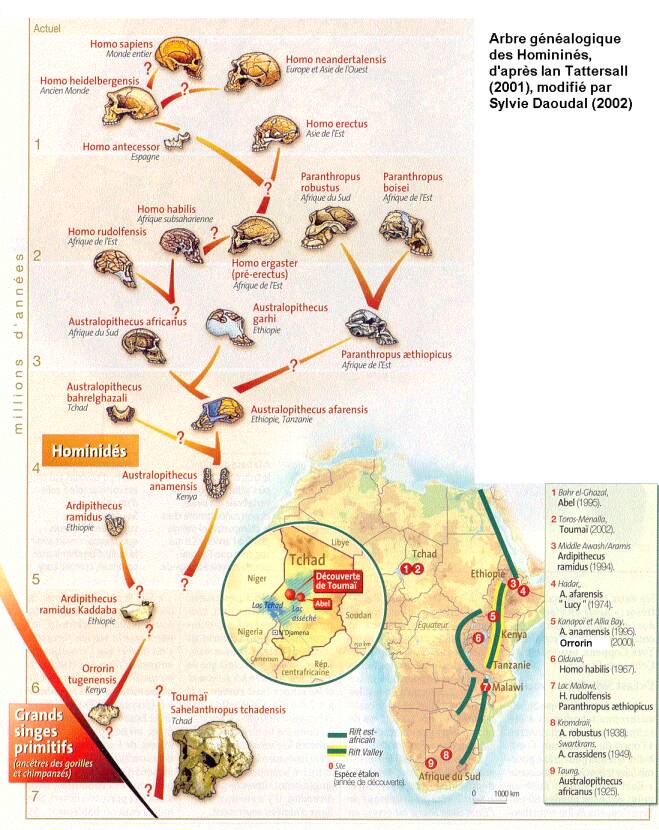

Imàgens externes
- ↑ Vore image de IVPP V10591.
- ↑ Vore image de DPC 2803.
- ↑ Vore imàgens de DPC 2803.
- ↑ imàgens de Turkanapithecus kalakolensis.
- ↑ Vore imàgens de KNM-TH 28860, Equatorius africanus
- ↑ Vore imàgens del cràneu de Pau.
- ↑ Vore imàgens de l'esquelet parcial Pau.
- ↑ Vore imàgens de l'esquelet parcial Laia.
- ↑ Vore imàgens del cràneu parcial Laia.
- ↑ Vore imàgens del fòssil GSP 15000 i reconstrucció del cràneu.
- ↑ Vore image de.BMNH. M 11555/BM 112, mandíbula de Oreopithecus bambolii, de 8 millons d'anys. (enllaç trencat)
- ↑ Vore image de IVPP PA644.
- ↑ Vore image dels fòssils que formen BAR 1000'00.
- ↑ Vore image de Ardipithecus kadabba, entre ells l'eixemplar ALA-VP-2/10, fragment de mandíbula en molar, holotip de l'espècie.
- ↑ Vore image de ARA-VP-6/1, canino de Ardipithecus ramidus, foto C, quarta dent des de l'esquerra de la fila superior.
- ↑ Vore image de les dèu dents holotip de Ardipithecus ramidus, exposts en el Museu Nacional d'Etiopia.
- ↑ Vore image de KNM-LT 329.
- ↑ Vore image de KNM-TH 13150
- ↑ Image de KNM-KP 29285A, tébea dreta de Australopithecus anamensis (part proximal).
- ↑ Vore imàgens del fòssil MRD-VP-1/1, cràneu de Australopithecus anamensis de 3,8 millons d'anys. Vista lateral
- ↑ Vore imàgens del fòssil MRD-VP-1/1, cràneu de Australopithecus anamensis de 3,8 millons d'anys. Vista frontal
- ↑ Vore fotografies de LH 4.
- ↑ Vore imàgens de les chafades de Laetoli.
- ↑ Vore image de l'esquelet parcial conegut com Kadanuumuu.
- ↑ Image del fòssil KT 12.
- ↑ Vore image del genoll de Australopithecus afarensis AL 129-1.
- ↑ Vore imàgens del fòssil BRT-VP-3/1, holotip de Australopithecus deyiremeda.
- ↑ Vore imàgens del fòssil BRT-VP-3/1, holotip de Australopithecus deyiremeda.
- ↑ Vore imàgens de AL 444-2, Australopithecus afarensis.
- ↑ «Image del fòssil LD 350-1 en el moment del descobriment». EurekAlert!. Consultat el 6 de març de 2015.
- ↑ Imàgens de LD 350-1- Science
- ↑ Vore image del cràneu Omo 18-18.
- ↑ Vore imàgens de BOU-VP 12/130 de A. garhi.
- ↑ Vore image de STS 14, Australopithecus africanus.
- ↑ Vore imàgens de STS71 i STS36, Australopithecus africanus.
- ↑ Vore image del temporal de Chemeron.
- ↑ Vore image del temporal de Chemeron, KNM-BC 1, des de quatre ànguls.
- ↑ Vore imàgens de STS 52, Australopithecus africanus.
- ↑ Vore image de DNH 7, Paranthropus robustus.
- ↑ Vore imàgens detallades de KNM-ER 1470.
- ↑ Vore image de l'homínit Dik-dik.
- ↑ Vore image de OH 65.
- ↑ Vore image de KNM-ER 62003, és la peça marcada com i.
- ↑ Vore image de KNM-ER 62000 des de varis ànguls.
- ↑ Vore image de KNM-ER 60000. Distintes vista en les imàgens a-d.
- ↑ Vore image de D 2280, cràneu 1 de Dmanisi.
- ↑ Image del fòssil D 2600, mándibula del cràneu número 5 de Dmanisi.
- ↑ Vore image de D 4500 (cràneu) i D 2600 (mandíbula).
- ↑ Vore imàgens de KNM-WT 17400, Paranthropus boisei.
- ↑ Vore imàgens de OH 8
- ↑ Vore imàgens de KNM-ER 1805, Homo habilis.
- ↑ Vore image de OH 13.
- ↑ Vore imàgens de KNM-ER 732
- ↑ Vore imàgens de KNM-ER 23000, Paranthropus boisei.
- ↑ Vore image de StW 53.
- ↑ Vore imàgens de Paranthropus robustus
- ↑ Vore imàgens de SK 847, Homo habilis sensu clapixc.
- ↑ Vore image de el molar conegut com a chiquet de Orce, una dent d'uns 1,4 millons d'anys d'un Homo sense especificar.
- ↑ Vore image de Konso, KGA 10-1 (mandíbula i KGA 10-525 (cràneu).
- ↑ Image dels ossos i dents que componen OH 80.
- ↑ Vore image de l'os denominat home de Orce, interior. En i sense restants de roca.
- ↑ Vore image de l'os denominat home de Orce, exterior. En i sense restants de roca.
- ↑ Vore image de la mandíbula, ATE9-1, de l'Alvenc de l'Elefant (Atapuerca).
- ↑ Vore image de Madam Buya (image en extensió JPEG).
- ↑ Vore imàgens de la pelvis de Gona, H. erectus femella adulta de baixa estatura.
- ↑ Vore image de KNM-OG 45500.
- ↑ Vore imàgens de Sangiran IV
- ↑ Vore image de Sangiran 17
- ↑ Vore image reconstrucció 3D de Sangiran 17
- ↑ Vore image de l'home de Yuanmou.
- ↑ Vore image de l'home de Yuanmou.
- ↑ Vore image d'una rèplica de la mandíbula Ternifine 1, 2, 3 i 4.
- ↑ Vore imàgens de Bodo, H. erectus o H. heidelbergensis.
- ↑ Vore imàgens d'Home de Swanscombe
- ↑ Vore imàgens d'Home de Swanscombe
- ↑ Vore image d'Home de Swanscombe
- ↑ Vore imàgens de Hexian.
- ↑ Vore image de la mandíbula Irhoud 11.
- ↑ Vore image de Dali.
- ↑ Vore image de Bontnewydd.
- ↑ Vore imàgens de Bontnewydd en varis ànguls.
- ↑ Vore imàgens de Omo 1.
- ↑ Vore image de Omo 2.
- ↑ Vore image dels Restants de Herto, Homo sapiens idaltu.
- ↑ Vore imàgens de Restants de Herto, Homo sapiens idaltu.
- ↑ Vore image de l'home de Altamura.
- ↑ Vore image del detall del cràneu de l'home de Altamura.
- ↑ Vore image del detall del cràneu de l'home de Altamura.
- ↑ Vore imàgens de Broken Hill 1.
- ↑ Vore imàgens de Krapina 3, Homo neanderthalensis.
- ↑ Vore imàgens de Tabun 1, Homo neanderthalensis.
- ↑ Vore imàgens de Saccopastore 1, Homo neanderthalensis.
- ↑ Vore imàgens de Qafzeh 6, Homo sapiens.
- ↑ Image de SCLA 4-1 al 20 re ensamblados.
- ↑ Image de SCLA 4A-1
- ↑ Image de SCLA 4A-2.
- ↑ Vore image dels 47 dents de Daoxian.
- ↑ Vore image de Skhul IX.
- ↑ image de Obi-Rakhmat 1.
- ↑ Vore image de Amud 7.
- ↑ Vore image de Amud 7 in situ.
- ↑ Vore image d'alguns dels fòssils de Klasies River Caves. Les mandíbula en dents és el primer fòssil trobat al final de la década de 1960.
- ↑ Vore image de Amud 1, Homo neanderthalensis.
- ↑ Vore image de Zafarraya 1 (fèmur) i Zafarraya 2 (mandíbula).
- ↑ Vore image de Zafarraya 2 (rèplica).
- ↑ Vore image de l'home de Sidrón.
- ↑ Vore image de l'home de Sidrón.
- ↑ Vore image del home de Sidrón.
- ↑ Vore image de l'home de Sidrón.
- ↑ Vore image de Mont Circeo 1.
- ↑ Vore animació 3D interactiva de Guattari 1, també conegut com a Mont Circeo 1.
- ↑ Vore imàgens de la Quina H 5, Homo neanderthalensis .
- ↑ Vore imàgens de la Quina H 18, Homo nenaderthalensis.
- ↑ Vore image de el molar Denisova 8.
- ↑ Vore image de el molar Denisova 8.
- ↑ Image de la falange original de la Dòna X de Denisova
- ↑ Vore image de la dent original de l'homínit de Denisova.
- ↑ Vore image de la falange del peu trobada en Denisova.
- ↑ Vore image de la mandíbula Oase 1.
- ↑ Vore imàgens de Oase 2, Homo sapiens.
- ↑ Imàgens de Hofmeyr abans dels varis desperfectes i com es troba en l'actualitat
- ↑ Vore image de l'home de Yamashita-Cho.
- ↑ Vore image del cràneu V de l'home de Sol.
- ↑ Vore imàgens de Ngandong 7.
- ↑ Vore imàgens de Ngandong 7
- ↑ Vore image del chiquet de Lapedo.
- ↑ Vore image del chiquet de Lapedo.
- ↑ Vore image del chiquet de Lapedo.
- ↑ Vore image de Tandou.
- ↑ Vore imàgens de Minatogawa 1.
- ↑ Vore image de Iwo Eleru.
- ↑ Vore image d'un dels dos enterrament de Paiján pertanyents al Paleolític.
- ↑ Vore image de Penghu 1.
- ↑ Vore image de Wadjak 1.
- ↑ Vore image de 6-B-36.
- ↑ Vore image del cràneu Lothagam 4b.
- ↑ Vore image del cràneu de SDM 16704, esquelet de De el Mar.
- ↑ Vore image del cràneu de Kerma.
- ↑ Vore image de Cerro Sota 2.


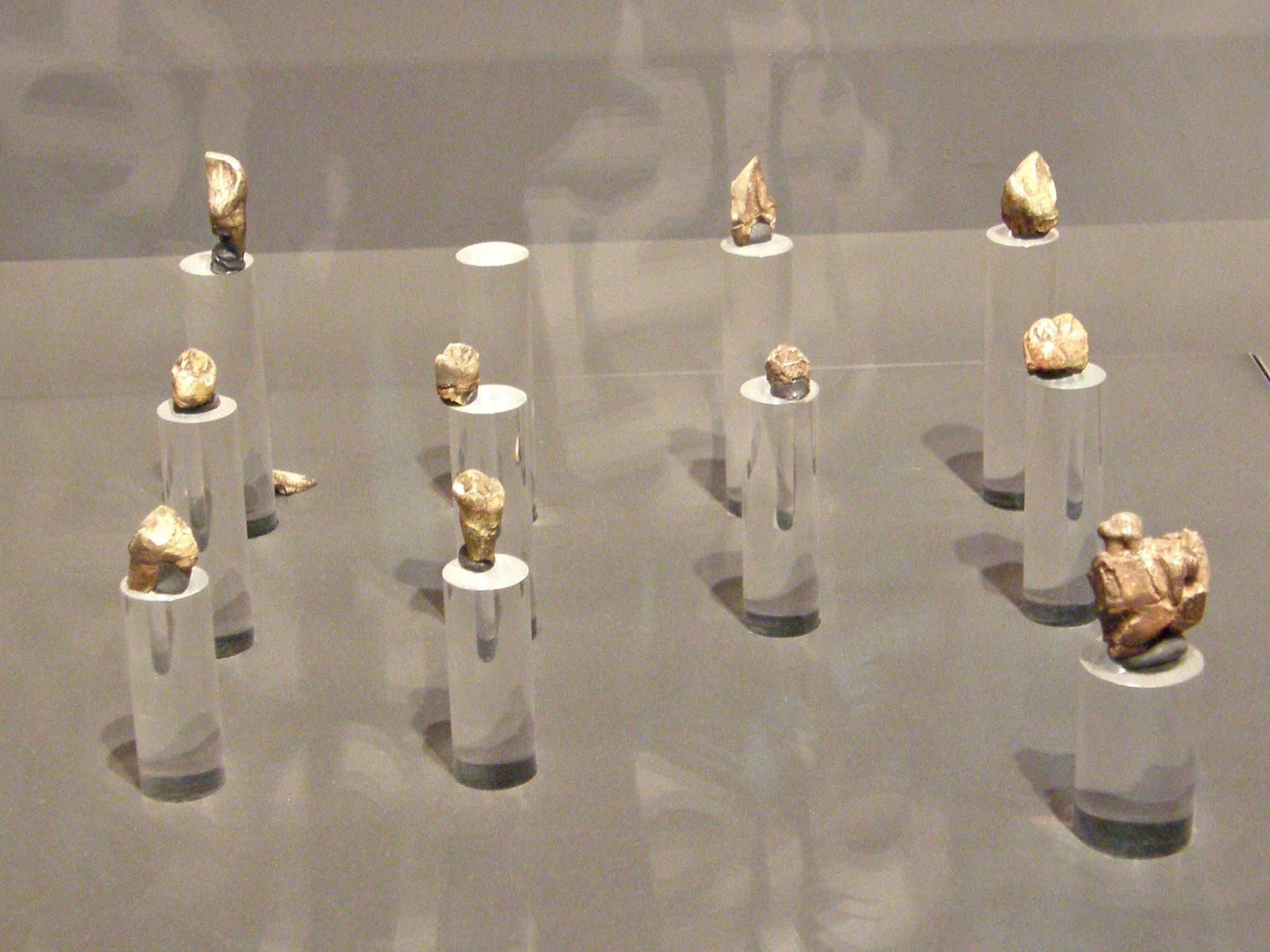


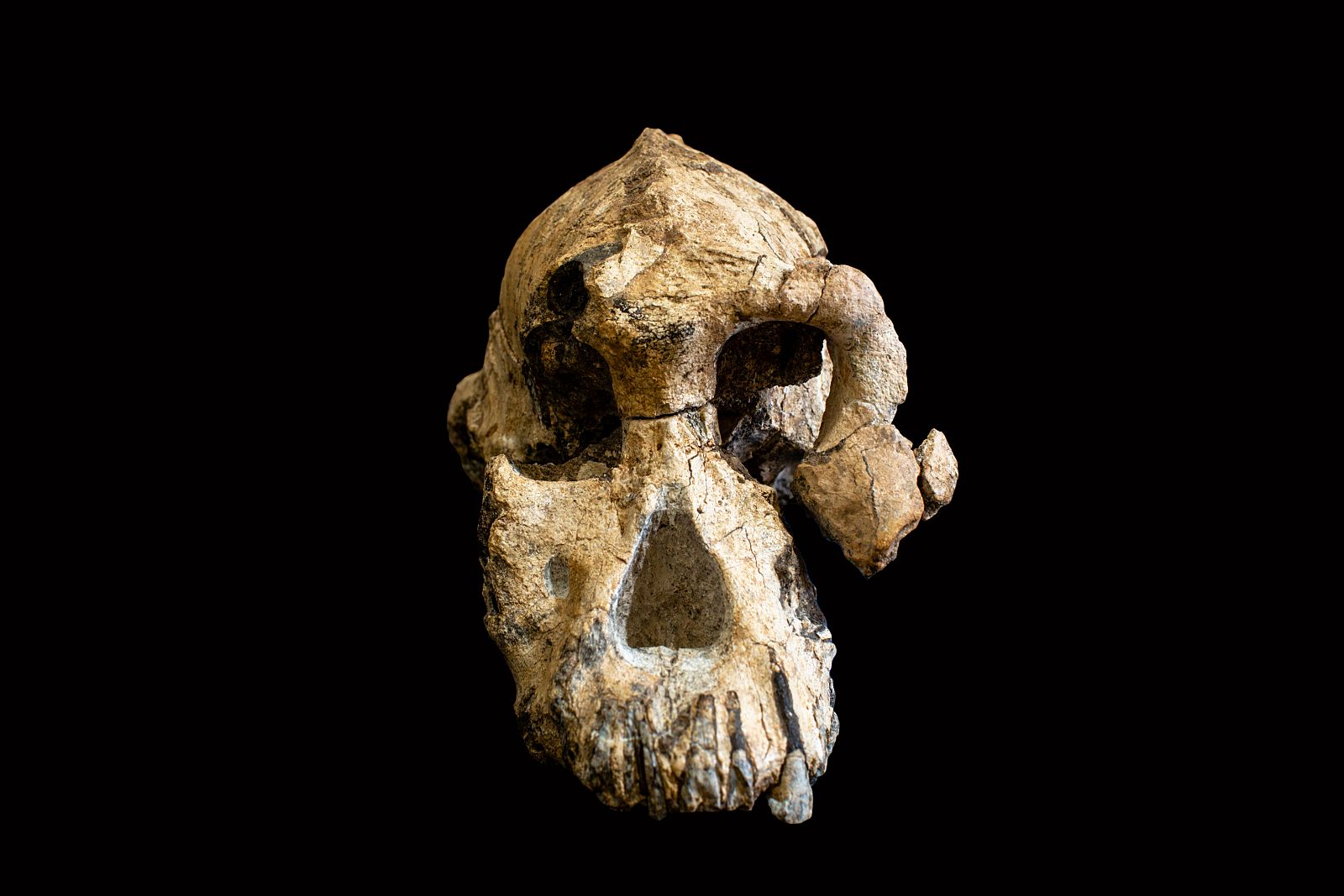

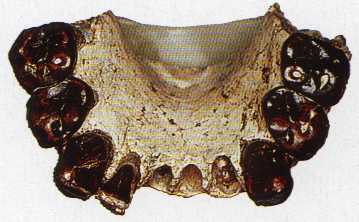
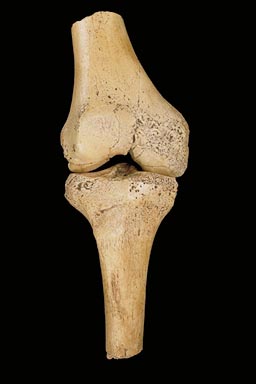


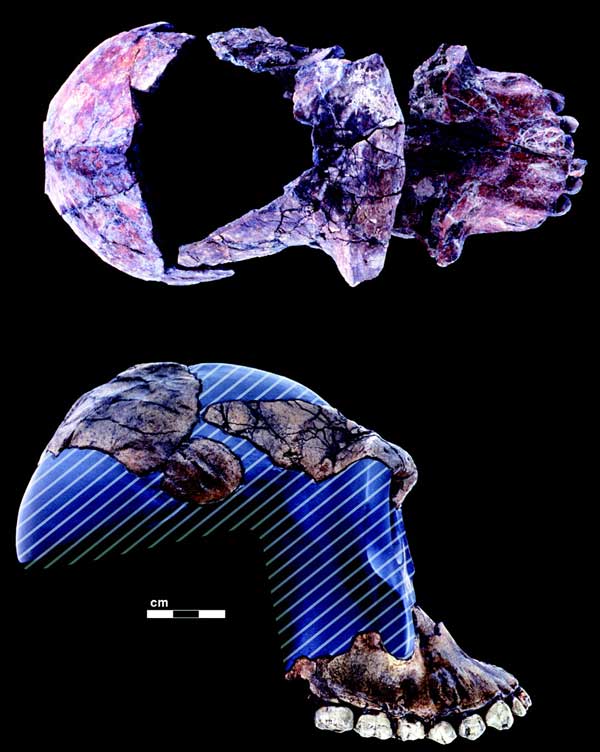

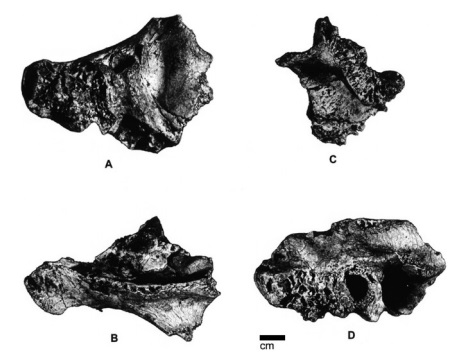

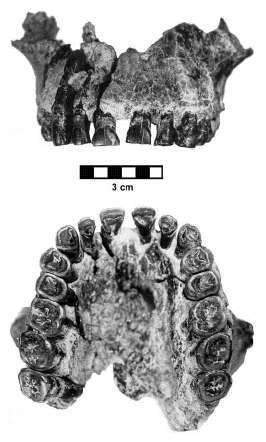


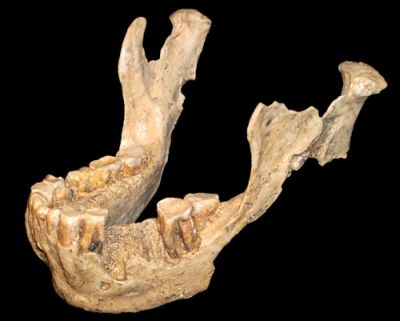

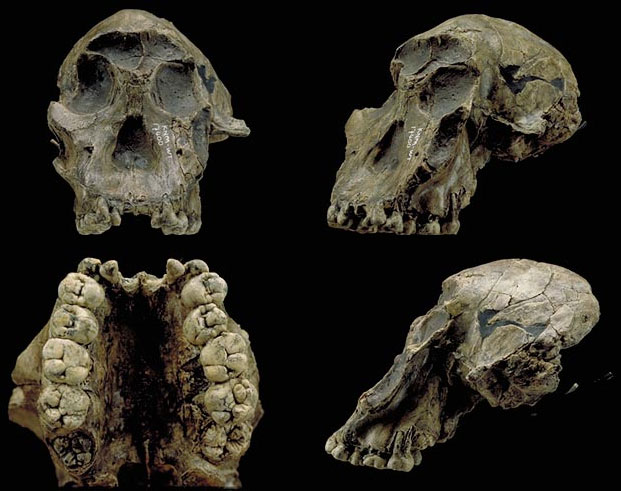
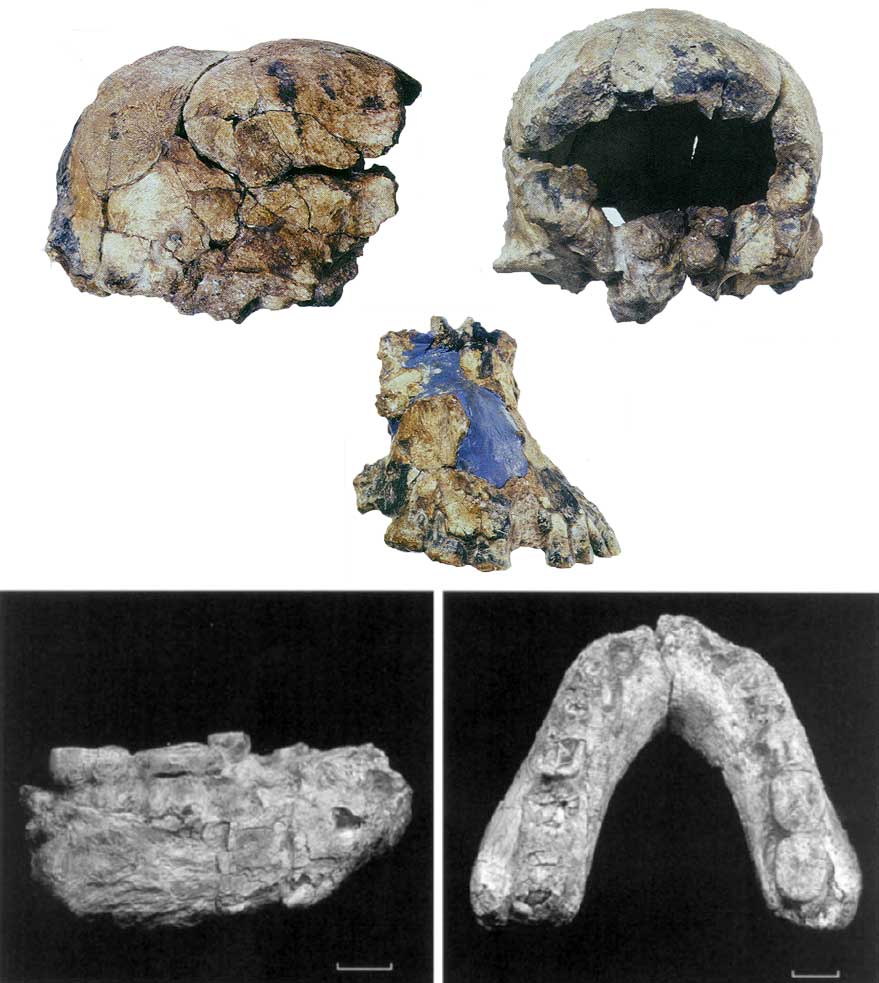
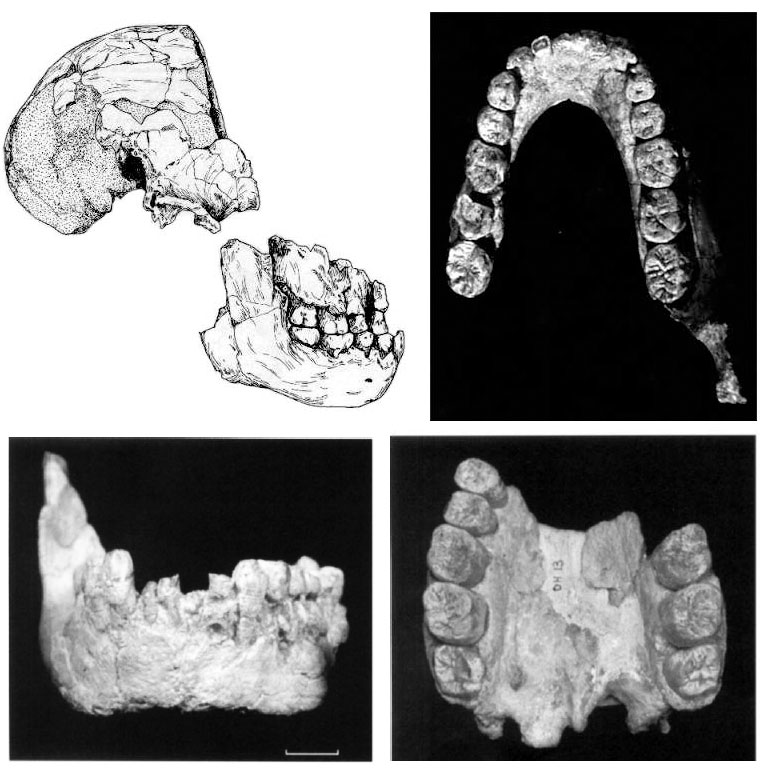
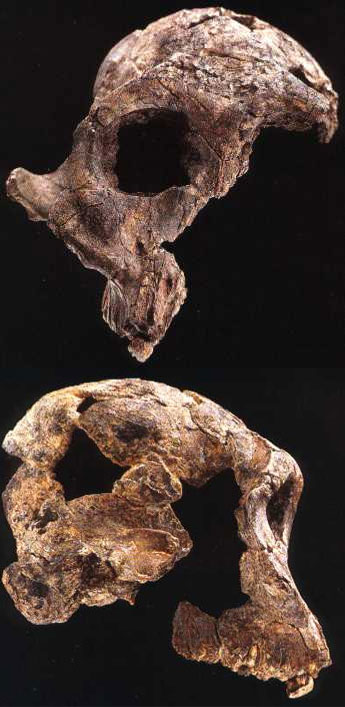
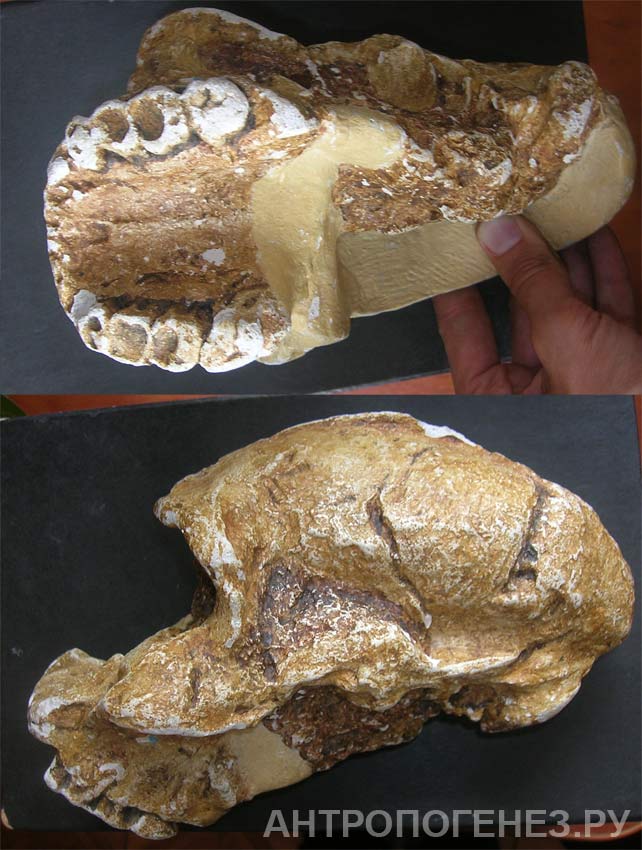
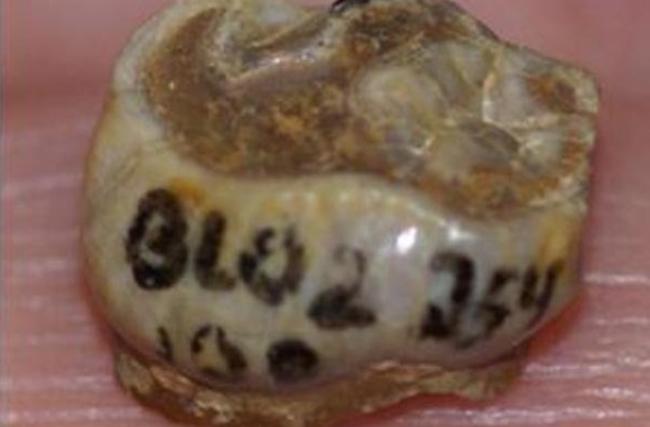
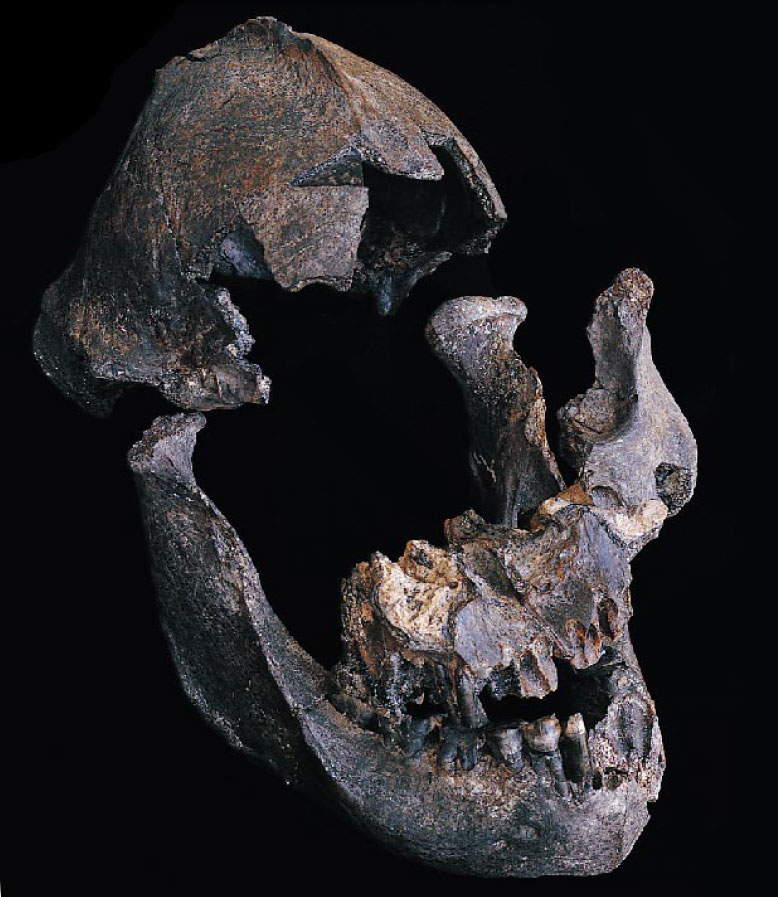
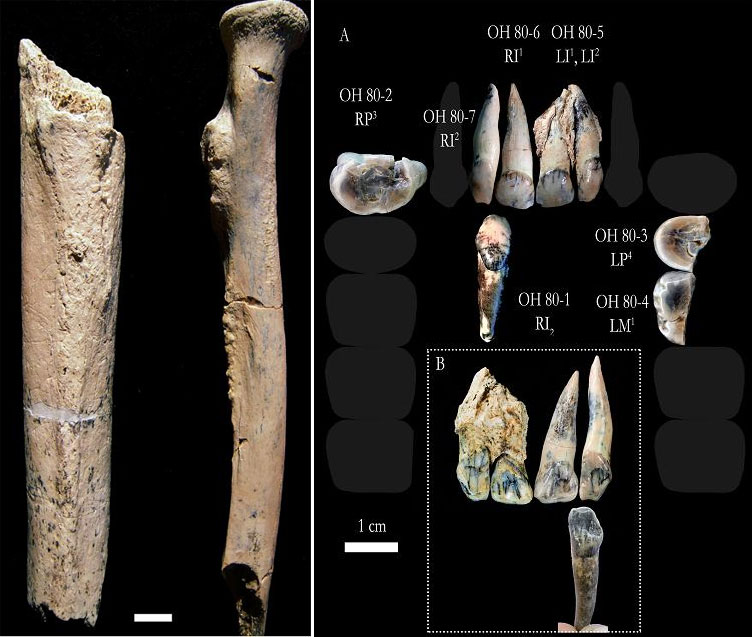


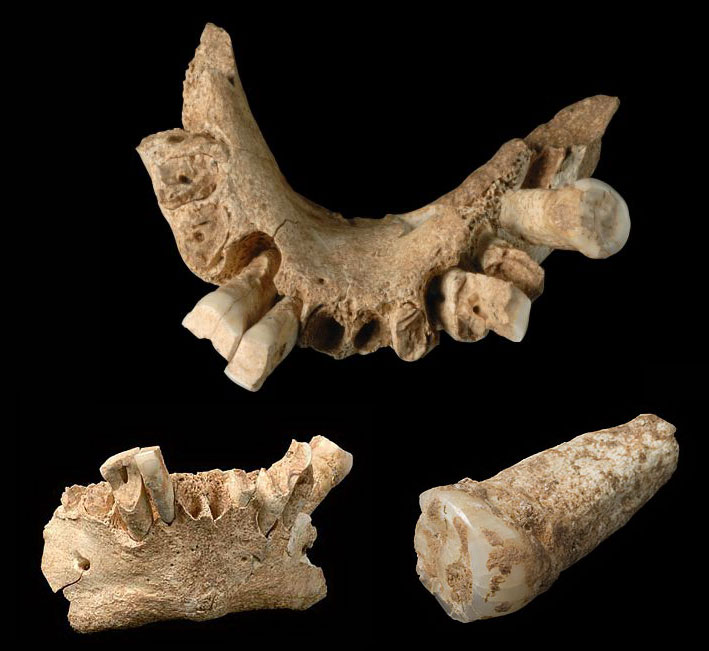


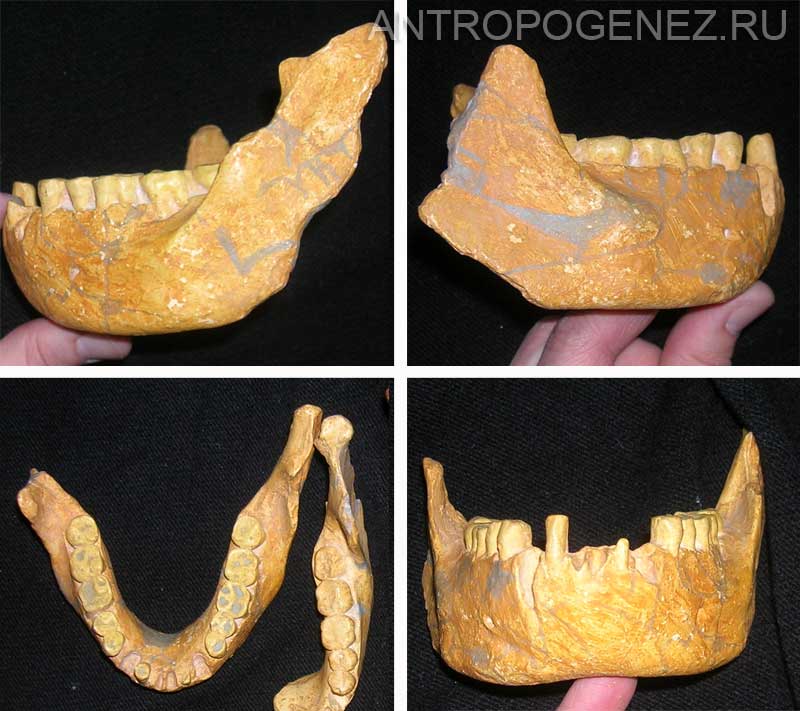
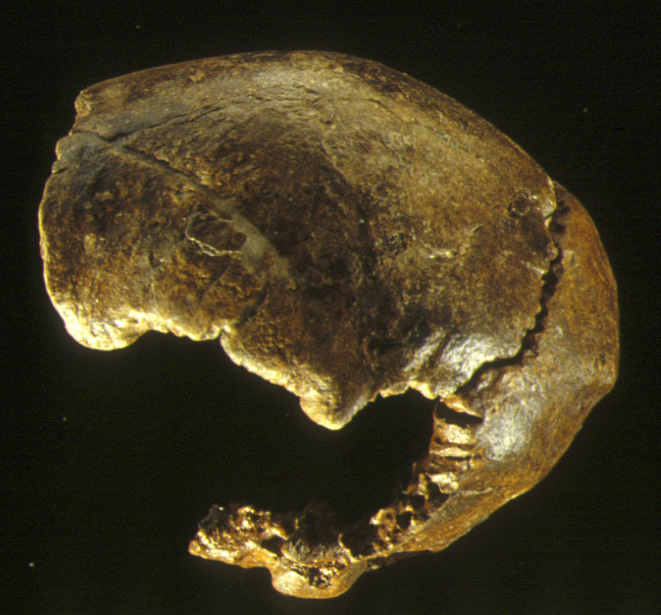


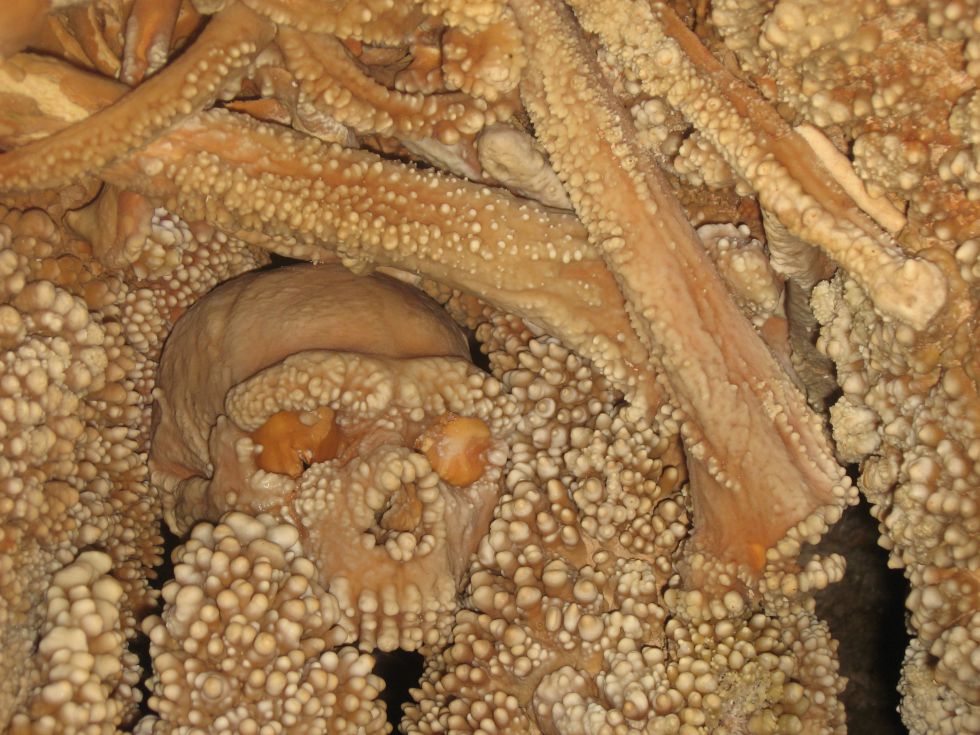


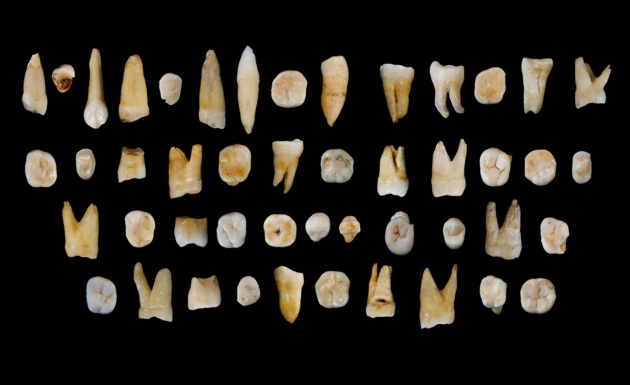


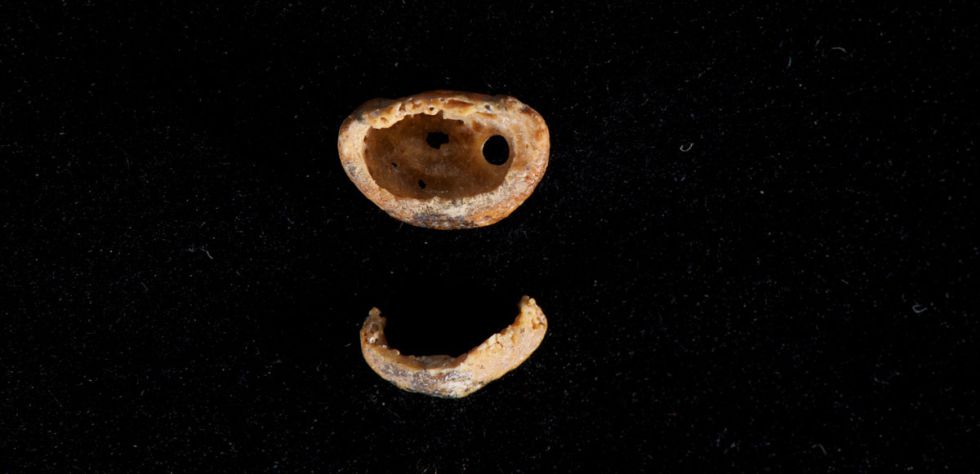
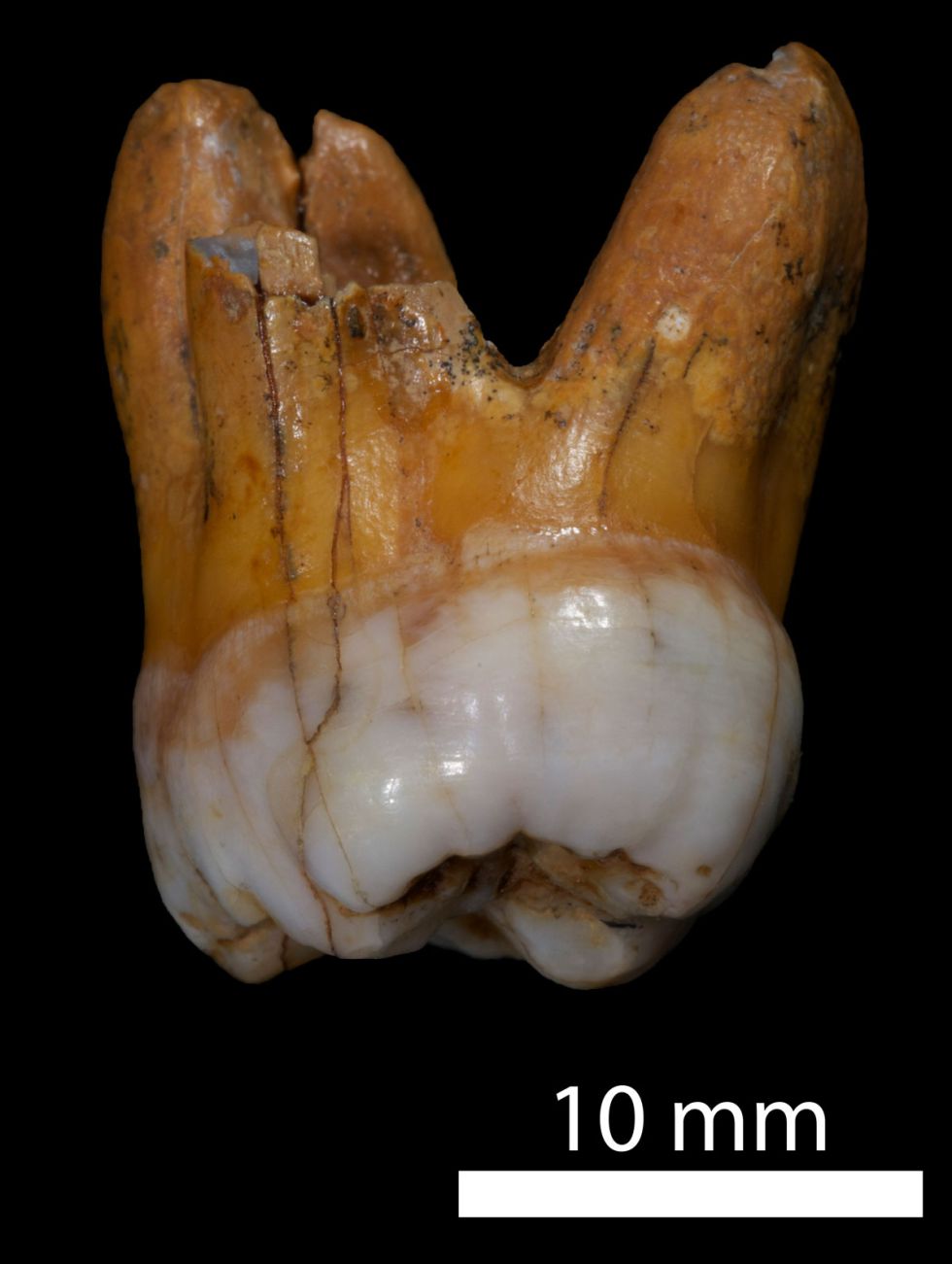


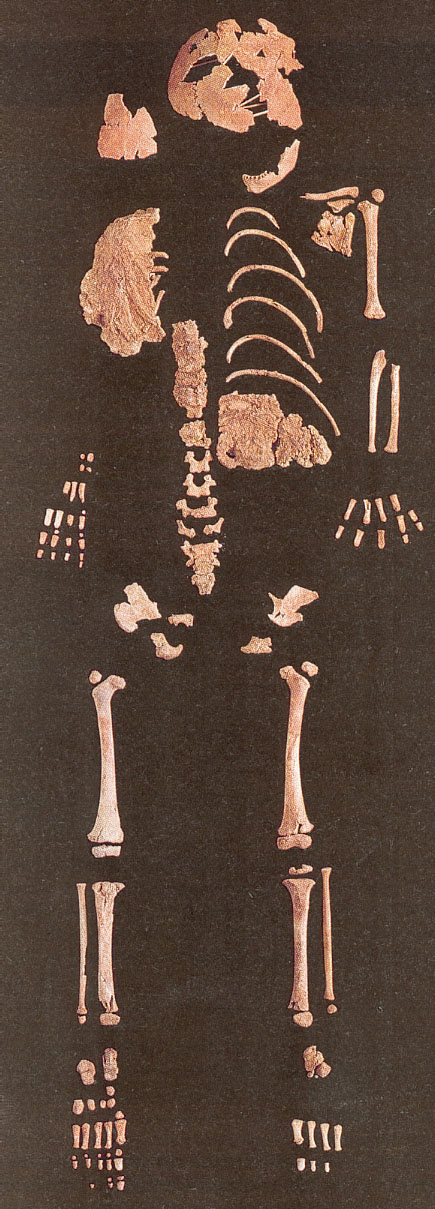


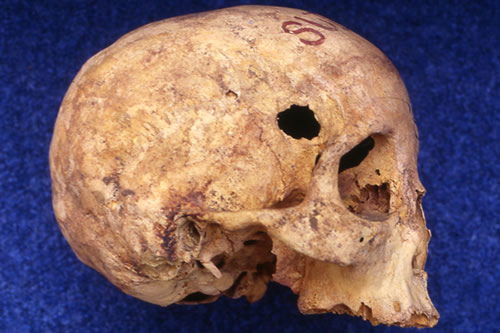

Bibliografia
- (1980) Clapix stone age fishermen of Lothagam, Kenya (en en), East Lansing: Michigan State University. Museum of Anthropology.
- Arambourg, C.; Hoffstetter, {{{nom2}}} (1963). «History and Geology», Li gisement de Ternifine (en fr), París, pp. 9-36.
- Ayala, Francisco J. (2017). Processes in Human Evolution: The journey from early hominins to Neanderthals and modern humans, 2.ª edició (en en), Oxford University Press. ISBN 9780191060458. La versió en llínea oferix una vista parcial del llibre.
- Bonjean, Dominique; Abrams, Grégory; Delaunois, Élise; Vaig donar Monica, Kévin; McMillan, Rhylan; Pirson, Stéphane; Roy, Chery A. i Toussaint, Michel (2017). «Taphonomy of the juvenile Neandertal remains from sedimentary Complex 4A, Scladina Cave», Michel Toussaint i Dominique Bonjean (ed.). The Scladina I-4A Juvenile Neandertal - Andenne, Belgium (en en), Lieja: ERAUL Editions, pp. 127-154. ISBN 9782930495200.
- Braun, David R.; Levin, {{{nom2}}} (2013). «Initial investigations of Acheulean hominin behaviour at Elandsfontein», Antonieta Jerardino, Antonia Malan i David Braun (ed.). The Archaeology of the West Coast of South Africa ((PDF)(PDF)) (en en), Archaeopress, pp. 10-23. ISBN 978-1-4073-1144-9.
- Cameron, David W. (2004). Hominid Adaptations and Extinctions (en en), UNSW Press. ISBN 9780868407166. La versió en llínea oferix una vista parcial del llibre.
- Cartmill, Matt; Smith, Fred H. (2009). The human lineage (en en), Hoboken, NJ: John Wiley & Sns. ISBN 0471214914. La versió en llínea oferix una vista parcial del llibre.
- Cela, C. J. (2001). Senderes de l'evolució humana, 1.ª edició, Madrit: Aliança Editorial. ISBN 84-206-6782-X.
- Clarke, Ronald (2013). «Austrolopithecus from Sterkfointein Caves, South Africa», The Paleobiology of Australopithecus (en en), Springer, pp. 105-124. ISBN 9789400759190. La versió en llínea oferix una vista parcial del llibre.
- (1974) East African Literature Bureau (ed.). Journal of Eastern African Research and Development (en en). La versió en llínea mostra solament partix de les pàgines.
- Deak, Viktor (2007). Gary J. Sawyer (ed.). The Last Human: A Guide to Twenty-two Species of Extinct Humans (en en), Peter N. Nèvraumont. ISBN 9780300100471. La versió en llínea oferix una vista parcial del llibre.
- (2004) Eric Delson, Ian Tattersall, John Van Couvering, Alison S. Brooks (ed.). Encyclopedia of Human Evolution and Prehistory: Second Edition (en en), Routledge. ISBN 9781135582289. La versió en llínea oferix una vista parcial del llibre.
- Dunsworth, Holly; Walker, {{{nom2}}} (2002). «Early genus Homo», Walter Carl Hartwig (ed.). The Primat Fossil Record (en en), Cambridge University Press, pp. 419-436. ISBN 0 521 66315 6. La versió en llínea oferix una vista parcial del llibre.
- «Prominent Hominid Fossils» (en en). The TalkOrigins Archive. Consultat el 8 de març de 2015.
- Fullola i Pericot, Josep Mª; Nadal Lorenzo, {{{nom2}}} (2005). Introducció a la prehistòria. L'evolució de la cultura humana, 1.ª edició, Barcelona: UOC. ISBN 84-9788-153-2. La versió en llínea oferix una vista parcial del llibre.
- (2008) Homo erectus: Pleistocene evidence from the Middle Awash, Ethiopia (Vol. 1) (en en), Berkeley: University of Califòrnia Press. ISBN 978-0-520-25120-5.
- (2007) Evolutionary History of the "Robust" Australopithecines (en en), Transaction Publishers. ISBN 9780202365961. La versió en llínea mostra una cantitat llimitada de les pàgines del llibre.
- (1996).«Phenetic Affinities Among Early Homo Crania from East and South Africa».Journal of Human Evolution.30(3)
- 189–225.ISSN 0047-2484.doi:10.1006/jhev.1996.0019.
- (2011) «Hominins from the Upper Laetolli and Upper Ndolanya Beds», Paleontology and Geology of Laetoli: Human Evolution in Context (en en), Springer Science & Business Mija, pp. 141-188. ISBN 9789048199624. La versió en llínea oferix una vista parcial del llibre.
- Harrison, Terry (2002). «Clapix Oligocene to middle Miocene catarrhines from Afro-Aràbia», Walter Carl Hartwig (ed.). The Primat Fossil Record (PDFPDF) (en en), Cambridge University Press, pp. 311-338. ISBN 0 521 66315 6.
- (2002) The Primat Fossil Record (en en), Cambridge University Press. ISBN 9780521663151. La versió en llínea oferix una vista parcial del llibre.
- Jungers, William L. (2007). «New Estimates of Body Size in Australopithecine», Frederick E. Grine (ed.). Evolutionary History of the "Robust" Australopithecines (en en), Transaction Publishers, pp. 115-126. ISBN 0202365964. La versió en llínea oferix una vista parcial del llibre.
- Jurmain, Robert (2013). Introduction to Physical Anthropology, 2013-2014 Edition, 14.ª edició (en en), Cengage Learning. ISBN 9781285607054. La versió en llínea oferix una vista parcial del llibre.
- Klein, Richard G. (2009). University of Chicago Press (ed.). The human career Human Biological and Cultural Origins, 3ª edició (en en). ISBN 9780226027524. La versió en llínea oferix una vista parcial del llibre.
- (2015).«Proceedings of the Radiocarbon and Archaeology 7th International Symposium Ghent, Belgium, April 2013: Direct radiocarbon dating of clapix Pleistocene hominids in Euroasia: Current status, problems, and perspectives».Radiocarbon.Arizona Board of Regents on behalf of the University of Arizona.56(2)
- 753-766.doi:10.2458/56.16936.Consultat el 16 de març de 2015.
- Larsen, Clark Spencer; Gebo, {{{nom3}}} (1991). Human Origins: the fossil record, 2.ª edició (en en), Prospect Heights, Illinois: Waveland Press. ISBN 0-88133-575-4. La versió en llínea oferix una vista parcial del llibre.
- Matsuzawa, T. (2009). «Primat foundations of human intelligence: A view of tool use in nonhuman primats and fossil hominids», Tetsuro Matsuzawa (ed.). Primat Origins of Human Cognition and Behavior (en en), Springer Science & Business Mija, pp. 3-25. ISBN 9784431094234. La versió en llínea oferix una vista parcial del llibre.
- Mirazón Lahr, Marta (1996). The Evolution of Modern Human Diversity: A Study of Cranial Variation (en en), Cambridge University Press. ISBN 9780521473934. La versió en llínea oferix una vista parcial del llibre.
- Morell, Virginia (11 de giner de 2011). Ancestral Passions: The Leakey Family and the Quest for Humankind's Beginnings (en en), Simon and Schuster. ISBN 978-1-4391-4387-2. La versió en llínea mostra solament partix de les pàgines.
- Olària, Carme (2008). «Restants i tombes infantils i jovenils en la prehistòria europea: del Musteriense al Mesolítico», Francesc Gusi Jener, Susanna Muriel i Carmen Rosa Olaria Puyoles (ed.). Nasciturus: infans, puerulus. Vobis mateer terra. La mort en l'infància (PDFPDF), Servei d'investigacions arqueològiques i prehistòriques, pp. 387-472. ISBN 978-84-96372-62-7.
- (2017) «Stratigraphic origin of the juvenile Neandertal remains from Scladina Cave: re-evaluation and consequences for their palaeoenvironmental and chronostratigraphic contexts», Michel Toussaint i Dominique Bonjean (ed.). The Scladina I-4A Juvenile Neandertal - Andenne, Belgium (en en), Lieja: ERAUL Editions, pp. 93-124. ISBN 9782930495200.
- Powell, Joseph F. (2005). The First Americans: Race, Evolution and the Origin of Native Americans (en en), Cambridge University Press. ISBN 9780521530354.
- (2008).«Statistical and Biological Definitions of ‘‘Anatomically Modern’’ Humans: Suggestions for a Unified Approach to Modern Morphology».Evolutionary Anthropology.(17)
- 38-48.doi:10.1002/evan.20155.
- (2013) The Paleobiology of Australopithecus (en en), Springer. ISBN 9789400759190. La versió en llínea oferix una vista parcial del llibre.
- Schwartz, Jeffrey H.; Tattersall, {{{nom2}}} (2005). The Human Fossil Record, Craniodental Morphology of Genus Homo (Africa and Àsia). Volume 2 (en en), Estats Units: John Wiley & Sons. ISBN 0-471-31927-9. La versió en llínea oferix una vista parcial del llibre.
- Smith, Fred H.; Ahern, {{{nom2}}} (2013). The Origins of Modern Humans: Biology Reconsidered (en anglés), Illinois: John Wiley & Sons. ISBN 9781118659908. La versió en llínea oferix una vista parcial del llibre sense paginació.
- Stefoff, R. (2009). First Humans (en en), Marshall Cavendish. ISBN 9780761441847. La versió en llínea oferix una vista parcial del llibre.
- Tattersall, I.; Schwartz, {{{nom2}}} (1999). Extinct Humans (en en), Boulder CO: Westview Press. ISBN 0-8133-3482-9.
- Tattersall, Ian (1999). The Last Neandertal: The Rise, Success, and Mysterious Extintion of Our Closest Human Relatives (en en), Nova York, NY: Westview Press. ISBN 0-8133-3675-9.
- Tuttle, Russell H. (2014). Apes and Human Evolution (en en), Harvard University Press. ISBN 9780674073166. La versió en llínea oferix una vista parcial del llibre.
- Wood, B. (1999). «Plio-Pleistocene homininis from the Baringo Region, Kenya», Clapix Cenozoic Environments and Hominid Evolution: A Tribute to the Clapix Bill Bishop (en en), Geological Society of London, pp. 113-122. ISBN 9781862390362. La versió en llínea oferix una vista parcial del llibre.
- (2011) Wiley-Blackwell Encyclopedia of Human Evolution, 2 Volume Set (en en). doi:10.1002/9781444342499. ISBN 9781444342475. La versió en llínea oferix una vista parcial del llibre i sense numeració de pàgina, pot utilisar el buscador de text incorporat en Google Books. Accés a les referències de l'enciclopèdia.
- (2015) Wiley-Blackwell Student Dictionary of Human Evolution (en en), John Wiley & Sons. ISBN 9781118335741. La versió en llínea oferix una vista parcial del llibre.
Bibliografia adicional
- Holloway, Ralph L.; Broadfield, {{{nom2}}}; Yuan, {{{nom3}}} (2004). The Human Fossil Record: The Paleoneurological Evidence. Brain Endocasts. Volume Three, John Wiley & Sons. ISBN 9780471678649. La versió en llínea oferix una vista parcial del llibre.
- Lieberman, Daniel E. (2011). The evolution of the human head (en anglés), Harvard University Press. ISBN 9780674059443. La versió en llínea oferix una vista parcial del llibre.
- Trinkaus, Erik; Broadfield, {{{nom2}}} (1983). The Shanidar Neandertals (en anglés), Academic Press. ISBN 9781483276472. La versió en llínea oferix una vista parcial del llibre.
Llistes bibliogràfiques
- University of Califòrnia. «The George and Mary Foster Anthropology Library» (en anglés). Archivat des d'el original, el 25 de març de 2015. Consultat el 29 de març de 2015.
Enllaços externs
- Bases de senyes
- «Catalogue of Fossil Hominids: Database» (en anglés i japonés). Consultat el 28 de març de 2015. «Permet la busca per mapa i mostra informació detallada dels jaciments, inclosa l'estratigrafia.»
- Smithsonian National Museum of Natural History. «Smithsonian Human Origins Program» (en anglés). What does it pixen to be human?. Consultat el 18 de maig de 2014. «Base de senyes fotogràfica, principalment de cràneus. En alguns casos es mostren imàgens 3D. En la majoria dels casos les fotografies són de rèpliques.»
- «Antropogenez» (en rus). Consultat el 28 de març de 2015. «Gran base de senyes fotogràfica en descripcions detallades i referenciadas en gran part» Les consultes realisades a esta base de senyes per a este artícul es varen realisar utilisant el traductor de Google.
- «360° Rotations - Hominid Skulls, Bones & Artifacts» (en anglés). NCSSM, North Carolina School of Science and Mathematics. Consultat el 19 de març de 2015. «Imàgens 3D interactives d'alta calitat dels principals cràneus de l'evolució humana. Baixe llicència CC-SA-NC-BY»
- «Hominid Index» (en anglés). A Look at Moderm Human Origins. Archivat des d'el original, el 22 de febrer de 2015. Consultat el 28 de març de 2015. «Llistade fòssils agrupats per espècie»
- «FossilWorks: Gateway to the Paleobiology Database» (en anglés). Consultat el 28 de març de 2015. «Proporciona ferramentes de consulta, descàrrega i anàlisis que utilisen la gran base de senyes relacional Paleobiology Database»
- «Paleobiology Database» (en anglés). Consultat el 28 de març de 2015. «Gran base de senyes relacional Paleobiology Database»
- «Плейстоценовые гоминиды [Homínits del Pleistoceno]» (en anglés i rus). Consultat el 28 de març de 2015. «Base de senyes de fòssils en referències i descripcions. No inclou imàgens. Seleccione «Hominids» per a accedir.»
- «AffricanFossils» (en anglés). AfricanFossils.org. Consultat el 28 de març de 2015. «Imàgens 3D, possibilitat de comparativa de mostres a elecció, imàgens d'alta calitat. Inclou fòssils animals i ferramentes. Solament per a materials de l'est d'Àfrica i el Llac Turkana.»
- Universitat de Nova York. «Colletions» (en anglés). Center for the Study of Human Origins, CSHO. Consultat el 28 de març de 2015. «Base de senyes descargable en format Excel o Filemaker»
- Department of Anthropology: The University of Texas at Austin. «Prominent Hominid Fossils» (en anglés). eFossils.org. Consultat el 28 de març de 2015. «Base de senyes en referències, en molts casos, i imàgens dels fòssils des de distints ànguls»
- Jim Foley. «Prominent Hominid Fossils» (en anglés). The TalkOrigins Archive. Consultat el 28 de març de 2015. «Artícul citant els fòssils més destacats trobats fins al moment organisats per espècies. No presenta referències»
- Smithsonian National Museum of Natural History. «Explore colletions» (en anglés). Q?rius. Consultat el 28 de març de 2015. «Base de senyes fotogràfica per categories»
- «Hominoid 1101. The evolucionary Histories of apes and humans» (en anglés). Consultat el 19 de juliol de 2015. «Fotos i fiches de simis i homininos extints i actuals.»
- Imàgens
- «Virtual lab showcases a spectacular collection of fossils and artifacts found mostly at Lake Turkana in East Africa» (en en). African Fossils. Consultat el 9 d'abril de 2020.
- «CalPhotos» (en en). Biodiversity Sciences Technology group (BSCIT), Berkeley Natural History Museums (UC Berkeley). Consultat el 28 de març de 2015. «Repositori fotogràfic. Permet la busca per térmens»
- «3D Models» (en en). SketchFab. Consultat el 19 d'abril de 2020. «Repositori imàgens en 3D interactives»
- «Photos» (en en). Forensic and Osteoarchaeological Services. Consultat el 28 de març de 2015. «Vistes de varis dels fòssils més coneguts de l'evolució humana des de distints ànguls»
- «human evolution» (en anglés). ArchaeologyInfo.com. Consultat el 28 de març de 2015. «Fotos de varis dels fòssils més coneguts de l'evolució humana i les seues reconstrucció idealizadas»
- «The ORSA Movie Database: 3D Interactive Clips» (en anglés). Open Researche Scan Archive. Consultat el 14 d'octubre de 2015. «Imàgens 3D esteroscópiques»
- Mapes
- «Human Paleontology» (en anglés). Consultat el 28 de març de 2015. «Mapa interactiu en selecció de data. Inclou referències i descripcions. També inclou un escala temporal. Baixe llicència CC-SA-BY-NC 4.0»
- «Diàspora» (en anglés). Consultat el 28 de març de 2015. «Mapa interactiu en grafia de les principals migracions de homíninos»
- «Map of Austràlia, Indonèsia and Southeast Àsia, showing the former ladnmasses of Sahul and Sunda.» (en anglés). Consultat el 28 de març de 2015. «Es mostra l'ubicació dels principals jaciments de fòssils de la zona»

- «Global Biodiversity Information Facility: Free and Open Access to Biodiversity Data» (en anglés). GBIF.org. Consultat el 20 de juliol de 2015. «Base de senyes d'espècies en situació en mapa d'ocurrències. Llicència CC-BY-SA.»
- Arbres de l'evolució i escales temporals
- Smithsonian National Museum of Natural History. «Human Family Tree» (en anglés). What does it pixen to be human?. Consultat el 28 de març de 2015.
- «Human Evolution Timeline» (en anglés). Consultat el 28 de març de 2015.
- Juan Luis Arsuaga. «Posició del Homo heidelbergensis i H. antecessor dins del gènero Homo». Atapuerca.tv. Consultat el 28 de març de 2015. «Imàgens 25 i 26»
Referències
- Este artícul conté una traducció derivada de «Anexo:Fósiles de la evolución humana» de Wikipedia en castellà publicada baix la Llicència de documentació lliure de GNU i la Llicència Creative Commons Reconeiximent-CompartirIgual 4.0 Internacional.